




Pregnancy
Miscarriage cradle to be rolled out across Scotland

Published
1 month agoon
By
News Desk
A ‘miscarriage cradle’ is being introduced at three Scottish hospitals to help women experiencing miscarriage at home and in hospital.
The device was created by engineer Laura Corcoran after she lost her third baby.
Forced to devise her own way of collecting her baby’s remains, she came up with a solution to deal with the physical side so women could focus on their emotional loss.

Corcoran said: “My husband and I are both engineers, we went into problem-solving mode and we ended up using a kitchen sieve to collect baby over the toilet and then we used a Chinese takeout container to store baby in the fridge over the weekend, the hospital said I wasn’t allowed to bring them in out of hours and I miscarried on a Friday evening.”
Corcoran described the ordeal as ‘a really awful time’ and said she felt very vulnerable.
“It was completely undignified and it felt like I didn’t matter, my baby didn’t matter, there was nothing fit for purpose,” she added.
NHS Greater Glasgow and Clyde is the first UK health board to roll out its use.
The Royal Alexandra Hospital in Paisley, the Queen Elizabeth University Hospital and Princess Royal Maternity in Glasgow will offer the device to support women through miscarriage at home and in hospital.
It is believed to be the first time a group of hospitals in the UK has committed to embedding this type of support across multiple sites.
Laura’s invention came out of one of the darkest moments of her life, as she began to miscarry for the third time.
She was bleeding but was told there was no space for her in hospital and that she would have to manage the process at home.
Laura told BBC Scotland News: “Within the NHS, you have to miscarry three times before you are eligible for testing to try to find some answers.”
She said she asked the early pregnancy unit how to collect the baby and they said ‘just to manage’.
During her recovery, Laura became angry that she had not been given the tools she needed to navigate the process.
But then she realised it was not just her, there was nothing fit for purpose for any woman dealing with baby loss.
“Using my background as an engineer, I started cutting up cardboard, taping bits together, sketching ideas.
“When I had something, I went to the 3D printers and printed the first prototype,” Corcoran said.
After patient and clinical feedback, she arrived at the device now in use.
The device is semi-circular and sits under the toilet seat. In the centre is a removable sieve. It filters out what is not needed and keeps the baby.
It then goes into a watertight storage container which can be taken to hospital for testing, or for a burial or cremation.
Corcoran said: “It allows women not to have to think of the practical aspects, to think about the emotional aspects, the grief. It gives them some space and time.
“The possibility that you might not be able to collect the baby and get access to testing adds weight to the problem.
“To be able to collect the baby respectfully and without cross-contamination means women can get access to testing, find potential causes and then prevent them going through it again in their next pregnancy.”
Corcoran said an independent economic report for NHS England showed that 50 per cent uptake would save the NHS in Scotland £11.2m, free up 12,000 gynaecology surgery slots and save 10,000 emergency department visits.

You may like


GLP-1 drugs do not increase pregnancy risks, study finds


New scan could speed up endometriosis diagnosis


WHO launches AI tool for reproductive health information


Women’s HealthX unveils Northwell Health, Corewell Health, Biogen & more to headline Chronic Disease stage


AI maps how reproductive organs age differently during menopause


Ovarian cancer cases rising among younger adults, study finds
Fertility
GLP-1 drugs do not increase pregnancy risks, study finds
Published
2 days agoon
May 1, 2026By
News Desk
GLP-1 drugs taken before conception were not linked to higher pregnancy risks in new research, which suggested they may even offer some protection.
Women of reproductive age are increasingly prescribed GLP-1 drugs for weight-management support, but the risks and benefits of using them before pregnancy remain poorly understood.
The findings support continuing the use of GLP-1 medicines in women with metabolic risk factors who are considering pregnancy, said Cara Dolin, a maternal-fetal medicine specialist and co-author of the research, which was presented at the Society of Maternal-Fetal Medicine pregnancy meeting in February 2026.

“While there’s more research to be done, this data provides some reassurance that it is not harmful to be taking a GLP-1 if you’re planning a pregnancy, and that having done so may in fact benefit you by optimising your preconception metabolic health.”
The researchers examined electronic medical records for patients with a pre-pregnancy BMI of more than 30 who delivered at more than 20 weeks’ gestation. The data were reviewed for two studies: one assessed the link between pre-pregnancy GLP-1 use and the risk of gestational diabetes, while the second looked at the risk of severe maternal morbidity in patients with obesity.
Women with obesity, diabetes, cardiovascular disease and other cardiometabolic disorders have a higher risk of pregnancy complications including preeclampsia, gestational diabetes, stillbirth, caesarean section and other outcomes. While GLP-1 medicines can help manage these conditions, they are contraindicated during pregnancy, and women are typically advised to stop the medication two months before trying to conceive.
However, stopping the drugs can often lead to rebound weight gain or worsening metabolic health. A 2025 study suggested this rebound worsened some pregnancy outcomes, but the risks and benefits are still poorly understood, Dolin said.
“There is a lot we just don’t know, which is why we wanted to look at our experience here with our Cleveland Clinic patients and see whether taking GLP-1 drugs before pregnancy was causing harm or if it was beneficial and helping patients have healthier pregnancies.”
Researchers analysed data for more than 8,000 women who had obesity but did not have diabetes before they became pregnant. They compared outcomes for 208 women who had been prescribed GLP-1 receptor agonists before pregnancy with those who had not been prescribed the medication.
Women in the GLP-1 group had more risk factors heading into pregnancy. They tended to be older and have a higher body mass index, higher rates of bariatric surgery and chronic high blood pressure, and present earlier for prenatal care.
However, outcomes for the two groups were similar. Researchers found that the GLP-1 group did not have higher rates of gestational diabetes, severe maternal morbidity or other adverse maternal outcomes, suggesting that the medication may have helped mitigate elevated risk factors.
“I think this is a really important signal, and it may reflect that these patients were able to optimise their metabolic health prior to conception.”
“It shows there’s potential to use these drugs in a more targeted way with patients who are planning a pregnancy and have these different comorbidities and obesity.”
While the findings suggest that using GLP-1 drugs before pregnancy may be beneficial in women with metabolic risk factors, having a plan to stop the medicines before conception is essential, Dolin noted. In some cases, patients may be moved to an alternative medication that is safe for pregnancy and can be used to help manage their metabolic health during pregnancy.
Providers with patients who are taking GLP-1 medicines and planning a pregnancy should consider referral to a maternal-fetal medicine specialist for pre-pregnancy counselling.
“We can have a nuanced conversation with the patient about taking the medication, what the benefits are, what the potential risks are, and help them formulate a plan to transition off the medication once they’re ready to start trying to conceive,” she said.
Pregnancy
Early miscarriage care could prevent 10,000 pregnancy losses a year, study finds
Published
4 days agoon
April 29, 2026By
News Desk
Early miscarriage care after a first loss could prevent about 10,000 pregnancy losses a year in the UK, according to a new study.
The study by Tommy’s National Centre for Miscarriage Research and Birmingham women’s hospital involving 406 women found a 4 per cent reduction in the risk of future miscarriage for women on the graded model of care compared with usual care.

Women in England, Wales and Northern Ireland currently become eligible for specialised NHS care for early baby loss only after they have had at least three miscarriages.
Tommy’s has called for women to become eligible after one miscarriage, saying this could reduce the risk of future miscarriages and improve health outcomes for mothers.
Researchers said that would translate to 10,075 fewer miscarriages a year across the UK.
Kath Abrahams, chief executive of Tommy’s, said women were being “left without early access to services that could help prevent future losses and reduce the debilitating feelings of isolation and hopelessness that we know affect so many who experience pregnancy loss”.
She said: “Our pilot study indicates that providing support after a first miscarriage, with escalating care after further losses, is not only effective but achievable without significant additional workload for NHS teams who are already working extremely hard to deliver good care.
“Put simply, it is the right thing to do. We will do all we can to drive that change across the UK so that more women and families are supported after every miscarriage.”
The graded model of miscarriage care proposed by Tommy’s is already available in Scotland, and the charity is calling for it to be introduced across the whole of the UK.
The graded model includes nurse-led support after one miscarriage, with advice on reducing risk factors such as low vitamin D, folic acid intake, alcohol consumption and caffeine use.
Women who received the specialised care were 47 per cent more likely to have a risk factor identified and receive relevant advice to help prevent future miscarriages than women receiving usual care, the study found.
Among women who had experienced two miscarriages and received the specialised care, one in five were found to have thyroid dysfunction or anaemia, both conditions that can affect pregnancy outcomes.
About one in four pregnancies ends in miscarriage, most often within the first 12 weeks of pregnancy.
The report comes ahead of the long-awaited final findings of the government’s investigation into maternity care in England. Interim findings uncovered a range of failures, including claims that NHS hospitals that caused harm to women and babies during childbirth often resorted to a “cover-up” of their mistakes, falsified medical records and denied bereaved parents answers.
Women’s health minister Gillian Merron said: “Pregnancy and baby loss can have a devastating impact on women and families, who too often feel they have been left without the care and support they need.
“I welcome the findings of this important report, and this will be carefully considered as part of our ongoing work to make sure women get the high-quality, compassionate NHS care they deserve.”
Pregnancy
Home blood pressure checks could lower heart risks for new mothers – study
Published
6 days agoon
April 27, 2026By
News Desk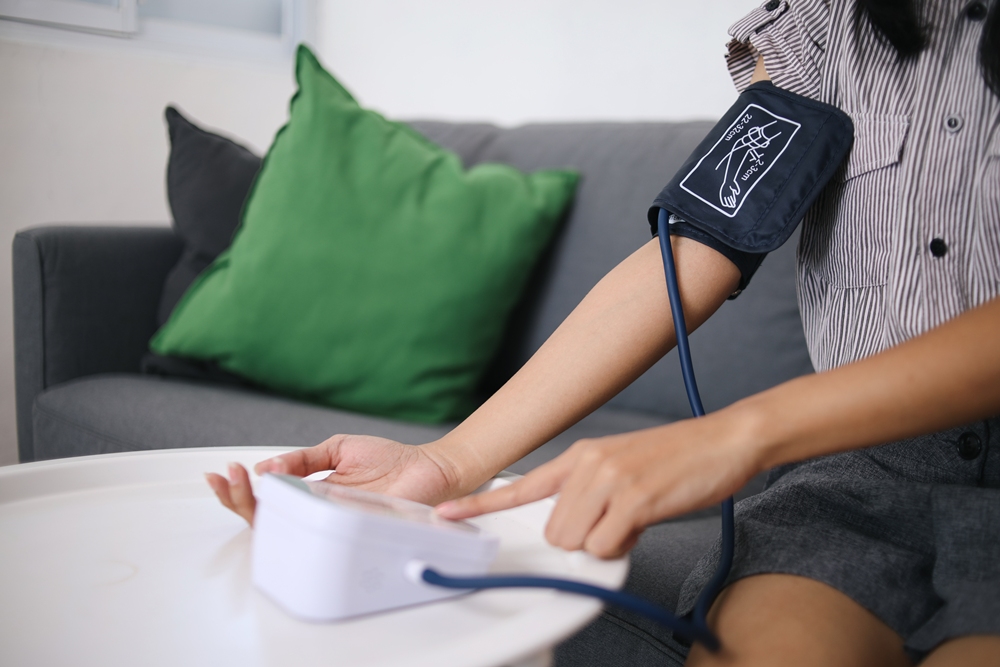
Home blood pressure checks after hypertensive pregnancy could cut the risk of heart attack, stroke and potentially early death, research suggests.
Women who regularly monitored their blood pressure in the weeks after giving birth, and had doctors tailor their medication if needed, had better functioning arteries nine months later than those who received routine care.
When the medication was adjusted to account for blood pressure changes, the women ended up with less stiff arteries, an effect researchers estimated could reduce the future risk of heart attack or stroke by 10 per cent.

Paul Leeson, professor of cardiovascular medicine who led the study, said the findings suggested that the weeks after birth provided a “powerful and often overlooked opportunity” to protect women’s future health.
“By simply monitoring blood pressure at home, new mothers with hypertensive pregnancies can protect their bodies from future damage,” he said.
High blood pressure, in the form of gestational hypertension or pre-eclampsia, where there are signs of organ damage, affects 5 to 10 per cent of pregnant women.
The condition can damage the mother’s organs and endanger the baby’s life.
Beyond the immediate threat to mother and baby, hypertension in pregnancy can raise the risk of long-term problems, with women three times more likely to develop high blood pressure and twice as likely to have heart disease later in life.
The Oxford team recruited 220 women who developed hypertension in pregnancy. All were on blood pressure medication but were due to reduce their dosage and eventually stop taking the drugs.
In the study, 108 women had standard care in which their medication was reduced based on a few blood pressure checks in the eight weeks after giving birth.
The remaining 112 women used a monitor to check their blood pressure at home each day.
They entered the readings into an app shared with doctors who, if needed, changed their medication day to day, with the aim of giving them better control of their blood pressure.
The new approach led to much better control of the women’s blood pressure, and in tests six to nine months later the women had less stiff arteries.
Stiff arteries are less effective at expanding and contracting, which can drive high blood pressure and ultimately the formation of clots that can block blood vessels and cause heart attacks and strokes.
Trials are now under way to find effective ways of rolling out blood pressure monitoring to women after hypertensive pregnancies. One option is for specialist NHS clinics to deliver the care.
Dr Sonya Babu-Narayan, clinical director at the British Heart Foundation, which funded the work, said the results highlighted a crucial window after birth when paying close attention to blood pressure could help protect women’s heart health for years to come.
“We now look forward to seeing results from larger studies with longer follow-up to see how this might save women’s lives,” she said.

Trending Posts









Trending

 Entrepreneur1 week ago
Future Fertility raises Series A financing to scale AI tools redefining fertility care worldwide
 Fertility3 weeks ago
Future Fertility partners with Japan’s leading IVF provider, Kato Ladies Clinic

 Menopause3 weeks ago
More research needed to understand link between brain fog and menopause, expert says

 Mental health2 weeks ago
Lifting weights shows mental health and cognitive benefits in older women, study finds

 News3 weeks ago
Self-employment linked to better cardiovascular health outcomes in Hispanic women

 Entrepreneur5 days ago
Women’s digital health market set to reach US$5.28 billion in 2026 – report

 Entrepreneur3 weeks ago
Flora Fertility closes US$5m seed round

 Menopause2 weeks ago
Resistance training has preventative effects in menopause, study finds