




Mental health
Researchers call for targeted menopause support for autistic women


Autistic women face serious gaps in menopause support and healthcare, with many reporting poor treatment and a lack of tailored information, a new review shows.
The analysis found many were unaware of symptoms when they began, struggled to access appropriate care and often had negative experiences with health services.
Three main issues emerged: poor knowledge of menopause, wide-ranging and sometimes severe symptoms, and limited access to treatment. Online forums and peer groups often filled the gaps left by formal healthcare.

The review, led by Dr Aimee Grant from Swansea University’s School of Health and Social Care, examined academic studies and first-hand accounts of autistic people’s menopause experiences.
Dr Grant said: “My review shows there is a real need to develop high-quality, co-produced resources to help Autistic people prepare for and navigate menopause.
“I also think that peer support models should be explored and evaluated and that healthcare professionals need to have tailored training and information to provide appropriate care for Autistic people during this life stage.”
Two studies found autistic people experienced more severe symptoms than non-autistic people, affecting work, relationships and self-confidence. Treatment was inconsistent.
Many used non-medical coping strategies, such as increased rest, while few tried hormone replacement therapy (HRT), which replaces hormones that drop during menopause.
Most described interactions with health professionals as negative.
The review also highlighted research gaps, including the impact on underserved groups within the autistic community, urogenital symptoms such as urinary incontinence, HRT use and effectiveness, and the development of tools to support autistic people during menopause.
Willow Holloway, director of Autistic UK and a study author, said: “We urgently need recognition of the different communication and access needs Autistic people have during menopause.
“It’s important that health professionals focus on the additional barriers of being Autistic, which can create a double-edged sword by adding to existing health inequalities.
“This review involved Autistic people with lived experience, and it is essential that the solutions are co-developed.”














Mental health
Dr-Julian helps deliver breakthrough mental health support for Black and ethnically minoritised mothers

A groundbreaking digital perinatal mental health pilot for Black and ethnically minoritised women has helped women access support faster, complete therapy at higher rates, and recover more successfully than national averages.
The partnership between digital tech company Dr-Julian and The Essential Baby Company Ltd within a new model of mental health care named haPPIE SHE Cares – who offer personalised support for women sharing their healthcare experiences, showed results well above NHS benchmarks for Black and ethnically minoritised women.
The pilot was created to help women who are less likely to use traditional mental health services during pregnancy and in the first year after giving birth.
By combining trusted community referrals, culturally aware support, and fast access to therapy through Dr-Julian’s online and virtual care platform, the programme delivered standout results.
Every woman who joined the pilot started therapy, 90 per cent completed treatment, and 74 per cent recovered; well above the NHS benchmark of around 52 per cent.
Women referred through community organisations accessed support in just one day on average, compared with around 21 days through many standard services.
Even the programme’s regular referral route reduced waits to 13 days.
The findings come as NHS leaders continue to focus on maternity inequalities and unequal access to mental health care.
Black and ethnically minoritised women can face barriers including stigma, language needs, lack of trust in services, childcare pressures, and difficulty navigating complex systems.
The haPPIE SHE Cares model was designed to break down those barriers by working with trusted community groups, offering culturally informed support, and where possible matching women with therapists who understood their background or language.
Gemma Poole for The Essential Baby Company said: “Too many women who need help feel unseen, unheard or unable to get support when they need it most.
“This project shows that when services are built around trust, culture and community, women engage, recover and thrive.
“This early success could provide a blueprint for reducing inequalities in maternal mental health care across the UK. Behind every statistic is a mother who felt supported, a family that benefited and a woman who found her voice.
“Mental healthcare must work for every community. This partnership shows that when high-quality therapy is combined with culturally responsive support, outcomes improve and women get help faster.
We are proud to have provided the therapists, virtual care systems and digital pathways behind this programme. We believe this model could help NHS organisations nationwide cut waiting times and improve recovery rates.”
Women who took part described the programme as life-changing, saying it reduced isolation, gave them confidence speaking with healthcare professionals, and made them more willing to seek help.
With growing pressure on maternity and mental health services, leaders behind the project say the pilot offers a practical solution that improves care while helping cut long waiting lists.
Plans are now being explored to expand the model through training, regional partnerships, and future funding.
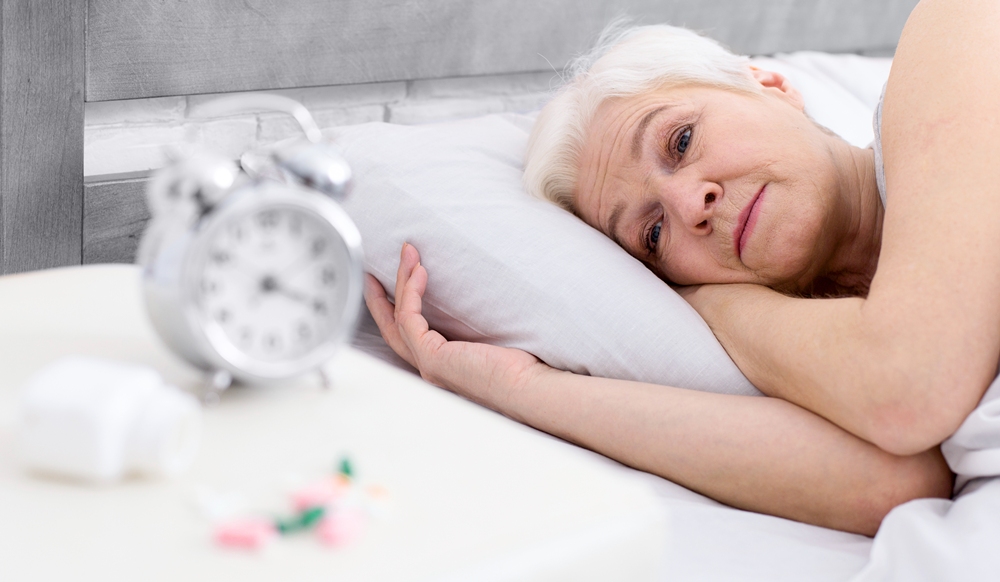
Poor sleep may signal higher Alzheimer’s risk in older women with greater genetic risk, a study suggests.
Older women who reported poorer sleep also showed greater memory difficulties and more Alzheimer’s-related brain changes, the study found.
That pattern appeared only in women with higher genetic risk, suggesting sleep complaints may be a stronger warning sign for some women than for others.
Researchers examined 69 women aged 65 years and older taking part in the Women Inflammation Tau Study, an ongoing project focused on ageing and Alzheimer’s disease risk.
Participants completed questionnaires about their sleep quality, underwent memory testing and received brain scans measuring tau. Tau is a protein that accumulates abnormally in Alzheimer’s disease.
The study found that poorer self-reported sleep was associated with worse visual memory performance and greater tau accumulation in brain regions affected early in Alzheimer’s disease, but only among women with higher genetic risk.
Women with lower genetic risk did not show the same relationship between sleep complaints, memory and tau build-up. The finding was specific to visual memory and was not observed for verbal memory.
Researchers said the results add to growing evidence that sleep disturbances and Alzheimer’s disease may reinforce one another over time.
Previous studies have suggested that disrupted sleep can contribute to the build-up of abnormal tau proteins, while Alzheimer’s-related brain changes may also interfere with healthy sleep patterns.
Because women account for nearly two thirds of Alzheimer’s cases and frequently report poorer sleep quality than men, the researchers said sleep may represent an important and potentially modifiable risk factor in older women.
The authors noted that self-reported sleep assessments are inexpensive and easy to administer, raising the possibility that sleep complaints could help identify people who may benefit from closer monitoring or early intervention.
They also suggested that improving sleep could become a target for future Alzheimer’s prevention strategies, particularly for women at elevated genetic risk.












 Opinion4 weeks ago
What Maternal Mental Health Month reveals about where postpartum support actually breaks down

 News3 weeks ago
NIH Grant terminations disproportionately impact minority scientists, research finds

 Hormonal health5 days ago
Perimenopause misinformation ‘putting women at risk’

 Adolescent health3 weeks ago
WUKA brings Period-Positive Pool Party to London Aquatics Centre to keep girls swimming through puberty

 Insight3 weeks ago
PCOS renamed after decade-long campaign to end ‘cyst’ misconception

 Events4 weeks ago
WHIS 2026 unveils agenda and first speakers for the leading women’s health summit
 Menopause3 weeks ago
CBT shows promise for menopause insomnia and hot flashes

 Insight4 weeks ago
Online abuse and deepfakes ‘pushing women out of public life’
1 Comment