




News
US start-up lands US$25m investment for female incontinence digital treatment
The device uses motion sensor technology to help women strengthen their pelvic floor

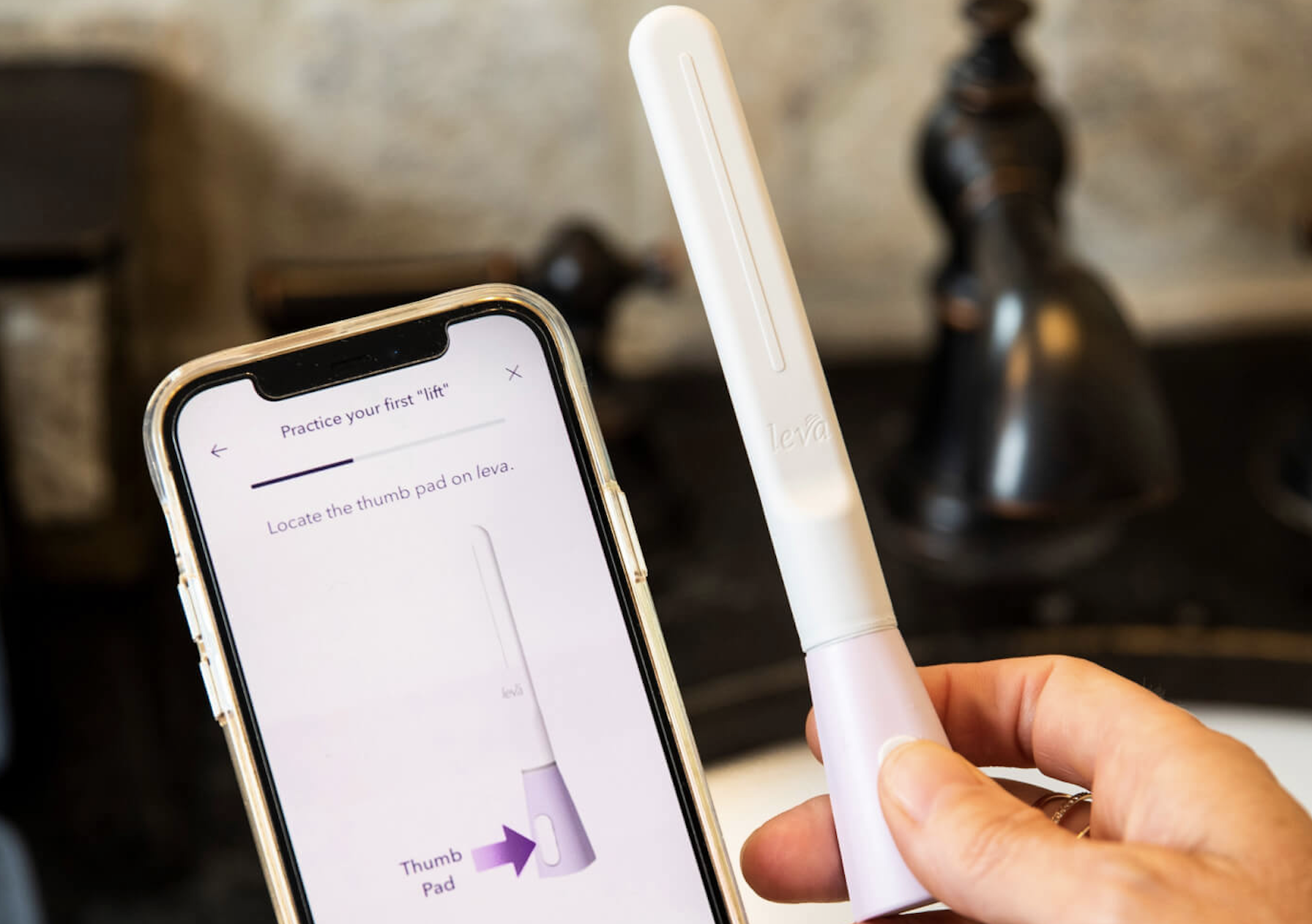
The US medical device company Axena Health has secured a US$25m investment to expand access to its at-home urinary incontinence treatment.
The Massachusetts-based start-up has developed a prescription digital therapeutic to treat stress, mixed and mild-to-moderate urgency urinary incontinence (UI) and chronic faecal incontinence (FI) and help women train and strengthen their pelvic floor muscles.
According to the company, the Leva System uses a vaginal motion sensor connected to a smartphone app and offers “precise visualisation” of pelvic movement in real-time to track progress and improve symptoms.
UI and FI are progressive medical conditions that, left untreated, can have a severe impact on a woman’s quality of life and are associated with significant negative comorbidities.
“We’re intently focused on combining novel technology, rigorous, peer-reviewed data and excellence in patient support to shine a light on what remains a vastly underserved area of women’s health,” said Axena Health’s chief medical officer, Dr Samantha Pulliam.
“The Leva Pelvic Health System can help women ease the burden of incontinence at home, on their own schedule, and allow them to re-engage with the activities that make them feel whole.”
The company says the US$25m investment from AXA IM Alts will support and expand access to the its digital solution.
Zina Affas Besse, deputy head of healthcare private equity at AXA IM Alts, said: “We believe the Leva Pelvic Health System combines high-quality clinical data with novel technology that harnesses the vast opportunity of digital health to offer a breakthrough, at-home treatment for incontinence.
“Through our Global Healthcare Private Equity Strategy, AXA IM Alts is supporting innovative, affordable healthcare that can provide more accessible solutions to global health challenges.
“Female incontinence is a significant unmet health need for millions of women worldwide and Axena Health will be uniquely able to address this need.”
Axena Health CEO, Eileen Maus, said: “We’re grateful to extend this solution globally, where an even greater number of women are silently enduring the significant medical, social and economic effects of incontinence.
“We look forward to working with Dr Besse and the AXA IM Alts team to support what we believe is a first-of-its-kind commitment to bring an affordable digital health treatment for incontinence to women regardless of geography.”
Shacey Petrovic, board member of Axena Health, added: “Urinary and faecal incontinence impose an enormous physical, psychological and economic toll for millions—probably hundreds of millions—of women worldwide.
“With AXA IM Alt’s support, the Leva device is now positioned to help ease this burden and improve outcomes for women dealing with these onerous, often debilitating conditions with an easy to use, effective technology.”











Women using menopausal hormone therapy had a lower dementia risk, with oestrogen-only users showing fewer Alzheimer’s-related brain changes in a recent study.
Researchers stressed that the findings do not show that hormone therapy prevents dementia, but found women using oestrogen-only treatment had fewer biological signs linked to Alzheimer’s disease.
The observational study also found that women using this form of hormone therapy were less likely to receive a clinical dementia diagnosis.

The study combined clinical data with biomarkers and evidence from brain tissue collected after death to build a more detailed picture of the relationship between hormone therapy and Alzheimer’s-related changes.
The findings contrast with several previous studies reporting that menopausal hormone therapy increases dementia risk.
Dr Hadi Hosseini, associate professor of psychiatry and behavioural sciences at Stanford University in the US and senior author, said: “Our study is unique in that we looked at all the standards of Alzheimer’s diagnosis, including the gold-standard outcome: Alzheimer’s-associated hallmarks in autopsied brains.”
Hosseini said many conditions can affect memory and that clinical diagnoses are not always accurate. Examining brain tissue allows researchers to look directly for the defining biological features associated with Alzheimer’s disease.
Researchers examined medical records from 21,462 women taking part in two large US studies.
They looked only at women who used oestrogen-only therapy because previous studies indicated that treatment combining oestrogen and progestin may increase dementia risk.
This group was compared with women who reported no use of menopausal hormone therapy.
The records included data from 258 brain autopsies of women who had reported using oestrogen-only menopausal hormone therapy and 2,701 autopsies from women who had not used hormone therapy.
After adjusting for factors including age, women who took hormone therapy had a 35 per cent lower chance of showing biological signs of Alzheimer’s disease than those who did not use hormone therapy.
Hormone therapy use was also associated with a 39 per cent lower risk of receiving a clinical dementia diagnosis and a reduced risk of memory problems or declining functional abilities.
Dr Tom Blackmore, research programmes manager at Alzheimer’s Research UK, said: “Dementia has been the leading cause of death for women in the UK for over a decade, yet we still don’t fully understand why women are more likely to be affected by the condition than men.
“Understanding how hormones, menopause and ageing influence brain health is an important area of dementia research.
“While these findings are interesting, this study can only show an association and cannot tell us whether hormone therapy itself reduced dementia risk.
“Many factors influence a person’s likelihood of developing dementia, and women who received hormone therapy may differ from those who did not in ways that also affect their long-term brain health.”
In current standard practice, oestrogen-only therapy is prescribed to people who have undergone a hysterectomy because of the increased risk of endometrial cancer.
Blackmore also said the study focused exclusively on women taking oestrogen-only hormone therapy, which “differs substantially from how hormone replacement therapy is typically used today.”
Although early studies suggested menopausal hormone therapy might help protect menopausal women from dementia, later research produced inconclusive results.
A large analysis published in 2003 suggested the opposite, finding that oestrogen-plus-progestin formulations appeared to increase dementia risk, particularly when started at an older age.
Hosseini said: “There have been a lot of conflicting findings about MHT’s [menopausal hormone therapy’s] effects on Alzheimer’s disease outcomes.”
He added: “Different studies may have involved different age ranges of initiating MHT.”
Hosseini said studies may also have examined different clinical outcomes and biomarkers, combined different hormone therapy formulations or looked at different routes of administration and treatment durations.
Blackmore added that the findings “are not a reason for women to start or stop hormone replacement therapy with the aim of reducing dementia risk.”
He added: “Instead, the study provides valuable clues about the biology underlying dementia and highlights the need for more research into women’s brain health.
“Larger and more diverse studies will be needed to determine whether hormone-based treatments could play any role in reducing dementia risk.”
According to Alzheimer’s Research UK, an estimated 982,000 people are living with dementia in the UK, with around 65 per cent of those affected being women.


Health visitor support may help women who quit smoking during pregnancy remain smoke-free after giving birth, research suggests.
The BabyBreathe programme was designed to help women who stopped smoking before or during pregnancy avoid returning to smoking after childbirth.
The programme was funded by the National Institute for Health and Care Research and tested by a team led by the University of East Anglia.
Professor Michael Ussher of the University of Stirling’s Institute for Social Marketing and Health was a senior investigator on the study and led recruitment at two trial sites.
Ussher said: “This study is the first to show that an intervention focussing on support from a health visitor may help women avoid returning to smoking.
“These findings are important as many women stop smoking in pregnancy but then return to smoking soon after their baby is born.”
BabyBreathe provides one-to-one support from trained health visitors alongside digital tools, text message support, a dedicated website and app and a relapse-prevention kit sent to families after birth.
Women who received the intervention as intended, with support from trained health visitors, were significantly more likely to remain smoke-free 12 months after giving birth than those without health visitor support.
A total of 886 women from England and Scotland who had successfully stopped smoking before or during pregnancy took part in the large-scale randomised controlled trial.
Participants were randomly assigned to receive either BabyBreathe or usual care, which offered no advice or support aimed at preventing smoking relapse.
BabyBreathe was not delivered as intended to around one in five participants because of health visitor workforce pressures, missed appointments or administrative problems.
Health visitors provided tailored one-to-one advice and support to women in the intervention group towards the end of pregnancy and immediately after their baby was born.
The support included advice on alternatives women could try if they experienced urges to smoke again, as well as advice for partners and family members and access to digital resources including the BabyBreathe app and website.
A relapse-prevention kit was also posted to women immediately after their baby was born.
Support continued for up to 12 months after childbirth during routine health visitor appointments.
The intervention followed more than a decade of research and development involving women, families, health professionals and researchers who worked together to design, develop and test the support package.
Among participants who received the intervention as intended, 57.6 per cent remained smoke-free after 12 months, compared with 49.9 per cent of those receiving usual care.
Researchers said the findings suggest health visiting services could play a significant role in providing consistent relapse-prevention support and helping more mothers remain smoke-free after giving birth.
Lead researcher Professor Caitlin Notley, professor of addiction sciences at UEA’s Norwich Medical School, said: “Women of childbearing age who quit and stay non-smoking can reduce their risks of developing a smoking-related disease to almost the same level of risk as non-smokers.
“There are also great benefits for babies and children brought up by parents who do not smoke in avoiding exposure to second-hand smoke, and in helping to prevent the next generation from taking up smoking.
“Until now, health visitors had no training on smoking relapse prevention.
“This meant that when women had made the extremely important and difficult health behaviour change of quitting smoking during pregnancy, no one picked up on this and gave them positive praise and support.
“This new approach extends the intensive support for initially quitting smoking that pregnant women are offered, going one step further to help women to stay smokefree in the long term.”
Researchers noted several limitations that affected the primary analysis, including incomplete delivery of BabyBreathe and low engagement with some parts of the programme.
The participant group was also more highly educated and less socioeconomically deprived than the wider population, which may have affected the programme’s overall effectiveness and limit how broadly the findings can be applied.
The Institute of Health Visiting worked with UEA on the BabyBreathe study.
Vicky Gilroy, director of innovation and research at the Institute of Health Visiting, said: “Health visitors and their teams are uniquely placed to support women in preventing smoking relapse as part of their universal offer.
“It has been a privilege to contribute to the BabyBreathe study and help develop the evidence of the importance of their role. The findings reinforce the need for all health visitors to receive training in this important area.”

Women with endometriosis say menstrual leave and flexible working would help most, as research estimates yearly income losses of €1,757 (£1,502).
Pain and fatigue were linked to more frequent work absences and reduced job performance.
The first large-scale study of its kind in Central and Eastern Europe estimated that women with the condition lose an average of €1,757 in income each year, roughly equal to one month’s average salary in Hungary.
The estimate covers income lost through work absences and does not include reduced productivity while at work or healthcare costs.
Researchers at Semmelweis University analysed data from 566 women with endometriosis and 447 women without the condition.
Using internationally validated questionnaires, they assessed work productivity, absenteeism and work ability.
Women with endometriosis lost an average of 12.7 working hours over four weeks because of health-related problems, compared with 5.7 hours among women in the control group.
Based on the hours missed, researchers estimated an average annual income loss of €1,757 for each affected woman.
Dr Dóra Balogh, assistant professor in the Department of Obstetrics and Gynaecology at Semmelweis University and senior author, said: “The impact of endometriosis is not only a health issue but also a major social and economic one.
“The condition affects women during one of the most active stages of their lives, meaning it can influence employment, career development, and long-term financial security.”
Endometriosis affects about 10 per cent of women of reproductive age worldwide.
It is a chronic gynaecological condition in which tissue similar to the lining of the womb grows outside the womb, causing chronic pelvic pain, painful periods, fatigue and, in some cases, infertility.
Symptoms often persist for many years before the condition is diagnosed.
The study found that 42 per cent of women with endometriosis had poor work ability, compared with 17.9 per cent of women in the control group.
Poor work ability means a person’s health makes it harder to perform their job and increases the risk of prolonged work disability or leaving the workforce.
Dr Dominika Miklós, resident physician in the Department of Obstetrics and Gynaecology at Semmelweis University and first author, said: “The most surprising finding was that nearly half of the women with endometriosis fell into this category.
“Without appropriate support, the condition may not only make day-to-day work more difficult but also threaten women’s ability to remain in the workforce over the long term.”
Researchers also found that many workplaces were not adequately prepared to support employees with endometriosis.
Some 54 per cent of respondents said their employer had little or no knowledge of the condition, while only 17 per cent believed their workplace was sufficiently informed about it.
Participants said they would most value menstrual leave, flexible working hours, remote or hybrid working and greater understanding and support from employers.
Some European countries, including Spain and Portugal, already allow menstrual leave in certain circumstances.
The research formed part of the international FEMaLe, or Finding Endometriosis with Machine Learning, programme, launched in 2020.
At Semmelweis University, the project is led by Dr Attila Bokor, associate professor in the Department of Obstetrics and Gynaecology.
The programme aims to improve understanding of endometriosis, promote earlier diagnosis and investigate its health, social and economic impact.
Researchers said it was the first comprehensive study in Central and Eastern Europe to examine work productivity, work ability and workplace support at the same time.
The findings were consistent with studies from Western Europe and Australia, suggesting the effect of endometriosis on working life is similar across regions.
Researchers concluded that flexible working arrangements and better-informed employers could help women with endometriosis remain in the workforce.











 News1 week ago
UK femtech investment surges 194% in a decade, research finds

 Entrepreneur1 week ago
TidalSense raises £14m to expand five-minute COPD test across NHS

 Wellness2 weeks ago
Cancer patient receives ‘landmark’ treatment in world-first

 News1 week ago
Cross-Border Impact Ventures raises US$58m for women and children’s health

 Insight2 weeks ago
Women urged to be wary of menopause misinformation on social media

 News1 week ago
Cultural stigma is a barrier to menopause help, black women say

 Motherhood2 weeks ago
One in eight mothers diagnosed with gestational diabetes, research finds

 Hormonal health1 week ago
Menstrual data is missing a critical layer: The mind