




Spinout awarded £1.75m for AI-powered fetal ultrasound trial
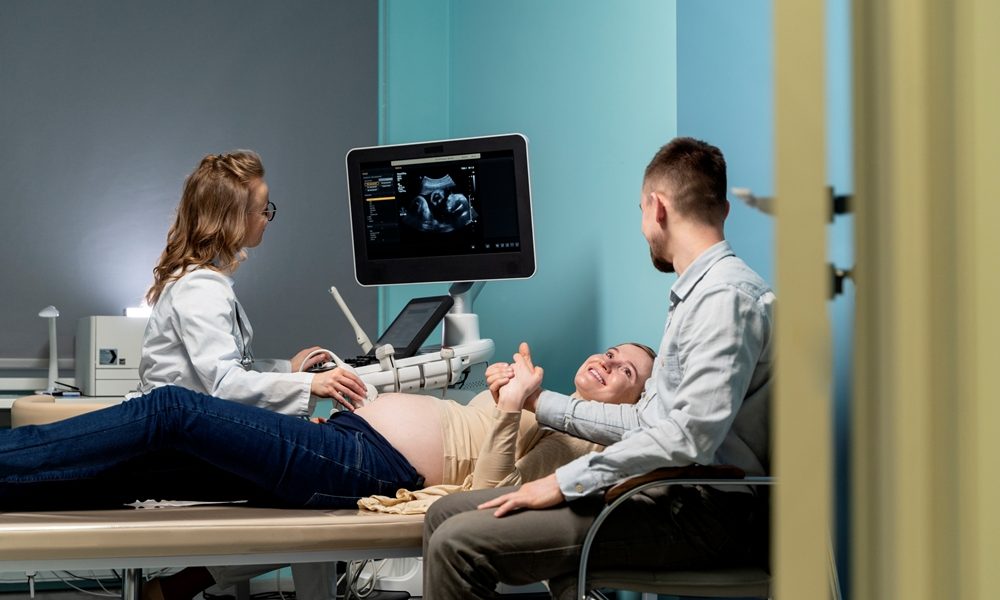
Fraiya Ltd has secured £1.75m to test how artificial intelligence could improve fetal ultrasound screening across several NHS sites.
The National Institute for Health and Care Research (NIHR) grant will support a 27-month trial of AI-assisted anomaly detection in pregnancy scans.
If successful, the tool could be integrated into NHS services and shape national standards for anomaly screening.
Anomaly detection refers to identifying potential birth defects or abnormalities during routine ultrasound.

King’s College London spinout Fraiya, led by professor Reza Razavi and Dr Jacqueline Matthew, will test the technology across four NHS trusts with more than 9,500 participants.
Congenital abnormalities affect about two per cent of UK pregnancies. Current detection rates vary widely across the country, with some cases missed.
The trial, beginning in November 2025, will compare standard ultrasound with AI-supported screening at Guy’s and St Thomas’, Lewisham and Greenwich, Liverpool Women’s and Royal Devon University Healthcare trusts.
The system will automate image capture and measurement, aiming to cut scan times and improve accuracy. It will also link to a remote review service, allowing specialists to check results.
Dr Jacqueline Matthew is co-founder of Fraiya, clinical research fellow and sonographer at the School of Biomedical Engineering & Imaging Sciences.
She said: “This work is about more than faster scans; it’s about giving clinicians and parents clearer information at a pivotal moment.
“By combining AI with sonographer expertise, we’ve shown it’s possible to improve both accuracy and the experience of pregnancy screening.
“We’re proud to see this research move into practice, and grateful to the families, clinicians and researchers who made it possible.”
The project involves public and patient input through an advisory group of NHS clinicians, advocacy groups and people with experience of antenatal screening.
A health economic evaluation, led by Dr Anna Barnes at the King’s Technology Evaluation Centre (KiTEC), will analyse NHS resource use, potential cost savings and long-term patient outcomes to support wider adoption.
The grant follows earlier trials showing AI’s potential to improve workflow and reduce cognitive load for sonographers.
Fraiya is also part of the London Institute for Healthcare Engineering’s MedTech Venture Builder programme, aimed at bringing new medical AI into practice.
Professor Razavi is co-founder of Fraiya and professor of paediatric cardiovascular science at the School of Biomedical Engineering & Imaging Sciences.
Razavi said: “Although many AI tools exist for imaging, very few are evaluated prospectively.
“We are excited to run this large randomised control trial of FraiyaScan and FraiyaDetect to see the clinical and economic impact in practice.”



Newsletter
Sign up for free weekly updates
The latest femtech news, research and investment, straight to your inbox.




