




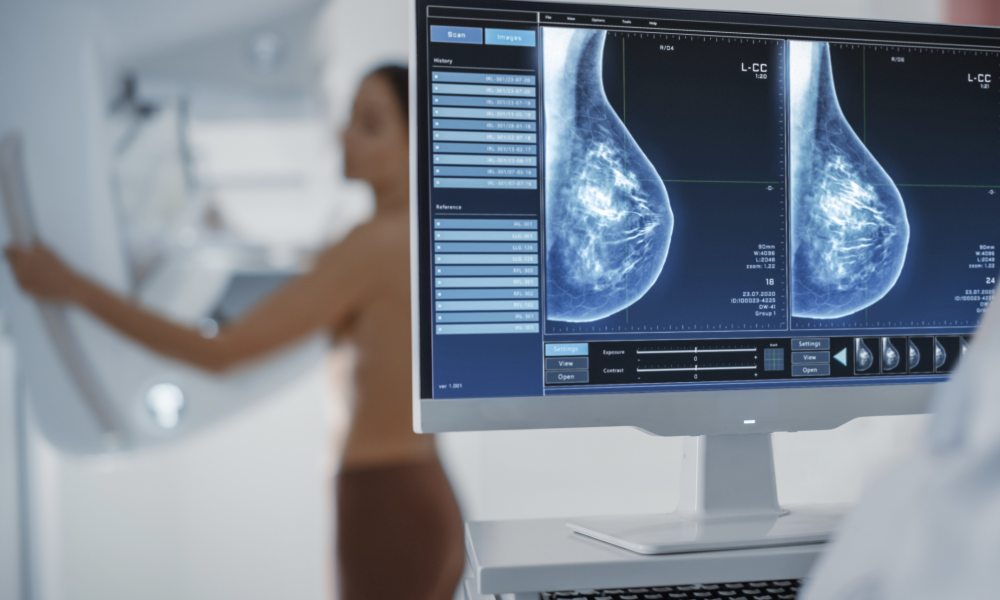
A US diagnostic imaging company has launched a new breast cancer detection programme to empower women to take control of their health.
Radiology Imaging Associates, a division of RadNet, has announced the implementation of its new Enhanced Breast Cancer Detection (EBCD) service which works alongside a patient’s annual breast screening regimen.
According to the developers, EBCD presents a significantly improved level of accuracy in breast cancer detection.
For an additional fee, patients can receive a screening mammography service including the application of Saige-Dx, a mammography diagnostic aid software, plus an additional AI-driven review applied to certain suspicious exams and findings, a personalised lifetime risk assessment for breast cancer and a support line.

Saige-Dx, an AI tool developed by Deep Health, aims to help radiologists identify the presence of potentially cancerous lesions in screening mammograms earlier and interpret them with more efficiency and accuracy.
Gregory Sorensen, founder of DeepHealth and president of RadNet’s AI division, added: “Saige-Dx is a sophisticated, AI deep-learning algorithm that has been trained on more data than any one radiologist would see in a lifetime.
“Saige-Dx’s pivotal study showed that radiologists who used Saige-Dx improved their performance, something no other mammography AI tool has demonstrated.
“The technology analyses each mammogram in detail, and if suspicious findings are present, the AI identifies the lesion in the exam for the radiologist and categorises the level of suspicion.”
Jacqueline Holt, director of breast imaging at RadNet, said: “In medicine, the ability to see and detect disease with more certainty is a game-changer, driving better patient outcomes.
“We are using AI to detect breast cancers that the human eye might not notice. In my experience, the addition of these proven, FDA-cleared algorithms has allowed us to detect hundreds of cancers that otherwise would not have been found at the time of screening.”
In the past, many breast screening mammography patients have described a desire for more information about the reports and follow-ups they receive after their annual mammogram, including their lifetime risk of developing breast cancer.
While a breast density score, currently required in 38 states, is one factor in a patient’s lifetime risk for breast cancer, multiple factors can increase risk.
The EBCD service aims to address questions about breast cancer risk by providing patients with personalised reports and specialist support.
Dr Howard Berger, RadNet president and CEO, says the service is one of the most exciting and important endeavours the company has pursued.
“AI is dramatically improving our detection capability and overall quality. This serves as another example of how RadNet continues to lead radiology forward.”


Newsletter
Sign up for free weekly updates
The latest femtech news, research and investment, straight to your inbox.




