




Wellness
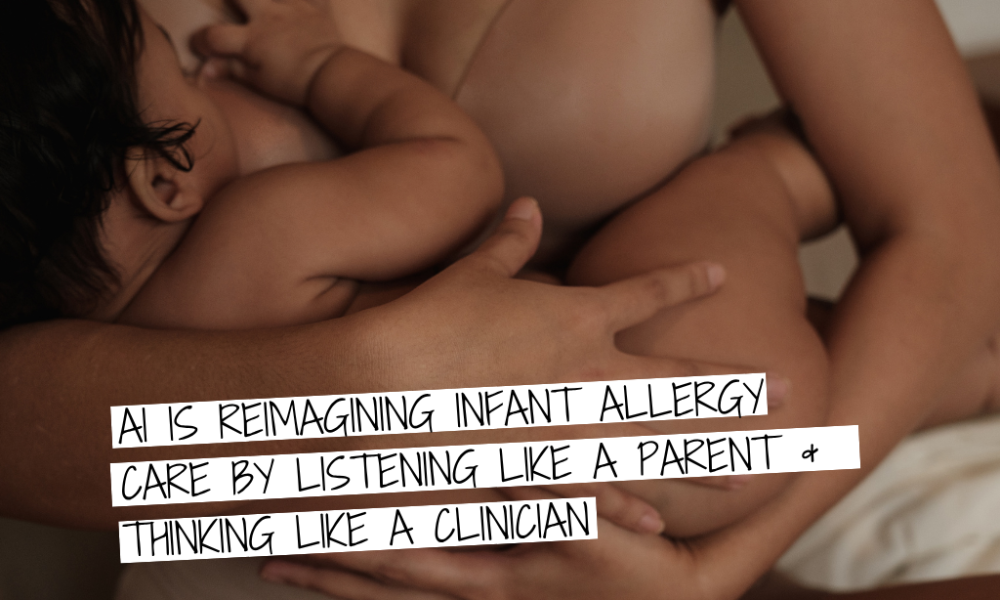
Free to Feed launches AI-powered allergy ally with Ema
By Morgan Rose, CNM, WHNP-BC, IBCLC | Chief Science Officer, Ema
In a bold stride toward reshaping paediatric allergy care, Free to Feed has launched a groundbreaking new partnership with Ema, the first AI platform built for women’s health.
This collaboration is more than technology; it radically improves how we identify and support food-allergic children through care that’s smarter, more personal, and emotionally attuned to the families navigating it.
Dr Trillitye Paullin, molecular biologist and co-founder of Free to Feed, said: “Partnering with Ema has been transformative for Free to Feed.

“Ema’s cutting-edge AI capabilities have enabled us to deepen our understanding and enhance our approach towards managing infant allergies effectively.
“With Ema’s support, we are addressing the symptoms directly while empowering families and clinicians with the knowledge to make informed decisions. It’s a game changer.”
The collaboration centres on an ambitious capstone project titled “Improving Outcomes for Food-Allergic Children,” led by Dr Trill and supported by the Stanford University Data Science for Social Good Program.
Alongside Stanford research assistant Miguel Esteban Villarreal Rodriguez, MD, the team is tackling one of pediatric health’s most frustrating disconnects: the gap between what parents report and what’s formally diagnosed.
That gap is starkly highlighted by the fact that non-IgE-mediated reactions, which largely impact children under 5, didn’t get their own ICD-10 codes until 2017 despite case reports dating back to the 1960s.
Ema brings to this partnership a proprietary AI trained on the real language, symptoms, and care experiences of women across life stages.
But Ema isn’t just built for women, she’s built for how women care.
Because when a child struggles with food allergies, it’s the mother who carries the invisible load: tracking symptoms, managing anxiety, navigating dismissals, and advocating for answers.
That’s why Free to Feed chose Ema to power this next phase.
Her hybrid language model delivers information and adapts to the emotional, cognitive, and logistical realities families face.
She meets parents where they are, and meets mothers as they are: the primary interpreters of paediatric health.
Through Free to Feed’s expansive data on infant food reactivity, Ema is helping build a powerful new AI-driven tool designed to:
- Collect and interpret parental reports of food allergy symptoms
- Prepare for integration through a planned pilot study with pediatric practices through Stanford
- Educate providers on emerging insights, especially around underrecognized non-IgE-mediated allergies
- Support parents with personalized, empathetic decision guidance
The project is already underway with over 500 families surveyed through the Stanford University Hoover Institution Veteran Fellowship Program, with clinical integration slated to begin next.
But its real promise lies in what comes next: improved provider awareness, better identification of food allergies, and ultimately, healthier outcomes for children.
Amanda Ducach, CEO of Ema, said: “This collaboration isn’t just academic.
“It’s a glimpse into what pediatric care can look like when we build around families’ real experiences, starting with how they talk, worry, and decide.”
Free to Feed’s mission has always been to give parents clarity in the chaos of infant allergies.
With Ema, that mission now includes a new kind of ally: one that’s smart, empathetic, and built to scale care that feels deeply human, while the Free to Feed provider network remains on hand to provide further support as needed.
News
WEC Chair calls out Health Minister’s delay on banning BBLs and other harmful cosmetic procedures

WEC chair Sarah Owen has criticised delays over a ban on high harm cosmetic procedures, including liquid BBLs.
The Women and Equalities Committee has published a letter from health minister Karin Smyth after the government missed the 18 April deadline to respond to the committee’s report on cosmetic procedures.
The report, published on 18 February, recommended that high harm procedures such as liquid Brazilian butt lifts, known as BBLs, should be banned immediately without further consultation.
MPs said the government is “not moving quickly enough” in introducing a licensing system for non-surgical cosmetic procedures and “should accelerate regulatory action”.
They also warned that “this lack of timely action is fostering complacency in self-regulation” within the industry.
In her letter, Smyth said the Department of Health and Social Care had “taken the decision to first of all focus on introducing legal safeguards for the cosmetic procedures posing the highest risks and I can confirm that we plan to consult on draft regulations in June”.
The letter added:
“Our intention is to issue a formal government response to the WEC report, once our consultation setting out our proposed approach and underpinning legislation is published.
“I acknowledge the concerns around the government’s pace of delivery in this area but, as you will appreciate, this is a complex area of policy and striking the balance between increased patient safety, placing new requirements on businesses and introducing proportionate and enforceable regulation is challenging.
“I recognise that regulation has not kept pace with the expansion of the aesthetics industry and, on that basis, I can assure you that we are committed to implementing licensing in the current parliament.”
Owen, chair of the Women and Equalities Committee and Labour MP, said:
“Further consultation and delay on clamping down on high harm procedures such as liquid BBLs is unacceptable. It allows unscrupulous people to continue to put women at risk and lets down those who have lost loved ones following these practices or who have come to serious harm themselves.
“As WEC’s report warned back in February, procedures that are deemed high risk such as liquid BBLs and liquid breast augmentations, which have already been shown to pose a serious threat to patient safety, should be banned immediately.
“While it is positive to hear a licensing system for non-surgical cosmetic procedures will be introduced within this Parliament, this issue requires faster regulatory progress, particularly in high harm areas, and the Government is not moving quickly enough.
“The Committee previously heard a powerful and shocking testimony from a woman who developed sepsis after having a liquid BBL. Her experience and those of many others provides clear evidence of the need to tackle this evolving wild west.”
A liquid BBL is a non-surgical procedure intended to alter the shape of the buttocks.
Sepsis is a potentially life-threatening response to infection that can lead to organ damage if not treated quickly.
Pregnancy
Pregnant women may reduce key health risk through more light exercise, study finds

Light exercise and less sitting may reduce pregnant women’s risk of serious blood pressure complications, according to a new study.
Researchers have proposed a daily activity and sleep guide that they say was linked to a nearly 30 per cent lower risk of hypertensive disorders of pregnancy.
The suggested pattern includes fewer than eight hours of sedentary time, at least seven hours of light physical activity, around 22 minutes of more intense activity and nearly nine hours of sleep.
The University of Iowa-led study examined the daily behaviours of 470 pregnant women across all stages of pregnancy.
Participants wore monitors that measured physical activity over 24-hour periods and recorded how long they spent asleep.
Hypertensive disorders of pregnancy include chronic high blood pressure, gestational hypertension and pre-eclampsia.
Gestational hypertension is high blood pressure that develops during pregnancy, while pre-eclampsia is a potentially serious condition involving high blood pressure and signs that organs may be affected.
Sedentary behaviour means being mostly inactive, such as sitting or lying down.
Light physical activity can include casual walking, moving around the home or standing.
Moderate to vigorous activity includes movement such as brisk walking, where breathing and heart rate increase.
Kara Whitaker, associate professor in the department of health, sport, and human physiology at Iowa and corresponding author of the study, said: “We are identifying the optimal composition of movement behaviours across the day associated with the lowest risk of developing HDP and the most improved health outcomes.
“This blueprint holds for each and every trimester of pregnancy.”
Study participants were enrolled at sites in Iowa City, Pittsburgh and Morgantown, West Virginia.
The women wore activity and sleep monitors for at least one week during each trimester of pregnancy.
Four in five participants were non-Hispanic white and nearly a quarter lived in rural areas.
The data showed a steep rise in risk among pregnant women who were sedentary for more than 10 hours a day.
Women who increased light physical activity to at least four hours a day reduced their risk of hypertensive disorders of pregnancy to 15 per cent from 30 per cent.
Whitaker said: “Just moving around more seems to have significant health benefits.
“And I think it also may be a more feasible target for women who are pregnant who are not exercising regularly.”
The researchers said they were surprised that longer durations of moderate to vigorous physical activity did not appear to provide additional benefit.
Sleep beyond a certain duration also did not appear to bring major further benefits.
Whitaker said: “Through this study, we are providing evidence that reducing sedentary behaviour and engaging in light physical activity are important, and maybe more important, when it comes to pregnancy and health.”
The findings may be relevant beyond pregnancy because clinical research has shown that women who develop hypertensive disorders of pregnancy are more than twice as likely to develop heart disease later in life.
Cardiovascular disease includes conditions affecting the heart and blood vessels, such as heart disease and stroke.
Whitaker said: “We know that cardiovascular disease is the number one killer of women, and if we can intervene in pregnancy and prevent women from developing a hypertensive disorder of pregnancy, we are putting them on a better trajectory, away from cardiovascular disease and toward more optimal cardiovascular health.”
The study was published online on June 10.
A second study, published online on May 27, looked more closely at the ratio and type of sedentary behaviour and light physical activity linked to a lower risk of hypertensive disorders of pregnancy.
Whitaker is a lead co-author on that study.
Co-authors in the June 10 study include Alex Crisp, Jaemyung Kim, Karina Smith, Donna Santillan, Mark Santillan and Bridget Zimmerman, from Iowa; Jacob Gallagher, from Iowa State University; Melissa Jones, from Oakland University in Michigan; Bethany Barone Gibbs, Katrina Wilhite, Alexis Thrower and Iqra Sheikh, from West Virginia University; and Sabera Rahman, Janet Catov, Christopher Kline and Maisa Feghali, from the University of Pittsburgh.
The National Institutes of Health, the University of Iowa Institute for Clinical and Translational Science, the University of Pittsburgh Clinical and Translational Science Institute and the West Virginia Clinical and Translational Science Institute funded the research.
Motherhood
Expectations about sleep affect postpartum sleep quality, study finds

Pregnant women’s expectations about postpartum sleep may predict sleep quality after birth, outweighing prior sleep and psychiatric history, a study suggests.
The findings suggest attitudes and beliefs about sleep during pregnancy could be a modifiable risk factor for postpartum sleep concerns.
They also indicate that, among women expecting the poorest sleep, higher postpartum anxiety may further worsen sleep quality.
Sammy Dhaliwal, lead author is clinical health psychologist and research fellow in the department of obstetrics and gynaecology at the Perelman School of Medicine at the University of Pennsylvania.
Dhaliwal said: “Most pregnant women in our sample anticipated poor postpartum sleep before it occurred, and it was striking that those expectations predicted worse sleep outcomes even after accounting for factors such as prior sleep disorders, psychiatric history, and number of previous births.
“This suggests that attitudes and beliefs about sleep during pregnancy may represent a modifiable target for early intervention before postpartum sleep problems emerge.”
Sleep disturbance affects an estimated 60 to 80 per cent of postpartum women and is linked to a higher risk of depression and anxiety.
Researchers said it is often regarded as an expected part of life after childbirth rather than a health issue that may be addressed earlier.
The study enrolled 432 pregnant women at about 24 weeks of gestation, meaning around 24 weeks into pregnancy.
Participants completed measures of their expectations about postpartum sleep, current sleep quality using the Pittsburgh Sleep Quality Index, and mood using validated depression and anxiety scales.
Assessments were repeated at six, 12 and 24 weeks postpartum.
A subset of 49 women also wore wrist actigraphy devices at six to eight weeks postpartum.
Actigraphy uses a wearable device, similar to a watch, to estimate sleep and wake patterns based on movement.
The results showed that 70 per cent of pregnant women, or 301 of 432 participants, expected poor sleep in the postpartum period.
Researchers found that predicted sleep disruption during pregnancy was a significant predictor of postpartum sleep concerns.
Among first-time pregnant women without prior health concerns, those who expected greater sleep disturbance had significantly more disrupted sleep after birth, measured by both actigraphy and self-report.
Among women who expected the worst sleep quality, higher postpartum anxiety significantly worsened both measured sleep and self-reported sleep, independent of anxiety levels during pregnancy.
Dhaliwal said the findings point to two possible areas for intervention: addressing sleep-related beliefs during pregnancy and treating postpartum anxiety.
Dhaliwal said: “Postpartum sleep disruption is often treated only after problems develop, but our findings suggest there may be an opportunity to intervene earlier during pregnancy.
“Addressing sleep-related beliefs and postpartum anxiety during prenatal and postpartum care may help improve sleep and emotional well-being in new mothers.”
Menopause3 weeks agoPerimenopause misinformation ‘putting women at risk’
Hormonal health4 weeks agoNHS urged to update website following renaming of PCOS
News3 weeks agoWomen still being failed when they reach menopause, experts say
Entrepreneur3 weeks agoWomen’s Health Innovation Summit opens submissions for 2026 Innovation Showcase
Insight2 weeks agoBritish women among angriest in Europe, health survey reveals
News3 weeks agoThree menopause innovators shortlisted for Femtech World Award
Menopause3 weeks agoSweden eyes domestic production of oestrogen patches amid menopause treatment shortage
News4 weeks agoLow insulin diet and avoiding four food groups may prevent menopause weight gain



