




News
How Phone Apps Can Improve Your Family’s Safety


Technology has become part and parcel of most people’s lives in today’s society. According to Forbes, 94.6% of Americans have access to the internet as of 2024. This is a testament to the extensive presence of smartphones and the internet. Consequently, technology has revolutionized communication, allowing families to keep in touch even when they are miles away from each other. However, all these benefits come with ingrained risks that call for careful management. Let’s explore these risks to your family, as well as tips on how you can always use phone apps to ensure that they are safe.
Risks Your Family Is Exposed to on the Internet
The internet is a great way to access information, connect, collaborate, and even make money, as influencers and digital creators have proved time and time again. With everyone leaving a conspicuous digital footprint, it is important for you and your loved ones to exercise caution while on the internet. Here are a few examples of threats that lurk in the digital realm:
Cyberbullying
Cyberbullying is the use of technology to bully a target person. This includes sending nasty text messages or emails, intimidation, posting mean comments, photos or videos designed to hurt someone, and so much more. This is a common trend today, and it often takes a toll on the victim’s mental health. With kids nowadays having access to the internet, they may be exposed to such cyberbullying attacks. Ominously, some cases of cyberbullying have been known to lead to suicide.
Online Grooming
A common concept to keep in mind while online is that not everyone is who they say they are. Online grooming is where someone befriends someone, maybe even a child, online and builds their trust with the intention of exploiting them or causing them harm. Groomers create fake accounts with fake names and photos to appear as if they were the same age as the child. They may even make an account impersonating aspirational figures. Fortunately, armed with a robust online GPS location tracker by phone number, you can easily uncover their identity and take appropriate measures.
To lure kids, groomers often compliment kids and give them lots of attention and affection, money, and the like. Once they’ve gained their trust, they strike- which could manifest as radicalization, requesting sensitive information, or exploiting them to send sexually explicit images.
Online Sexual Exploitation
Sadly, the internet has proved to be a hotbed for the sexual exploitation of children. Cases that might be considered online sexual exploitation include but are not limited to:
- Enticing, manipulating, or forcing a child to perform sexual acts in front of a webcam.
- Distributing, importing and exporting, or knowingly obtaining sexual material from a child online.
- Sexting, which is sharing explicit images, videos, or texts
- Exposing a child to pornography without consent
Unfortunately, the same online sexual exploitation can happen to the adults in your family as well.
Phishing
This is a technique used to acquire sensitive data such as bank account numbers or passwords through solicitation emails or messages in which the perpetrator masquerades as a legitimate person or business. Kids are more likely to fall victim to phishing attacks due to their impressionable nature. As a remedy, teach them to avoid clicking links sent to them by numbers they don’t recognize or clicking links on websites.
Identity Theft
In the popular Netflix series “Tinder Swindler”, a man who presented himself as the son of a Russian-Israeli diamond mogul scammed women into giving him their credit cards. He would then go ahead to max out their credit cards, leaving them wallowing in debt. This is an apt example of how identity theft can happen.
Identify theft is the unauthorized use of another person’s name and personal information to commit fraud. Since the victim’s identity is used to commit crimes, it might end up landing them in trouble with the authorities. Common crimes identity thieves commit include applying for loans and credit cards under the victim’s name, buying products using the stolen identity, opening fraudulent accounts or making fraudulent purchases, and much more. This is why many people ask, “what is identity theft protection?”—it refers to services and strategies designed to monitor, detect, and respond to suspicious use of personal data, helping individuals reduce risks and recover quickly if their identity is compromised.
Phone Apps for Safety
Here are our top picks for apps that will help you mitigate some of the risks we’ve discussed and always ensure that your family is safe:
GEOfinder
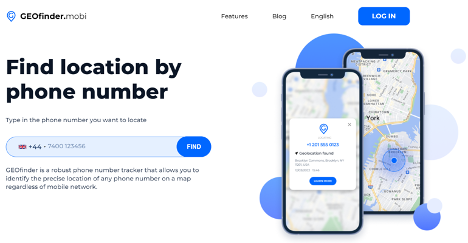
Accessible on both Android and iOS devices, GEOfinder is a web-based tool that allows you to get location information about any phone number worldwide. It operates discreetly, so whoever you track remains none the wiser. Additionally, it encrypts any data you provide to maintain your family’s privacy and confidentiality:
- VPN checker: This feature allows you to get the location information of the target recipient even when they attempt to obscure it using a VPN.
- GPS tracker: This allows you to view their exact location on a map for easier tracking.
- Wi-Fi tracker: It allows you to pinpoint their location by tracking the Wi-Fi network they are connected to. This feature comes in handy when your target is indoors, where GPS may not work accurately.
- No installation is required: GEOfinder is web-based, which means it is accessible from any browser on any internet-connected device.
- Cell phone carrier lookup: This feature allows you to know what carrier the recipient is using, and the only requirement is their phone number.
And it’s easy to use, too! Here’s only 3 steps you need to take to track a person via GEOfinder:
- Visit the GEOfinder website.
- Draft a text to send to your recipient. GEOfinder will embed a tracking link with your text.
- When they click the link, you will be able to see their location on a map in your user space.
Glassagram
Glassagram is your go-to IG story viewer. It allows you to view Instagram profiles and stories anonymously without creating an account. It gives you full access to any Instagram account as if you were a follower, allowing you to monitor everything you need discreetly. What’s more, it works on private and public accounts. With it, you can monitor your child’s every activity on Instagram:
- Monitoring multiple accounts: Glassagram allows you to add multiple accounts to your account and check them out anytime.
- Anonymous story viewer: This allows you to view stories of any account, private or public, without appearing in the story viewers list.
- Media download: This feature allows you to download stories, reels, and pictures from anyone’s Instagram to watch at your convenience. Stories are saved for up to 3 months on the platform.
- Detailed posts’ information: This feature allows you to view the history of an account in a convenient calendar view. It will also analyze all activity of the tracked profile in the form of a chart.
- Hot likes: This feature alerts you whenever there is heightened interest in any of your target’s old posts. If it’s triggered on your child’s Instagram, it could point to a groomer or other unscrupulous character.
Fortunately, for those who don’t use technology often and have no idea what’s going on most of the time, Glassagram is very easy to set up. Here’s what you should do:
- Visit the Glassagram homepage and click on the Watch Now button.
- Select the type of account you want to monitor.
- Enter the username or URL of the account you would like to see.
- Choose and purchase a subscription to initiate the monitoring.
Phonyspy
Phonyspy is a parental control app that enables parents always to keep an eye on their children. With little to no learning curve, it allows you to access data from your child’s device in real time. It also generates reports and receives updates every few minutes:
- History and call recording: The app allows you access to all calls made or received.
- Messenger monitoring: This feature allows you to monitor the most popular messengers, such as WhatsApp, Viber, FB Messenger, and others.
- Emails tracking: This feature enables you to keep track of all incoming and outgoing emails on the device.
- Browser tracking: You can easily pull up your child’s browsing history when needed using this feature.
- Photos and video monitoring: This feature gives you access to any photo or video captured on the target phone. It also gives you access to media downloaded or received.
- Keylogger: This allows you to log everything that the person types, including passwords.
- GPS monitoring: The app will give you access to the current location of the target as well as a detailed history of locations they’ve visited.
The set-up process is easy and straightforward for this one – you only have to follow these simple steps:
- Visit the Phonyspy website.
- Select the target device to be monitored.
- Install and set up the app.
- Track your device.
Conclusion
Ensuring that your family is safe and secure always is a parent’s greatest concern. The apps we’ve explored can go a long way in helping you protect and shield your children from harm that may arise online or physically. It is also a good idea to educate them on the risks they may be exposed to online and encourage them to talk to you if they feel they might be experiencing any danger online.


Natural Cycles has received its sixth FDA clearance for an updated fertility algorithm designed to personalise digital contraception.
The regulator cleared the company’s next-generation NC° Fertility Algorithm, which combines statistical modelling with machine learning to predict fertile and non-fertile days.

Natural Cycles said the algorithm was trained on tens of millions of real-world fertility data points and adapts to individual cycle patterns.
“People don’t just want effective birth control; they want a method that fits naturally into their lives,” said Dr Elina Berglund Scherwitzl, chief executive and co-founder of Natural Cycles.
“One of the unique advantages of a software-based contraceptive is that it can continue to evolve.
“As our scientific understanding of fertility grows and we continue to learn from more than a decade of real-world data, we can responsibly refine the technology through rigorous research, clinical validation, and FDA review.
“This latest clearance is the result of that work, helping us give many users more flexibility while maintaining the effectiveness they rely on.”
Evidence supporting the FDA clearance showed that the updated system maintained the app’s established safety and effectiveness while giving many users more Green Days.
Green Days are those on which the app confirms that pregnancy protection is not needed.
The birth control app remains 98 per cent effective when used as intended and 93 per cent effective with typical use, according to the company.
Natural Cycles said these rates place it in the same effectiveness category as the combined oral contraceptive pill.
Typical use includes mistakes or inconsistent use, while intended use means following the method correctly.
Digital contraception uses technology and physiological data, such as body temperature, to provide personalised fertility predictions.
Natural Cycles said its updated algorithm can identify fertile and non-fertile days more precisely than traditional fertility awareness methods, which may classify larger parts of the cycle as potentially fertile.
The changes provide more Green Days while maintaining effectiveness, improve performance for people with irregular cycles and better handle lower-quality temperature or biomarker data, the company said.
A biomarker is a measurable biological signal, such as body temperature, that provides information about processes taking place in the body.
Natural Cycles also said the system can personalise its predictions more quickly as a user’s menstrual cycle changes over time.
“Years ago, the question was whether digital contraception could work. Today, Natural Cycles has demonstrated robust clinical and real-world evidence that it can,” said Dr Kerry Krauss, senior medical adviser at Natural Cycles.
“The next chapter for digital contraception is making it more personalised and easier to use while maintaining the same high standard of safety.
“This FDA clearance demonstrates how advances in AI and machine learning can improve the user experience while preserving the scientific rigour expected of a regulated medical device.”
Natural Cycles has filed a patent application covering key innovations in the updated algorithm.
The decision follows the FDA’s first De Novo clearance of the company’s birth control app in 2018.
Later clearances allowed the app to integrate with the Oura Ring in 2021 and Apple Watch in 2023.
In 2024, the FDA cleared a Predetermined Change Control Plan, creating a regulatory pathway for future hardware integrations.
Natural Cycles said the plan has since enabled the launch of its NC° Band and other hardware integrations, including a Garmin connection introduced in March 2026.
A further clearance in 2025 allowed the birth control app to be offered both over the counter and by prescription.
The company has also received regulatory authorisations in more than eight markets worldwide, including Europe, Canada, Brazil, Australia, South Korea and Singapore.
Diagnosis
Experimental treatment significantly slows progression of fatal brain disease in women, study finds

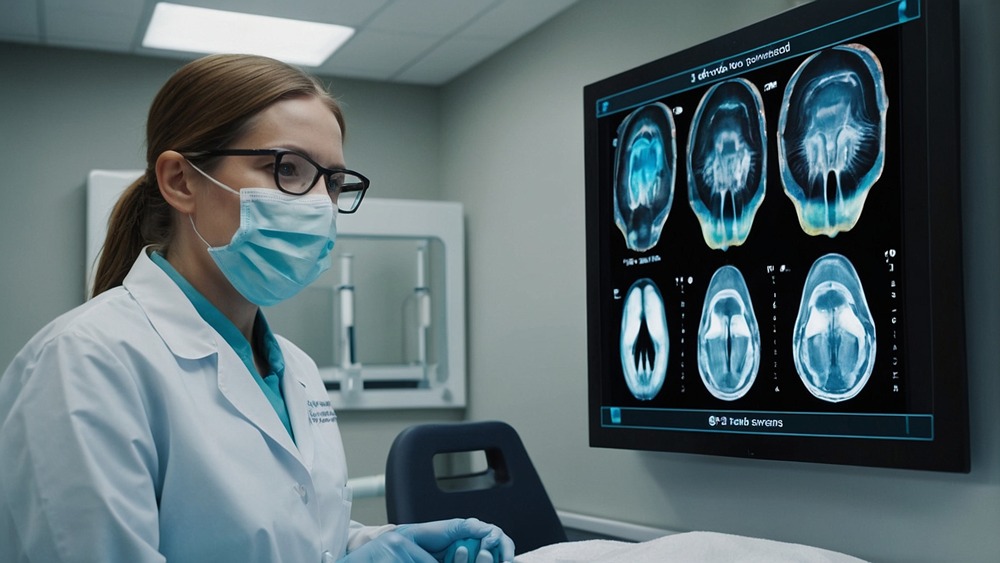
Davunetide may significantly slow the progression of a fatal brain disease in women, according to a new analysis of clinical trial data.
The findings indicate that women and men with progressive supranuclear palsy (PSP) may respond differently to the experimental treatment.
Progressive supranuclear palsy, or PSP, is a rare and fatal neurodegenerative disease.
Researchers at Tel Aviv University led the analysis and said the results reinforce the need for sex-specific approaches to neurodegenerative diseases.
Neurodegenerative diseases are conditions in which nerve cells in the brain or nervous system gradually lose function and die.
The team reanalysed data from a 52-week international clinical trial involving more than 300 people with PSP.
The disease is caused by the abnormal accumulation of tau protein in the brain. Tau is a protein found in nerve cells that builds up abnormally in people with PSP.
There is currently no effective drug treatment for the disease.
The work was led by professor Illana Gozes of the Sagol School of Neuroscience and the Gray Faculty of Medical and Health Sciences at Tel Aviv University.
The research team included current and former students Dr Guy Shapira, Jason Blatt and Liri Guz, together with professor Noam Shomron.
The original clinical trial found that Davunetide was safe but ineffective.
However, the researchers separated female and male participants and re-examined the data using updated assessment measures recommended by the FDA.
Women treated with Davunetide experienced a significant slowing of disease progression, while no similar effect was observed in men.
The treatment helped preserve essential movement and functional abilities, including balance, fine motor skills and everyday tasks such as using cutlery, buttoning clothes and washing the face and hands.
Fine motor skills are the small, precise movements needed for tasks involving the fingers and hands.
Treated women also showed significant improvements in language ability, working memory and overall cognitive function.
Cognitive function covers mental abilities such as memory, attention, language and problem-solving.
The analysis also identified profound molecular differences between women and men.
The relationship between levels of pathological tau in cerebrospinal fluid and clinical symptoms was completely reversed between the sexes.
Cerebrospinal fluid is the clear liquid surrounding the brain and spinal cord. A biomarker is a measurable sign that can indicate disease activity.
For example, language abilities declined significantly as tau pathology increased in women, but not in men.
The researchers said this suggests the disease mechanisms may work differently in women and men, potentially explaining their different responses to treatment.
According to professor Gozes, overlooking biological differences between the sexes may hide a genuine treatment effect.
“Our data show that analysing women and men separately is not merely a statistical exercise, but an essential tool for developing more effective treatments for neurodegenerative brain diseases,” she said.
The researchers believe the findings provide a strong scientific basis for future clinical trials and treatment protocols designed from the outset to account for patients’ sex.
These trials could evaluate Davunetide as a targeted treatment for women with PSP.
They said the approach may also pave the way for more precise treatments for tau-related diseases, including Alzheimer’s disease and other neurodegenerative brain disorders.
The study was supported by ExoNavis Therapeutics, which is developing Davunetide for brain diseases under licence from Ramot, Tel Aviv University’s technology transfer company.


A preeclampsia study has found unusual cell activity in mothers and babies that could reveal new targets for treatment.
The condition affects 2 to 4 per cent of pregnancies worldwide and is a leading cause of maternal and foetal mortality.
There is currently no cure, and severe cases can put both the mother and baby at risk.
Scientists from UCL and University College London Hospitals found that stressed placental cells, poorly functioning blood vessels and an overactive immune response all contribute to the condition.
Preeclampsia causes high blood pressure during pregnancy. It can affect blood flow to the baby and cause symptoms such as swelling, headaches, blurred vision and pain under the ribs.
Without treatment, it can damage the mother’s health, slow the baby’s growth and, in severe cases, become life-threatening.
Previous research has focused only on the placenta, the organ that develops during pregnancy to support the baby’s growth, rather than the tissues around it.
The researchers said the findings could reveal new therapeutic targets, which are biological processes that future treatments could be designed to alter.
Senior author professor Sara Hillman, of the UCL EGA Institute for Women’s Health, said: “We studied individual cells from both the mother and the baby to see how their activity changes in healthy pregnancies compared with preeclampsia.
“This helped us to confirm some changes already suspected in the condition and also discover new ones.”
The team studied 20 pregnant women recruited at UCLH, including 10 with severe preeclampsia and 10 without the condition.
They used genomic testing to examine individual cells in the placenta and other tissues where cells from the developing baby and mother come into contact.
Genomic testing examines genetic information to help researchers understand how cells behave and the roles they may play.
The other tissues studied were the myometrium, the muscular layer of the womb, and the chorioamniotic membranes, which surround the baby during pregnancy.
The team compared cells from healthy pregnancies and those affected by preeclampsia at different gestational ages, meaning different stages of pregnancy.
They used technology that can read the genetic information of thousands of individual cells at the same time, allowing them to see what each cell was doing and where it was located in the tissue.
In preeclamptic pregnancies where babies were born prematurely, before 37 weeks, during the third trimester, placental cells showed signs of stress and low oxygen levels.
The cells also did not use energy in the normal way.
Some cells responsible for reshaping the mother’s blood vessels were not working properly, the researchers found, which may affect blood flow to the baby.
There were also signs of an overactive immune response in the placenta, nearby tissues and the mother’s blood.
The researchers said this response, together with other stress molecules released by the placenta, helps explain why preeclampsia affects the whole body and can become serious.
They hope the findings will help researchers find treatments for the condition and potentially save lives.
Co-lead author Dr Yara Sanchez Corrales, of the UCL Great Ormond Street Institute of Child Health, said: “These findings point to specific biological processes that could be targeted with treatments. Acting early in pregnancy, especially in more severe early-onset cases, could help improve outcomes and reduce the high risks associated with severe preeclampsia.
“We hope that our findings may set us on the path to reducing premature births and fatalities associated with preeclampsia.”
Co-lead author Mr Theodoros Xenakis, of the UCL Great Ormond Street Institute of Child Health, said: “Future studies may provide an even clearer picture of the biological changes linked to the disease by including more participants and using even more precise methods.”









 News2 weeks ago
New menopause drug approved for use by NHS in Scotland

 Hormonal health2 weeks ago
Stardust period tracker shares health data, study reveals

 News7 days ago
Zero Candida market set to reach over US$2 billion by 2030 – report

 News2 weeks ago
Women’s health draws record $1.55bn in equity as capital spreads beyond the mega-rounds

 Fertility2 weeks ago
Onto Health acquires diagnostics software company Levy Health

 News2 weeks ago
Congress urged to invest over $20bn to close women’s health gap

 Mental health1 week ago
Nearly 60% of young women get health advice from influencers, research finds

 News5 days ago
From Hologic to Ark Surgical: Why Joseph LaBruzzo is betting on the future of women’s surgical innovation