




Breast cancer patients face ‘postcode lottery’ for new drug
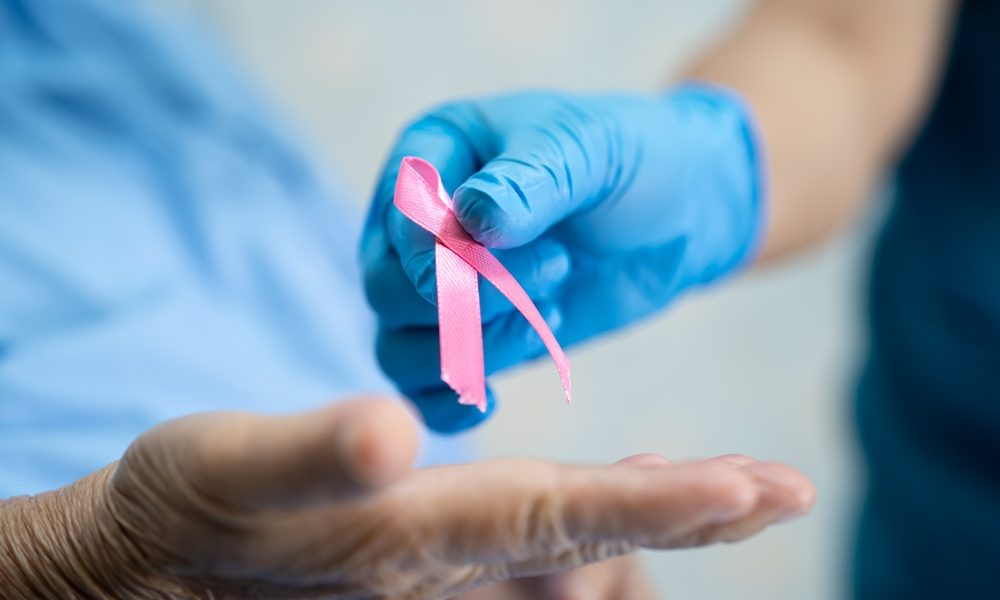
Breast cancer patients in Scotland face a postcode lottery that could limit access to two newly approved NHS treatments.
The Scottish Medicines Consortium has approved Elacestrant and Capivasertib, which could be life-extending for some people with metastatic breast cancer.
Eligibility depends on genetic testing to confirm gene mutations before treatment can be prescribed, but the necessary testing is not yet available through the NHS in Scotland.
The testing is available to patients in England and to those able to pay for it privately.

Claire O’Donnell, who was diagnosed with metastatic breast cancer at 37, has raised concerns about the difference in access.
Ten years after her diagnosis, O’Donnell is receiving a treatment that works for her but does not know when it may stop being effective.
She said: “I know how lucky I am. It’s certainly not been easy but I’m incredibly lucky and incredibly privileged to be in that position.
“I’ve watched a lot of my friends die, and a lot of the circumstances has been about not being able to access a drug or getting the drug too late or being too poorly by the time the drug becomes available to them. It makes me angry, and it makes me sad.”
O’Donnell, who has been supported by secondary breast cancer charity Make 2nds Count, is frustrated by the gap in care for patients in Scotland.
She said: “These drug are a lifeline to people. It makes all the difference, and it only takes one drug to be your drug that you know can give you six months a year, two years, five years. It’s almost like they’ve given you a bit of good news, but they’ve also put a little bit of a criteria on it that you know they dangle the carrot in front of you.”
David Cameron, professor of oncology at Edinburgh University and chair of trustees for Make 2nds Count, said the system needed improving to better support patients.
He said: “It’s a frustration for many of us in the clinic because for a long time we’ve been saying as we move into an era of medicines, not just cancer medicines, but medicines that are increasingly driven by special tests, we need a system which absolutely locks the two things together.
“There has been progress in that direction, but they’re not locked together. this comes down to the way the NHS is in a sense fragmented internally.”
Health secretary Angela Constance said: “I welcome the acceptance of Elacestrant, known as Korserdu, for treatment of post-menopausal women, and men, with a certain type of advanced breast cancer.
“We work closely with the independent SMC and the NHS in Scotland to improve access to new medicines, helping to expand the range of treatment options available.
“We are aware that a genomic test is needed in order to access this therapy, and we are working in collaboration with the NHS and industry partners to secure access to this as soon as possible.”


Newsletter
Sign up for free weekly updates
The latest femtech news, research and investment, straight to your inbox.




