




Insight
How Agentic AI and nursing models of care are combatting decision fatigue in women’s health


Women are no strangers to decision fatigue.
From navigating reproductive health to managing chronic conditions and making daily lifestyle choices, the sheer volume of decisions women face can be overwhelming.
Add to this the complexity of healthcare options, time constraints, and information overload, and it’s no surprise that decision fatigue—a state of mental exhaustion that impairs sound decision-making—is a growing concern in women’s health.
But what if there was a way to reduce this cognitive burden while empowering women to make informed, confident choices?
Enter Ema, the first Agentic AI designed to blend the holistic principles of nursing care with cutting-edge technology, offering scalable, empathetic support tailored to women’s unique needs.
Decision Fatigue in Women’s Health: A Growing Challenge
Decision fatigue is more than a buzzword; it’s a real psychological phenomenon that disproportionately impacts women, especially in healthcare.
Studies show that:
- Women often face information overload, with conflicting advice from online sources adding to the confusion.
- Limited time during provider consultations creates pressure to make quick decisions, often without fully understanding the options.
- Emotional factors, such as anxiety and stress, further impair decision-making capabilities.
For example, a woman navigating fertility treatments may need to weigh multiple complex factors—from medical protocols to emotional and financial implications.
Similarly, those managing chronic conditions like endometriosis or diabetes must make daily decisions that affect their long-term health outcomes.
The result?
A sense of overwhelm that leads to suboptimal choices or delays in critical healthcare decisions.
The Nursing Model of Care: A Proven Framework
The nursing model of care offers a solution to decision fatigue by prioritizing holistic, patient-centred care:
- Simplification: Nurses distill complex medical information into clear, actionable steps.
- Emotional Support: Nurses help patients feel confident in their choices by building trust and providing reassurance.
- Shared Decision-Making: This collaborative approach ensures patients’ values and preferences are respected while guiding them toward informed decisions.
These principles alleviate the mental burden of decision-making and enhance patient autonomy and satisfaction.
Ema: Bringing the Nursing Model to Life with AI
Ema takes the best of the nursing model of care and amplifies it with the power of Agentic AI. Designed to act as a personalised health companion.
How Ema Tackles Decision Fatigue: Real-Life Scenarios
- Managing Fertility Treatments:
For a woman overwhelmed by the options for fertility treatments, Ema simplifies the journey by presenting her with clear, tailored recommendations and automating reminders for the next steps. - Navigating Chronic Disease:
A woman managing diabetes might struggle with daily decisions about medication, diet, and exercise. Ema reduces this burden by sending personalised prompts, tracking progress, and providing encouragement. - Understanding Abnormal Test Results:
When test results return abnormal, Ema provides clear, non-alarming explanations and actionable suggestions, reducing stress and confusion. - Choosing the Right Breast Pump:
For new mothers overwhelmed by breastfeeding and pumping, Ema simplifies pumping data by asking personalised questions about lifestyle, milk production needs, and work conditions. Based on the user’s responses, Ema recommends tips and links to resources, lactation consultants, or support groups for new moms.
Why Agentic AI Matters in Women’s Health
Agentic AI is about more than automation—it’s about empowerment.
Agentic AI doesn’t just provide answers; it actively engages users, fostering confidence and autonomy in their healthcare decisions.
By integrating the principles of nursing care with intelligent automation, Agentic AI can deliver:
- Enhanced Health Literacy: Users better understand their health, enabling informed decisions.
- Reduced Cognitive Load: With AI managing the background tasks, women can focus on what truly matters.
- Stronger Engagement: Personalised, empathetic interactions build trust and long-term relationships.
The Future of Decision Support in Women’s Health
As healthcare grows increasingly complex, tools like Ema represent a critical shift toward patient-centred innovation.
By blending the art of nursing care with the science of AI, Ema is more than a tool—it’s a trusted partner in empowering women to navigate their health with confidence and ease.
For women facing decision fatigue, this isn’t just a solution; it’s a revolution.
Learn more about Ema at emaapp.com


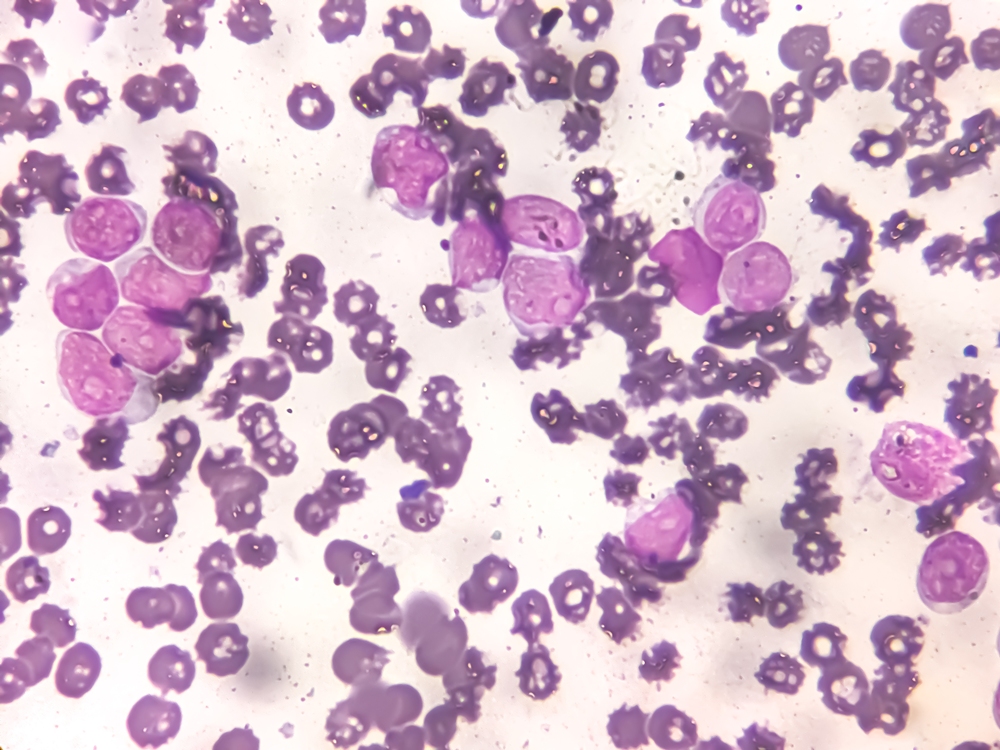
Cancer cells may hijack a fertility protein to repair damaged DNA and survive chemotherapy, research suggests.
The findings could point to a way of making existing cancer treatments more effective.

SYCP1 is a protein normally involved in producing sperm and eggs.
Researchers at the University of Liverpool found that the protein, previously thought to work only in reproduction, can be reactivated in cancer cells, where it helps tumours survive and grow.
SYCP1 usually helps chromosomes pair during meiosis, the form of cell division that produces reproductive cells.
In cancer cells, however, the protein appears to take on another role. It enters the nucleus, the cell’s control centre, binds directly to DNA and regulates genes involved in cell division and DNA repair.
DNA repair is how cells fix damage to their genetic code. In cancer, this process can help tumour cells survive treatment.
The researchers found that removing SYCP1 made cancer cells much more sensitive to chemotherapy drugs that damage DNA.
The findings suggest cancers may use SYCP1 to repair damage caused by treatment and continue growing.
Dr Urszula McClurg, lecturer in biochemistry, cell and systems biology at the University of Liverpool, said: “Our findings show that cancer cells can hijack proteins that normally exist only in reproductive tissues and give them completely new jobs.
“Understanding these unexpected functions opens up exciting opportunities to develop new treatments that make existing cancer therapies more effective.”
The work challenges the long-held belief that proteins active only in fertility have no biological relevance outside the reproductive system.
Researchers say these specialised proteins could provide new treatment targets across many types of cancer.
The study also offers a new view of how cancers evolve by repurposing developmental and reproductive processes.
The findings highlight SYCP1 as a candidate for future precision cancer therapies, which are treatments based on the specific biology of a patient’s cancer.

Women’s health has become one of the most searched and shared topics online, from cycle syncing and cortisol management to menopause hacks, supplements, hormone testing and clinician-creator content.
That surge in attention, sometimes dubbed “healthmaxxing,” is changing how women find, evaluate and act on health information, and it is starting to reshape the relationship between patients, clinicians and the companies building products for this market.
For providers, the shift means patients are arriving better informed but also more exposed to unverified claims, putting pressure on clinicians to engage with online narratives rather than dismiss them.
For femtech and pharma companies, it opens a route to reach and educate consumers at scale, but also raises the stakes on credibility: products and messaging that ride the trend without clinical grounding risk eroding the trust the industry has spent years building.
Investors are watching the same dynamic from a different angle.
Attention-driven demand can be a signal of where the next wave of femtech growth will come from, but distinguishing genuine clinical need from viral momentum is increasingly part of due diligence.
The net effect is a widening gap between companies that treat cultural attention as a distribution channel for credible, evidence-based care, and those that risk being swept up in trends with little clinical substance behind them.
How that gap plays out will shape patient trust, clinical relationships and commercial opportunity across the women’s health industry for years to come.
These themes will be explored in more depth in an upcoming webinar, “Women’s Healthmaxxing: The Opportunity & Risks of Cultural Attention for the Women’s Health Industry,” hosted by the Women’s Health Innovation Summit (WHIS), featuring Ellen Wilcox (Listen Ventures), Jessica Bell van der Wal (Frame Fertility), Dr. Tosin Sotubo-Ajayi (NHS, BBC and more) and Nora Lansen (Elektra Health).
Register free for the webinar on 23 July 2026 at https://events.virtualpro.com/womens-health-series-webinar-july-2026/registration


More young midwives are leaving the NHS before 35 as burnout adds pressure to stretched maternity services, new research has revealed.
The trend has raised concerns about the quality and safety of care for mothers and babies in understaffed maternity units.
During 2025-26, 1,669 midwives aged 34 or under left the health service in England, representing 57 per cent of the 2,949 midwives of all ages who resigned.

The pressures of maternity care, including increasingly complex childbirth and the risks involved, are thought to be among the factors behind the trend.
Hannah Leonard, deputy chief midwife at the Royal College of Midwives, said the exodus of midwives under 35 was “deeply worrying” and showed that too many were ending up “burnt-out within a few years of qualifying because every shift means too few colleagues, missed breaks and unpaid hours”.
She added: “Losing these midwives, and students, even before they qualify, is a terrible waste of talent.”
The figures, revealed in parliamentary questions tabled by the Liberal Democrats, show that 205 of last year’s younger leavers were under 25, while 655 were aged 25 to 29 and 809 were aged 30 to 34.
The number of midwives under 35 leaving the NHS has risen sharply in recent years. The 2025-26 figure was 59 per cent higher than the 1,051 who left in 2014-15, according to NHS figures.
Burnout means long-term physical and emotional exhaustion, often linked to sustained pressure at work.
Separate figures obtained by the Liberal Democrats suggest almost one in four midwifery students are leaving before completing their three-year degree.
In 2021, 3,565 students started a midwifery degree, but 2,725 graduated in 2024, meaning 840, or 24 per cent, did not complete the course.
Midwifery students spend much of their second and third years learning on the job in maternity units.
The loss of staff and students underlines what the Royal College of Midwives has described as a “staffing emergency” in maternity care across the UK.
A recent survey by the Royal College of Midwives found that three-quarters of midwives had considered leaving the profession over the last year, mainly because of concerns over staffing levels and patient safety.
Both recent large-scale reviews of maternity care in England, led by Donna Ockenden and Valerie Amos, identified staffing shortages as a key problem affecting patient safety.
Helen Morgan, the Liberal Democrat health spokesperson, said: “These statistics reveal an alarming crisis in maternity, with far too many midwives burning out early in their career and in their training. Patients are paying the price, and mothers are left with no alternative but to give birth on understaffed and unsafe wards.
“Rather than throw money at yet more new recruits who quit under intolerable pressure, the government needs a new approach. Through guaranteeing protected, year-round training and professional development we can help midwives cope with rising complexity and risk.”
About 10 per cent of all midwives leave the NHS each year.
However, the figures show higher leaving rates among younger midwives, with one in seven, or 14.6 per cent, of those aged 25 to 29 and one in six, or 16.6 per cent, of those aged 30 to 34 leaving during 2025-26.
A Department of Health and Social Care spokesperson said: “Under this government we have a record number of midwives in the workforce and we value the vital service they provide in maternity and neonatal units across the country.
“To make the NHS the best employer it can be, we have introduced new NHS staff standards to improve health and wellbeing support, promote flexible working, as well as crucial measures to tackle violence, sexual harassment or abuse and racism.
“Alongside consecutive above-inflation pay rises, we’ve bolstered the midwifery workforce through our graduate guarantee and recently opened up 1,000 more midwifery roles backed by £10m to help prevent student midwives leaving the profession.”
Department of Health and Social Care figures show a record 25,500 full-time-equivalent midwives are working in the NHS, 2,000 more than when the Labour government took office in July 2024.












 News1 week ago
New menopause drug approved for use by NHS in Scotland

 Cancer2 weeks ago
Thousands of women could avoid painful cancer exam with new AI blood test

 Fertility2 weeks ago
Applications open for the third W Accelerate with Merck KGaA and M Ventures

 Fertility2 weeks ago
Older women face lower chance of fertility treatment working, even with donor eggs, study finds

 News2 weeks ago
We built Ema like a nurse: Here’s why that matters

 News7 days ago
Women’s health draws record $1.55bn in equity as capital spreads beyond the mega-rounds

 Mental health2 weeks ago
SSRIs may lower heat intolerance in women with depression – study

 Hormonal health5 days ago
Stardust period tracker shares health data, study reveals
1 Comment