




INTERVIEW: Kathleen Van Vlierberghe, Boston Scientific — how we’re pushing for equity in healthcare
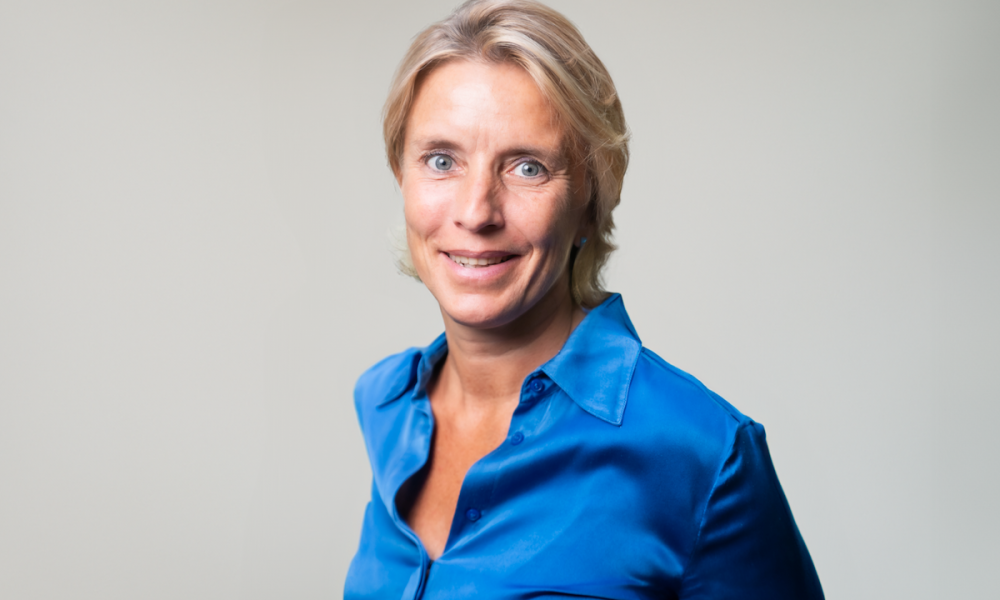
VP of Peripheral Interventions for Europe, the Middle East and Africa (EMEA) at Boston Scientific, Kathleen Van Vlierberghe, talks to Femtech World about advancing minimally invasive treatments, empowering women in the workplace and championing gender equity in clinical research.
When Kathleen Van Vlierberghe joined Boston Scientific almost two decades ago, she was one of only a few women at the table. Now in her recently appointed role as vice president of Peripheral Interventions for EMEA, she is helping to address the gender inequities in healthcare, clinical research and the workplace.
The global medical technology company, Boston Scientific, has been transforming lives through innovative medical solutions designed to improve the health of patients around the world since 1979.
After 25 years in the medtech space— 19 of which have been with Boston Scientific— in her new role, Van Vlierberghe will focus on bringing minimally invasive solutions to patients and healthcare professionals in the fields of interventional oncology and vascular disease.

She spoke to Femtech World about innovative new solutions in the female cancer and women’s health space, as well as the company’s efforts to create more representative clinical trials and empower women in the workplace.
Femtech World: Kathleen, thank you for taking the time to speak with Femtech World. Could you start by giving us an overview of your main focus at Boston Scientific?
Kathleen Van Vlierberghe: What positions us as a company in the field of peripheral interventions is our focus on minimally invasive technologies across different disease areas. By minimally invasive, we really mean shifting treatments that would typically require surgery to less invasive procedures. This allows us to be more patient-centric while also addressing hospital challenges, such as enabling same day cases or reducing the need for overnight hospital stays.
Our treatments primarily focus on peripheral artery disease and clot management addressing conditions both above and below the knee. We are also working in the oncology space, particularly interventional oncology, where we have a range of products.
FTW: You’re VP of Peripheral Interventions in EMEA, but you work closely with teams across other global markets too. Do you see similar trends and challenges when it comes to healthcare internationally, or are they quite specific to each region?
KV: A common challenge across most geographies is the lack of adoption of minimally invasive therapies—many patients still undergo surgery or are identified too late to receive alternative treatments. For example, in vascular care, we continue to see high amputation rates, particularly among diabetic patients. Through physician education programs, we can raise awareness about alternative therapies to prevent unnecessary amputations. Amputation is not only costly to healthcare systems but has a profound impact on a patient’s quality of life.
FTW: What technologies are you currently excited about in the women’s health and female cancer space?
KV: One of my first visits in this role was to Hospital Universitario La Paz in Madrid, which specialises in breast cancer cryoablation. Cryoablation is a minimally invasive technology that works by freezing and destroying the tumours. It is most often performed percutaneously (through the skin and into the tumour) by a specialist such as an interventional radiologist. Compared to surgery, it is often less invasive, often requires less hospital time, and often enables preservation of the breast.
FTW: You mentioned that this technology was first introduced for treating kidney tumors. Is there potential to expand it to other conditions?
KV: As we broaden the clinical applications of cryoablation, we are listening to customer feedback and expanding clinical studies. While the technology has shown positive results in kidney tumours, we are now applying it to breast tumours and other conditions such as desmoid tumours. There are also opportunities beyond oncology. Cryoablation has been explored as a treatment for endometriosis, a condition that causes significant pain for many women. We recently heard an amazing story from a patient who underwent cryoablation in France. She had suffered from severe pain for years despite medication. The procedure only took around an hour, and she is now completely pain-free. It goes without saying that this is only an example and that there are risks associated with every medical procedure. Any patient should consult their doctor to learn more about the risks and benefits of all treatment options.
FTW: Women’s health has historically been under-researched. Are you seeing a shift toward more innovation in this field as awareness grows?
KV: As awareness of the gender health gap grows, we are realising just how much information is lacking about many women’s health conditions in general. Take cryoablation for breast tumours, for example. The initial focus was on kidney tumours, but as we explored its potential, we identified new opportunities to expand its use. In Europe and the Middle East, we proactively listen to customer needs and feed those back into the organisation to ensure we prioritise patient-centric-solutions.
FTW: What other ways are you addressing the gender health gap at Boston Scientific?
KV: We are tackling this issue not only through innovative technologies but also by helping to ensure inclusivity in clinical studies, to ensure that our trials are relevant to the patients we aim to serve and it’s critical we accurately understand the outcomes of our technologies for everyone. A great example is the ELEGANCE Global registry, launched in France, Germany, Austria, and Poland, which aims to increase representation in study enrolment. This real-world study is collecting data on populations previously not well-represented in peripheral artery disease (PAD) trials. For example, the study has a bold goal of enrolling a minimum of 40 per cent women, and this this year, we are expanding it to Saudi Arabia, marking the first time patients from the Middle East and North Africa (MENA) region will be included in a global peripheral intervention study.
FTW: Can you tell me a bit more about how you support women internally?
KV: We are committed to creating equitable career opportunities within the company and extending these initiatives to the broader community. For example, the WeLead programme has supported high-performing women who demonstrate outstanding competencies. We provide employees with the right tools, bespoke training activities and support to fully realise their potential.
When it comes to supporting women externally, our EMERGE programme in EMEA is designed to support female physicians in the early stages of their interventional careers. This programme connects them with peers and senior mentors, providing a platform for knowledge-sharing, skill-building and confidence development in what is traditionally a male-dominated field.
FTW: As a female leader at Boston Scientific, how do you hope to empower and inspire other women in the company?
KV: In the past, being one of the only women at the table has come with its challenges. That’s why I am passionate about mentoring the next generation of female leaders. I encourage young women to speak up, raise their hands and to recognise when barriers are self-imposed.
By acting as a role model, I hope to show that leadership is possible for women in this industry. Work-life balance looks different for everyone—whether you are a mother, an athlete or have other passions—it’s about making time for what truly matters. My goal is to give back by helping the next generation navigate these challenges.


Newsletter
Sign up for free weekly updates
The latest femtech news, research and investment, straight to your inbox.




