




News
Melinda French Gates’ VC firm backs women’s health start-up Tia
The investment comes as the firm seeks to scale up its support for women-led businesses


Melinda French Gates’ venture capital firm will invest an undisclosed sum towards the California women’s health start-up Tia.
Pivotal Ventures aims to accelerate equality in the United States through investments, partnerships, and advocacy in areas where social progress has “stalled”.
With a commitment of US$1bn, the VC company’s goal is to expand women’s power and influence in the US.
Its undisclosed investment towards the San Francisco-based Tia comes as the firm seeks to scale up its support for women-led businesses.
Founded in 2017 by Carolyn Witte and Felicity Yost, Tia aims to bring a new standard of care for women for women across New York, Los Angeles, San Francisco and Phoenix.
Its “Whole Woman, Whole Life” care model currently provides virtual and in-person services, including primary care, mental health, and gynaecological care.
Research has shown that almost half of women in the US do not have a stable relationship with a primary care physician for routine preventive care.
“My vision is that every primary care provider starts delivering mental health as routine primary care and that every primary care provider clinic eventually looks and feels like Tia’s,” Tia co-founder and CEO, Carolyn Witte told Fast Company.
After opening its second Los Angeles-area clinic in Santa Monica, Tia plans on opening more centres across the US.
The investment, following a partnership with the healthcare company Cedars-Sinai in January, will bring the start-up’s total funding to approximately US$150m.










An experimental cancer drug reduced bone loss and body fat in mice modelling post-menopausal changes, early research suggests.
The compound, CADD522, appeared to strengthen bones and help the animals stay leaner after surgery designed to mimic hormonal changes seen after menopause.
The treatment remains at an early experimental stage and has so far only been tested in animals.

The study, led by the University of East Anglia, investigated CADD522, which was originally developed to block a protein involved in the growth and spread of several cancers.
Mice treated with the compound for eight weeks showed significant improvements in bone health. Scans found increased bone volume and better preservation of the honeycomb-like structures inside bones that are crucial for strength and resilience.
Blood tests suggested the treatment stimulated new bone growth without interfering with the body’s normal process of breaking down and rebuilding bone.
Dr Darrell Green, lead researcher from UEA’s Norwich Medical School, said: “Osteoporosis affects around one in three women over the age of 50, leaving sufferers vulnerable to painful fractures that can seriously impact quality of life.
“Current treatments exist, but many are plagued by side effects, safety concerns or inconvenient dosing schedules that make long-term use difficult.”
The researchers also found that mice receiving CADD522 weighed less than untreated mice despite eating the same amount of food.
They had less body fat and fewer fat deposits in their bone marrow, a process commonly seen after menopause and linked to declining bone health.
The team also examined brain tissue and found that the drug appeared to reverse several menopause-related changes in fatty acids.
Levels of omega-3 fats including DHA remained largely intact, while several other lipid abnormalities shifted back towards healthier patterns.
Green said: “We didn’t directly test for memory or thinking ability, but our work raises questions about whether this drug could one day help address wider menopause-related health problems.”
Safety experiments in mice, rats and dogs found that CADD522 could be taken orally and was well tolerated.
The compound also appeared to be metabolised more slowly in human tissue than in rodents, potentially improving its performance in people.
“This is still in the early stages and has so far only been tested in animals but we hope that the benefits will translate to humans to ultimately reduce fracture rates,” added Green.
The research was led by UEA in collaboration with the University of Maryland, the Scintillon Research Institute in San Diego and the University of Stirling.
Safety testing was funded by The Sir William Coxen Trust as part of the development of CADD522 as a childhood cancer treatment.


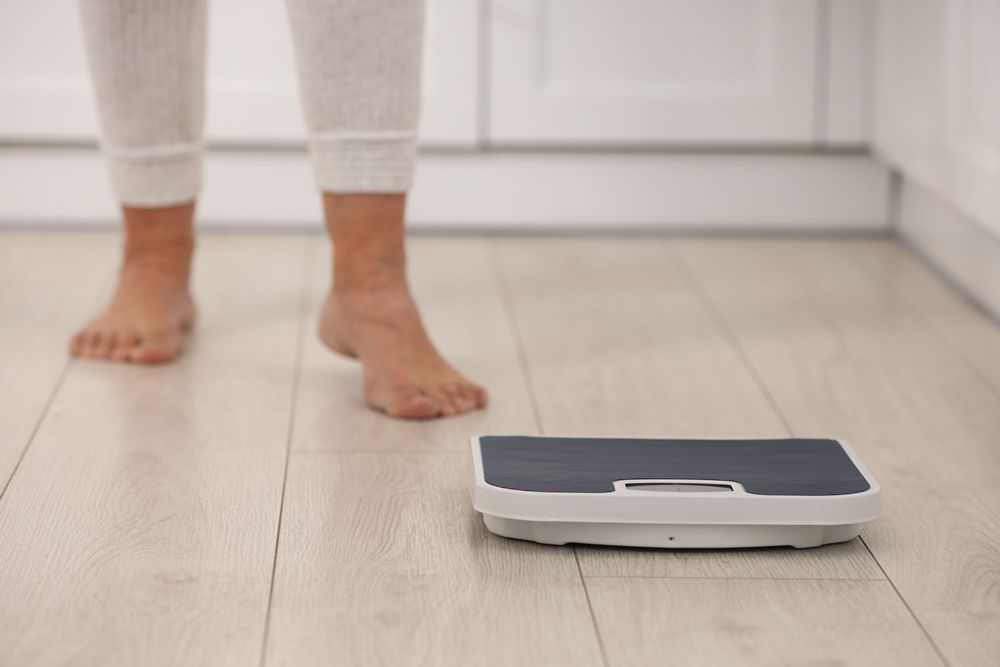
Weight loss surgery was linked to more regular periods and fewer polyendocrine metabolic ovarian syndrome (PMOS) symptoms in women aged 18 to 45 living with obesity in a recent study.
The researchers recommend that women undergoing the procedure have access to preconception care and reproductive counselling to support their reproductive health.
Researchers at the University of Surrey analysed data over 24 months from 84 women who underwent bariatric surgery and 18 women living with obesity who did not have surgery.
Of those who underwent surgery, 49 had gastric bypass procedures and 35 had gastric sleeve surgery.
Women who underwent metabolic bariatric surgery lost more than 30kg on average at 12 and 24 months after the procedure.
Among women with polycystic ovaries, the condition persisted in only 10 per cent after 24 months.
Women also reported a resolution of clinical hirsutism, or excess body hair, by 12 months.
Women who had previously experienced irregular periods reported more regular menstrual cycles after surgery.
Professor Martin Whyte, co-author of the study and professor of metabolic medicine at the University of Surrey, said: “A large proportion of those undergoing bariatric surgery are women of reproductive age, who may be planning a pregnancy in the coming years.
“So much remains unknown about the impact of this type of surgery on women who are planning to have children.
“This raises the question of when the ideal time after surgery is to conceive.”
Women have a higher prevalence of obesity than men, with 57 per cent of women in the UK classified as overweight and 27 per cent living with obesity, which can affect fertility and the health of an unborn baby.
The researchers said 17 women had healthy pregnancies following surgery.
Although this was not specifically examined in the study, no difference in birth weight was observed between babies conceived within or after the first year.
Dr Kathryn Hart, co-author of the study and associate professor in nutrition and dietetics at the University of Surrey, said: “What we have found is that bariatric surgery positively affects the reproductive health of women living with obesity and can improve the likelihood of them having a healthy pregnancy after surgery.
“Dysregulated hormone levels, irregular periods and conditions such as polycystic ovaries are affected by obesity.
“By reducing this, what we have seen is that it can lead to improvements without the need for medication.
“We would suggest that clinicians consider medical intervention for obesity to treat irregularities in the menstrual cycle and issues with fertility.”











 Hormonal health2 weeks ago
Major UK study could be a ‘game-changer’ for heavy periods and endometriosis
 Entrepreneur6 days ago
KOVE Medical raises €1.7 million to improve safety of foetal surgery

 Pregnancy2 weeks ago
One week left to apply: W Accelerate with Merck KGaA and M Ventures

 Pregnancy1 week ago
UK study aims to transform maternity care for high-risk pregnancies

 Menopause2 weeks ago
Quarter of women miss work due to menstual symptoms, survey finds

 Mental health2 weeks ago
PMDD after SSRIs or hormones: Why the brain may be the missing treatment target
 Diagnosis2 weeks ago
Ark Surgical secures further institutional backing to accelerate US expansion

 Menopause4 days ago
Menopause hormone treatment may ease brain fog, study suggests