




AI to check breast cancer scans in groundbreaking NHS trial
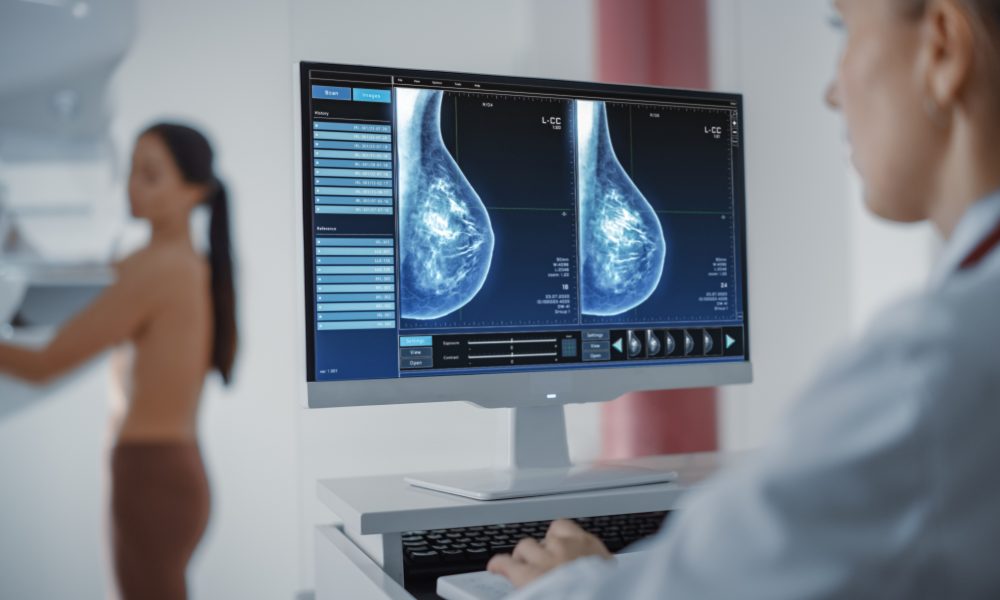
NHS patients in England will be part of a new groundbreaking trial using AI to support breast screening.
The programme, called MIA (mammography intelligent assessment), is developed by the London-based software company, Kheiron Medical, and uses AI to help radiologists identify signs of breast cancer.
The algorithm has already been used on half a million scans from hospitals in Hungary, but it is new to the UK.
According to the Times, MIA will work alongside two members of the breast screening reading team at Leeds Teaching Hospitals NHS Trust to check mammograms from almost 7,000 women.

During the trial, also known as Libra, if the two humans and AI reader all agree a mammogram is normal, the patient will receive the all-clear.
If any of the three disagree, another radiologist will review the scan before deciding whether or not to recall the patient for further checks.
“Breast screening isn’t perfect and it is hoped that the Libra study will lead to improvements in reviewing mammograms,” Dr Nisha Sharma, a consultant breast radiologist at the trust and director of the breast screening programme for Leeds and Wakefield, told the newspaper.
“Cancers that present between screening rounds are often quite aggressive and the reason these can be overlooked is because they are not clearly visible on a mammogram.
“AI works differently to humans and by combining human expertise with technology advances this could lead to earlier detection of cancers and impact positively on women’s lives. We will be the first breast screening unit in England to do a prospective study using AI.”
Simon Harris, senior project manager at Kheiron Medical Technologies, said: “The NHS does not have enough radiologists which is leading to delays in readings and diagnoses and workforce burnout.
“To solve this problem, we are looking at how AI software could replace the second human reader and release that person to do something more clinically urgent.
“We want to demystify what AI is. It is just a piece of software that’s very good at picking up certain patterns that it recognises in images and coming back with an output.”
The UK is currently short of 1,669 clinical radiologists, and over 200 vacancies have been unfilled for a year or more, according to the annual census released in June 2022 by the Royal College of Radiologists (RCR).
Unless urgent action is taken, the shortfall could hit 39 per cent by 2026, equal to 3,166 clinical radiologists, the report has found.
If successful, Mia could replace one of the two human readers in standard NHS care, reducing the burden on the health system.


Newsletter
Sign up for free weekly updates
The latest femtech news, research and investment, straight to your inbox.




