



Connect with us

Menopause

UK design company to launch AI menopause management app

The app will use machine learning to collect data on body temperature, energy levels, stress and sleep

Published

on

The UK design company Morrama has announced the development of an AI-powered management app to support women going through the menopause.

Morrama, the company behind the Elvie Catch breast milk collector, aims to help women manage menopause symptoms and access “tailored” supplements and recommendations.

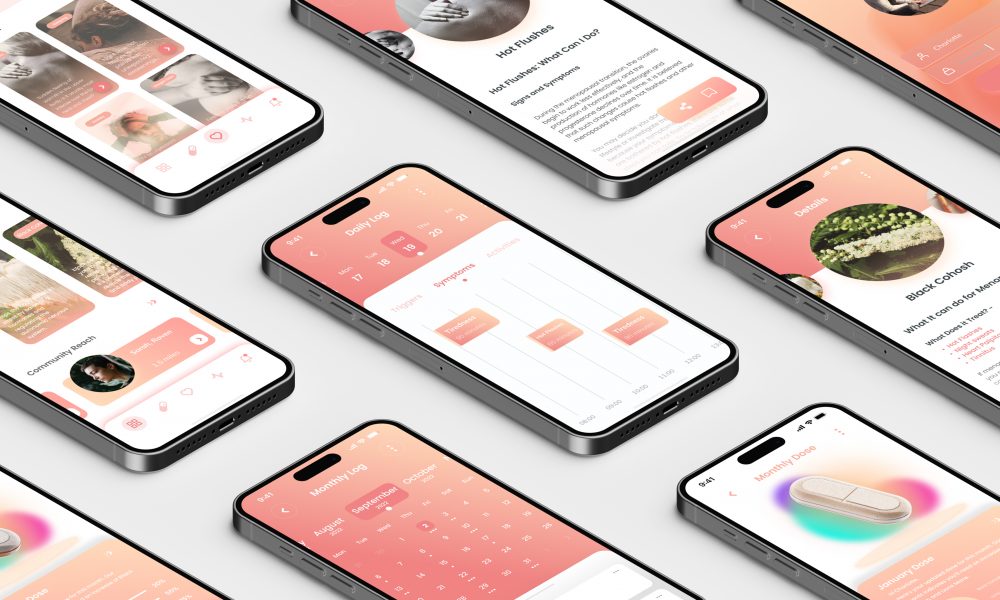
Taking inspiration from fertility tracking apps and 3D print technology, Luma is an app that uses smartwatch and sensor data combined with manual inputs to build up a user’s profile as they go through menopause.

According to developers, machine learning takes data including temperature, energy levels, stress and sleep to prompt questions to capture cognitive and emotional wellbeing.

This information would be used to “tailor” the ingredients that would be then 3D-printed into pills. The supplements would be part of a subscription-based programme.

“As part of our newly launched Morrama Lab, we’ve been looking into the health and wellness of typically overlooked markets,” says Morrama founder and creative director, Jo Barnard.

“With the recent ‘menopause leave’ trial rejected by ministers in England, it’s clear the women going through this experience have been one of the most neglected markets.

“Our Luma concept aims to support the wellbeing of those women and give them their power back.”

The supplements would include a combination of black cohosh for the management of hot flashes, lion’s mane to reduce brain fog and ginseng for increased libido.

There would also be the option – where legal – of THC which mimics aspects of anandamide, an endocannabinoid that helps regulate body temperature.

“As with fertility or nutrition, every woman’s menopause experience is different,” Barnard explains.

“Luma uses machine learning to build up an understanding of each user’s symptoms and tailor the formula accordingly, and 3D printing them into one simple ‘magic compound’ makes the ingredients easy to integrate into a daily routine.”

Menopause

Third of women unaware of perimenopause mental health impact

Published

on

A third of women surveyed did not know perimenopause could affect mental health, with many experiencing symptoms for months before recognising them.

The survey of 1,000 women found many had been caught off guard by mental health symptoms linked to perimenopause or menopause.

It was conducted by Dynata on behalf of LifeStance Health in June 2026 and included women born between 1960 and 1990 who had, or suspected they had, perimenopause or menopause.

Respondents described anxiety as somewhat or extremely severe in 66 per cent of cases and depression in 54 per cent, with many initially attributing the symptoms to a separate condition rather than a hormonal transition.

Stephanie Eken, chief medical officer at LifeStance Health, said: “Women’s mental health needs change across their life stages, and perimenopause and menopause are among the biggest transitions of all.

“Specialised, life-stage-specific care should be standard practice, and I believe the organisations that build care around this reality, rather than taking a one-size-fits-all approach, will define the next era of women’s health.”

Around 33 per cent of respondents said they did not know perimenopause could cause mental health symptoms.

Almost half, 49 per cent, were surprised that mental health symptoms linked to perimenopause or menopause could last for several years.

A further 22 per cent were surprised that perimenopause could begin shortly after childbirth.

The survey found 74 per cent experienced symptoms for six months or longer before suspecting perimenopause or menopause, while 27 per cent recognised the transition within six months.

Before recognising the symptoms as potentially linked to perimenopause or menopause, 49 per cent believed they were experiencing anxiety as a standalone condition and 39 per cent thought they had depression.

Around 36 per cent were surprised that symptoms linked to perimenopause or menopause could resemble a standalone mental health condition.

Among respondents who tried therapy for perimenopause or menopause-related symptoms, 83 per cent said it was helpful.

Around 82 per cent of those who tried medications such as antidepressants or oestrogen also found them helpful.

Nearly half, 47 per cent, said mental healthcare should be a standard part of perimenopause care, while 59 per cent said they would be more likely to seek mental healthcare if they knew it could meaningfully improve their symptoms.

Around 35 per cent said perimenopause or menopause had a slight to significant negative impact on their overall mental health, while 42 per cent reported a negative impact on mood.

However, 32 per cent reported no impact on their overall mental health and 22 per cent reported no impact on mood.

The survey points to women experiencing mental health symptoms for an extended period before connecting them to perimenopause or menopause, with many initially attributing anxiety or depression to an unrelated cause.

That delay may help explain why nearly half did not realise how long these symptoms can persist and why more than a third were surprised they could resemble a standalone mental health condition.

Despite the awareness gap, most respondents who sought treatment, whether therapy or medication, said it had been helpful.

Separate research published in 2023 estimated that menopause symptoms cost the US economy around US$1.8bn a year in lost work productivity.

The estimated cost rose to US$26.6bn when associated healthcare costs were included.

That research was based on more than 4,400 employed women aged 45 to 60, with its authors saying further studies in larger and more diverse populations were needed to confirm the findings.

Continue Reading

News

Cultural stigma is a barrier to menopause help, black women say

Published

on

Cultural stigma and a lack of education are making it harder to get menopause help, ethnic minority women in Jersey have said.

The women came together to share their stories at an event in St Helier hosted by Eve Studios and Liberty Underwear.

Participants were encouraged to speak openly about the symptoms they had experienced.

Angela Mowanga, from Jersey, told ITV Channel: “I became dismissive about signs and symptoms. From our parents and our grandparents, they just carried on.

“I hardly heard the word menopause spoken about in my household. We never had things like hot flushes, itchy skin and tiredness.

“So for us to start talking about menopause, there is a taboo around it. A taboo that comes from ignorance but also not being willing to educate ourselves.

“We as women of colour, societies of colour, we have a lot of taboo subjects, which now have to be highlighted with the generation today.

“However, with the modern day, society is changing. And we hope programmes like this can actually be well received.”

Daisy Ayebale, from Jersey, added: “I think it’s important we are listened to. We need the right information from the experts, but we have also been overlooked when it comes to the healthcare system.

“We need to know this information before it’s too late, before you’re gambling with your health. We are glad to be changing the narrative, we are glad to be changing things right now. We are very hopeful.”

Research shows that black women are more likely to experience menopausal symptoms earlier, more intensely and for longer.

Continue Reading

Insight

Women urged to be wary of menopause misinformation on social media

Published

on

Women are being urged to seek evidence-based advice and avoid menopause misinformation shared on social media.

A seminar co-hosted by the World Health Organization (WHO) mainly examined what is known about the cognitive effects of menopause and current research in the field worldwide.

Dr Nicole Jaff, a South African academic and certified menopause practitioner, said research into menopause and its effects was now at a peak.

She said: “There’s a lot of information out there.

“But I would say please look for the evidence-based information, not for the influencers and the misinformation, but those who are giving guidelines, who are giving information.”

Jaff highlighted research into cognitive changes during menopause and how some women experience brain fog, a term for difficulties with memory, concentration and clear thinking.

She said: “I’m very excited about the non-hormonal treatments that are now available, especially for women who could never take hormone therapy because of breast cancers and various cancers, who can now take it.

“I’m extremely excited about people who are standing up for evidence-based medicine, for science, who are actually fighting back against a lot of the social media and influencers who are not giving evidence-based information and making life very difficult for women because they think they should be forever young or buying this or buying that.”

Jaff advised women and healthcare workers to read new guidelines recently issued by the International Menopause Society. They are available free to download from its website.

The seminar also heard from Professor Aimee Spector, professor of clinical psychology of ageing at University College London.

She raised similar concerns about misinformation, particularly claims linking hormone replacement therapy, known as HRT, to dementia. Some claims suggest HRT reduces dementia risk, while others suggest it increases the risk.

Spector said: “I think there’s also lots of misinformation.

“And I think that there’s huge variations in how even professionals and doctors interpret this information.”

She was part of an international research team commissioned by the WHO last year to assess published studies on the issue.

The institutions involved also included the Global Brain Health Institute at Trinity College Dublin.

Spector said: “The first thing to say is that the quality of evidence was very low.

“Nine out of the 10 studies we looked at were observational, which means that you’re observing patterns over time. But you don’t necessarily know whether that’s due to the hormone therapy or not.

“Our overall recommendation was that there’s insufficient evidence for menopause hormone therapy in terms of either increasing or reducing the risk of dementia. In other words, we don’t know either way.”

Spector said women should therefore decide whether to use HRT to treat menopause symptoms rather than based on concerns about dementia.

She said: “It’s recommended for menopause symptoms, but it’s not recommended to reduce dementia. And I think a lot of people are saying that.”

The Menopause on the Brain webinar was part of an ongoing series hosted by the WHO and other global health agencies.

Continue Reading

Trending

Copyright © 2025 Aspect Health Media Ltd. All Rights Reserved.
