




Connect with us

Fertility

CCRM Fertility acquires The Institute for Reproductive Medicine & Science
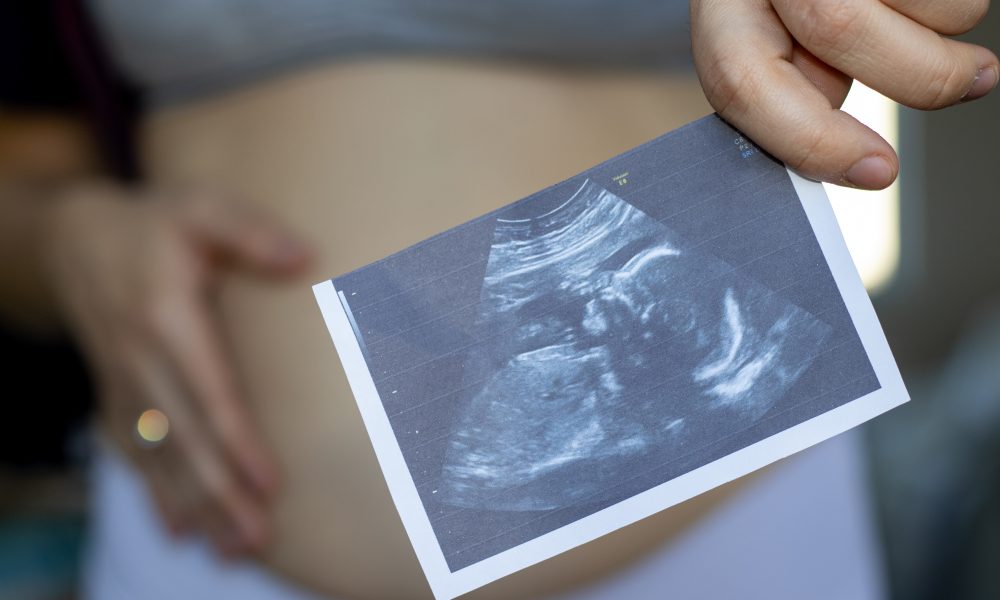
The American company specialises in fertility treatments, IVF, fertility testing and fertility preservation

Published

on

The US fertility provider, CCRM Fertility, has announced the acquisition of The Institute for Reproductive Medicine & Science (IRMS).

With the new addition of IRMS, the fertility company will now serve 11 major metropolitan areas with 34 locations across the US and Canada.

Jon Pardew, president and CEO of CCRM Fertility, said the acquisition is just one piece to the company’s overall growth strategy, further strengthening its commitment to its patients, physicians, technologies, fertility care and research.

“Bringing IRMS into our family made perfect sense,” he added. “It has a longstanding reputation for world-class services, personalised fertility treatment and access to care through convenient locations.

“We are confident IRMS’s diverse and experienced team of physicians and embryologists will be an excellent addition to the CCRM Fertility team. Our combined commitment to quality care and innovative solutions now makes us one of the largest and most advanced network of fertility clinics servicing North America.”

The IRMS clinical director, Dr Debbra Keegan, said: “The IRMS team is incredibly excited to join the CCRM Fertility network as we expand our philosophy of care throughout the State of New Jersey and beyond.

“We chose CCRM Fertility because of our common commitment to patient-centric care, best practices in medicine and scientific expertise. We look forward to this partnership bringing yet another level of superior reproductive care to our valuable patients.”

CCRM Fertility specialises in fertility treatments, IVF, fertility testing, fertility preservation, genetic testing, third-party reproduction and egg donation.

The addition of IRMS will combine the two companies’ scientific advances, laboratory techniques and full suite of reproductive services.

The acquisition comes weeks after the fertility provider announced the expansion of its partnership with TMRW Life Sciences, the world’s first automated platform for the management and care of the frozen eggs and embryos used in IVF.


 

Fertility

Spain football federation partnership to offer players egg-freezing and fertility treatment

Published

on

Spain’s football federation will offer national team players egg-freezing and fertility treatment through a clinic partnership running until 2029.

The agreement with the Tambre clinic in Madrid will give Spain’s World Cup winners more options to pursue motherhood when they feel the time is right.

The Royal Spanish Football Federation (RFEF) said the agreement covers all national team players, including the futsal team, as well as Primera Division referees and assistants and all other federation employees.

It is the latest policy introduced by the RFEF as it seeks to lead the way in work-life balance and maternity protection.

The federation has also introduced measures allowing players to travel with their children during major tournaments. The scheme was extended to the men’s team during their successful World Cup campaign in North America this past summer.

RFEF president Rafael Louzán said: “If Spain and its national teams are the best in the world on the pitch, they must also be the best in matters such as work-life balance.

“This is a new, comprehensive and pioneering benefit that extends to all federation employees. Today is a great day for the entire Spanish football family.”

The agreement followed a direct request from players after discussions with national team captains, including London City Lionesses midfielder Alexia Putellas.

Putellas told Spanish outlet El País: “As a group of captains, we had a concern — because experiencing a World Cup is vital for a player — regarding the difficulty of reconciling that with the desire to become a mother.”

“It’s a desire I didn’t originally have but developed some time ago.

“Thanks to the incredible work done by the federation, an agreement has been reached with a clinic allowing us to freeze our eggs while we are still active players, for as long as we wish.

“For me, this is a huge step forward; the federation understands that you are serving your country in a way that runs counter to your biological clock — that you can’t simply pause your career to become a mother because you need your body to do your job.”

The announcement follows Chelsea becoming the first Women’s Super League club to offer similar fertility treatment options to its players.

The move has also drawn criticism.

Spanish triple jumper Ana Peleteiro-Compaoré Brión said on Instagram: “The problem obviously isn’t freezing eggs.

“The problem is: why does the institution these women work for have an interest in financing them to delay their motherhood?

“And here there’s a problem that for me changes absolutely everything.

“Is this measure intended to make it easier for women to be mothers or is it intended to make it easier for them not to be while they’re playing?”

Spain are the current world champions in both the women’s and men’s games.

The women will attempt to defend their title at the 2027 World Cup in Brazil next summer.

Continue Reading

Fertility

Paracetamol use may impact future fertility, studies suggest

Published

on

Paracetamol use in pregnancy was not linked to autism or ADHD, while separate research found reproductive differences in girls exposed before birth.

One study analysed health records from more than 120,000 children and found no increased risk of autism following prenatal paracetamol exposure.

A separate analysis of nearly 100,000 children also found no increased risk of ADHD among those born to mothers who used the painkiller during pregnancy.

Researchers from the Hong Kong Hospital Authority examined electronic health records covering pregnancies between January 2001 and December 2023.

The autism analysis included 124,333 children, who were nine years old on average and split almost evenly between males and females. There were 3,445 autism diagnoses, representing 2.8 per cent of the group.

The ADHD analysis involved 97,285 children, who were seven years old on average and also split evenly between males and females. There were 5,168 ADHD diagnoses, representing 5.3 per cent.

Women prescribed paracetamol during pregnancy were more likely to be older and have pre-existing conditions including psychiatric disorders, as well as reasons for taking the drug such as infection, fever or chronic pain.

No association was found between prenatal paracetamol exposure and either autism or ADHD.

The findings did not differ according to the trimester in which paracetamol was taken or whether use was intermittent or daily. Advanced maternal age, defined as pregnancy in women over 35, did not alter the findings.

The researchers wrote: “Paracetamol remains a safe and essential analgesic [pain reliever] and antipyretic [fever reducer] during pregnancy, whereas alternatives, such as NSAIDs and opioids carry well-documented risks.

“Unwarranted reluctance to use paracetamol could lead to undertreatment of pain and fever, or the use of more harmful alternatives, both posing risks to the pregnancy and developing fetus.”

The authors said women should assess paracetamol use with guidance from their doctor.

A separate study involving 685 pregnant women without pre-existing conditions and 302 infant daughters found associations between prenatal paracetamol exposure and differences in reproductive organs and hormone levels.

Researchers from Copenhagen University Hospital enrolled the women during their first trimester and assessed them during the first trimester, third trimester and again when their babies were three months old.

At around three months, infants experience a temporary rise in reproductive hormones sometimes called mini-puberty.

Pregnant participants completed questionnaires every two weeks about their use of pain medicines including paracetamol. Infant girls underwent ultrasound scans of their reproductive organs and blood tests to measure hormone levels.

Researchers also examined a separate group of 1,210 girls followed from infancy to adolescence whose mothers reported paracetamol use during the third trimester.

Three-month-old girls exposed to paracetamol before birth had an average 40 per cent smaller ovarian volume, 13 per cent smaller uterine volume and 23 per cent fewer ovarian follicles.

Girls exposed during the first trimester also had lower levels of Anti-Müllerian hormone, a marker of ovarian function.

Among the older girls, those exposed before birth were more likely to have smaller uteruses at puberty and smaller ovaries during their teenage years.

Dr Margit Bistrup Fischer, lead study author and postdoctoral researcher in the Department of Growth and Reproduction at Rigshospitalet hospital in Denmark, said: “Animal studies have demonstrated that impaired formation of ovarian follicles can lead to reduced fertility and earlier reproductive aging.

“Whether the differences observed in our study have implications for fertility and age at menopause in humans remains unknown and will require long-term follow-up of the girls in our cohort.”

She cautioned that women who had used paracetamol during pregnancy “should not be alarmed by our findings”, as the study found associations rather than direct causation and outcomes for individual women and children are unclear.

“Importantly, our study does not evaluate whether [acetaminophen] causes reproductive problems, nor does it provide evidence that prenatal exposure affects future fertility or age at menopause,” she said.

“Although we observed similar associations in an independent cohort, long-term follow-up is needed to determine whether these early-life differences have any clinical significance later in life.”

Continue Reading

Insight

Fertility rate in England and Wales hits record low, new figures reveal

Published

on

The fertility rate in England and Wales fell to a record low of 1.39 children per woman in 2025, down from 1.41 a year earlier.

New figures show that parts of London and cities with major universities accounted for many of the areas with the lowest local fertility rates.

The City of London recorded the lowest rate in 2025 at 0.37 children per woman, followed by Cambridge at 0.87 and the London boroughs of Islington and Westminster at 0.90.

The Office for National Statistics (ONS) defines the fertility rate as the average number of live children women would expect to have over their childbearing lives.

Brighton & Hove recorded a rate of 0.95, followed by Southwark at 0.97 and Norwich at 0.98.

Exeter, Oxford and York, along with the London boroughs of Camden and Hammersmith & Fulham, each recorded 1.01 children per woman.

At the other end of the table, Pendle in Lancashire and Luton in Bedfordshire had the highest rate at 1.93.

They were followed by Oldham in Greater Manchester at 1.87, Bradford in West Yorkshire at 1.84 and Barking & Dagenham in London at 1.83.

The overall fertility rate for England and Wales declined from 1.41 in 2024 to 1.39 in 2025.

A rate of around 2.1 is needed for a population to remain stable over time when the impact of migration is excluded.

Twelve of the 25 local authorities with the lowest fertility rates in 2025 were in London.

In Wales, Swansea recorded the lowest fertility rate at 1.18, while Carmarthenshire, the Isle of Anglesey and Newport each had the highest rate at 1.48.

There were 585,396 live births in England and Wales in 2025, down from 594,677 in 2024 and the lowest number since 1977.

Live births fell across every region in England. The West Midlands recorded the largest percentage decline at 3.1 per cent, while the North East had the smallest at 0.3 per cent.

The average age of parents also increased slightly.

Mothers had a provisional standardised mean age of 31.1 in 2025, compared with 31.0 in 2024. Fathers had an average age of 34.0, up from 33.9.

In 1975, the average age was 26.4 for mothers and 29.5 for fathers.

The proportion of births where the mother was born outside the UK also increased, from 20.8 per cent in 2005 to 27.5 per cent in 2015 and 34.6 per cent in 2025.

India was the most common country of birth for non-UK-born mothers in 2025 for the fourth consecutive year.

It was followed by Pakistan, Nigeria and Romania.

In 2025, 56.4 per cent of births were to parents who were both born in the UK, down from 62.7 per cent in 2015.

Continue Reading

Trending

Copyright © 2025 Aspect Health Media Ltd. All Rights Reserved.

