




Motherhood
UK commits £254m to boost women’s maternal healthcare choices

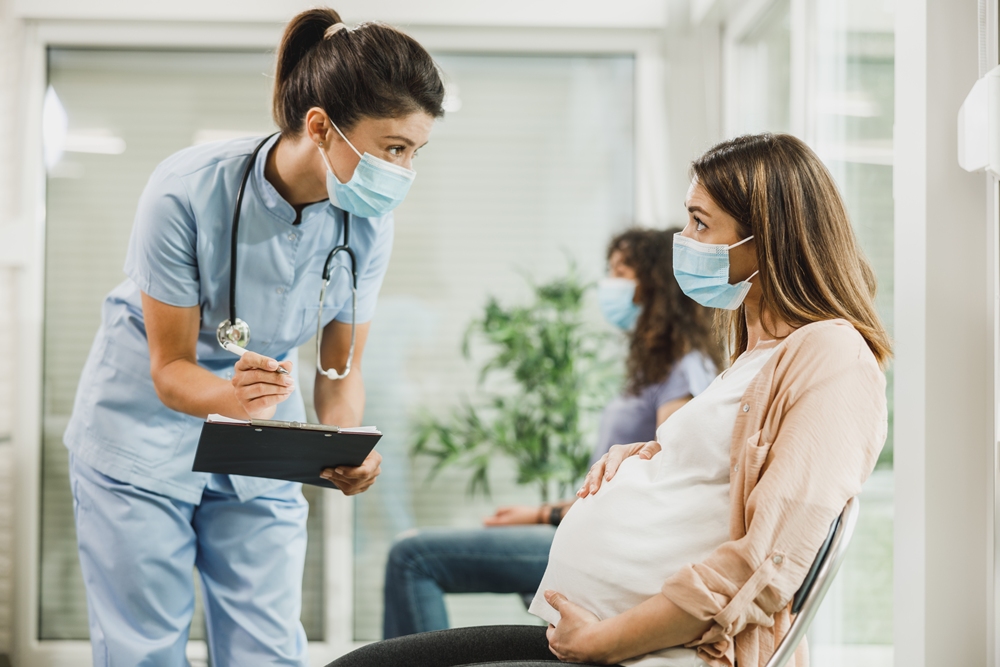
A £254m UK funding package will expand reproductive health access for millions of women and girls across 54 countries.
The government said the investment will support family planning for more than 15 million women each year and could prevent 14 million unintended pregnancies and more than 35,000 maternal deaths by 2028.
The funding will expand access to contraceptives and safe abortion products, as well as medicines and equipment for maternal and newborn healthcare.

Women will be supported to access family planning products including condoms, pills, implants and coils.
The programme will also provide equipment to improve early detection of post-partum haemorrhage, severe bleeding after childbirth, and treatments shown to reduce severe bleeding by almost two thirds.
Kirsty McNeill, minister for development, said: “It is a scandal that women and girls are denied the fundamental right to make informed choices about their own body, free from coercion, discrimination and violence.
“Every woman and girl should be able to make decisions about her own future. That choice can mean staying in school, finding work or surviving childbirth.
“The funding I have announced will help give millions more women and girls across the world autonomy over their bodies, control over their futures, and the chance to fulfil their full potential.”
The funding will be delivered through the CHOICES programme, working with the United Nations Population Fund (UNFPA) and Clinton Health Access Initiative (CHAI) across more than 50 of the world’s poorest countries, including conflict zones.
An estimated 259 million women who want to avoid or delay pregnancy are not using safe, modern contraceptive methods.
The government said it will also work with national governments to support sustainable health systems as countries transition away from donor funding.
Maternal deaths have fallen by 40 per cent since 2000, but progress has been uneven, with 70 per cent occurring in sub-Saharan Africa.
CHOICES operates in more than 50 countries, including Afghanistan, Chad, the Gambia, Malawi, Sudan and Yemen. It focuses on countries with the highest rates of death in childbirth and lowest rates of contraceptive use, as well as providing emergency support during humanitarian crises.













UK parents affected by pregnancy loss before 24 weeks will gain a legal right to up to two weeks of unpaid leave from April 2027.
The entitlement will cover miscarriage, terminations and unsuccessful IVF embryo transfers, giving those affected a formal right to time away from work following a loss.
It will also apply to partners, the other biological parent and intended parents in a surrogacy arrangement.
Vicki Robinson, chief executive of Miscarriage UK, said: “We welcome today’s announcement that bereavement leave for pre-24-week pregnancy loss will become law in April 2027, with an increased minimum of two weeks’ leave and an entitlement that recognises partners, too.
“This is an important step in recognising pregnancy loss as a bereavement and the profound impact it can have, and we hope will provide a baseline for employers to go further.
“We still strongly believe bereavement leave should be paid, and we will continue to press for this through our Leave for Every Loss campaign.
“We will continue work with Government to ensure the detail and guidance provide meaningful and compassionate support for everyone affected by pregnancy loss.”
There is currently no legal right to bereavement leave following pregnancy loss before 24 weeks.
The change follows campaigning by parents who experienced pregnancy loss without formal recognition of their loss.
An estimated one in five women in the UK experience a miscarriage during their lifetime.
The new entitlement is intended to provide greater consistency for families across Great Britain following pregnancy loss.
Nottingham University Hospitals NHS Trust has apologised after a human error caused 11 years of maternity data to be overwritten.
The incident happened during routine technical work on 18 August, when computer instructions intended to create a copy of a radiotherapy database were mistakenly applied to the maternity database.
Most of the affected information has since been recovered, including notes, observations, test results and other information recorded as part of patient care.
However, the trust has been unable to fully restore the historical record showing who viewed maternity records between September 2011 and November 2022.
Current data was not affected and the incident has had no impact on current maternity services or care provided to women and babies, according to the trust.
It also said no information was accessed or used inappropriately as a result of the incident.
Andy Callow, chief digital and information officer at Nottingham University Hospitals, said: “I am sorry for the concern and distress this incident may cause to women and families affected.
“On 18 August 2026, a human error during a routine technical process resulted in a maternity records database being unintentionally overwritten.
“We took immediate action to investigate the incident and recover the affected information.
“The information needed to support patient care has been restored and there has been no impact on current maternity services or the care provided to women and babies today.
“However, to date, we have been unable to fully restore the historical record showing who viewed maternity records between September 2011 and November 2022.
“We have informed the Information Commissioner’s Office, completed a full investigation and strengthened our processes and controls to help prevent a similar incident from happening again.”
The error occurred when pre-written computer instructions previously used for another hospital system were used during the technical work.
A setting that should have been changed was not altered, resulting in work being carried out on the maternity database instead of the radiotherapy database.
The issue was escalated within minutes of being identified and experts were brought in to recover as much information as possible.
The trust has referred the incident to the Information Commissioner’s Office and notified Nottinghamshire Police, which is conducting a separate criminal investigation into maternity care at the trust.
The force is assessing whether the loss of information about who accessed maternity records could affect that investigation.
The incident follows a maternity review led by midwife Donna Ockenden, which concluded in June after examining the cases of 2,500 families over a 20-year period.
The review found more than 500 mothers and babies suffered potentially avoidable harm, with 162 dying following substandard care. Some babies who survived were left seriously disabled.
Nottinghamshire Police announced its separate criminal investigation, Operation Perth, in September 2023.
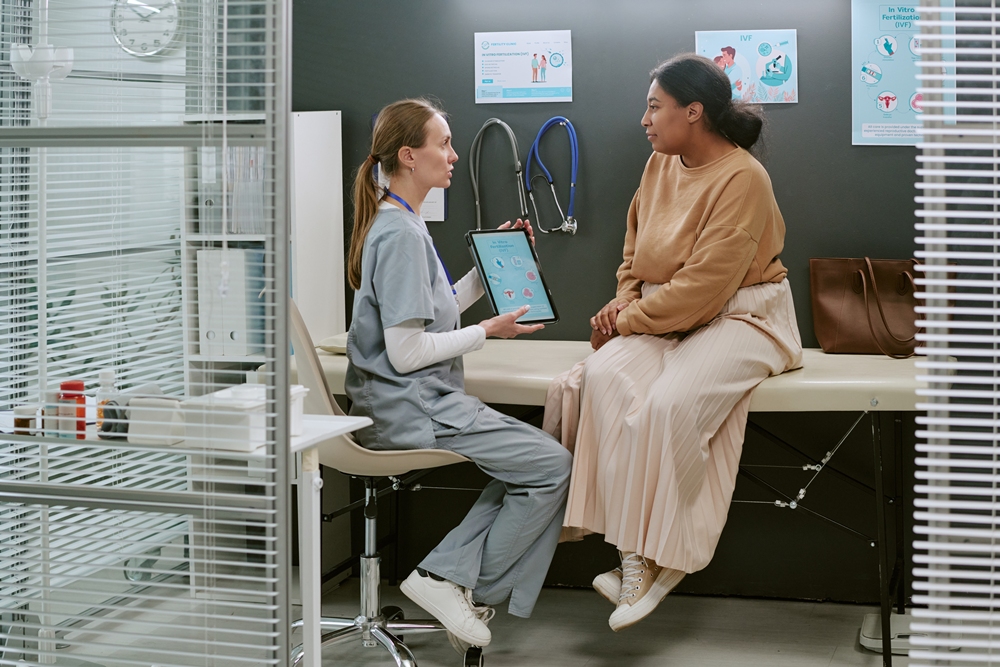
The Scottish government has launched a national review into whether NHS IVF access should be extended to single women.
The review will also consider whether wider access should be offered to couples who have children from previous relationships.
Health secretary Angela Constance said: “Access to NHS IVF treatment should be fair, timely and reflect the way people’s lives and families look today.”
Most single women are not currently eligible for NHS IVF treatment in Scotland.
Campaigners have welcomed the review.
Katie Rollings of Fertility Action said: “It’s an essential and long-awaited decision that will impact a huge number of people who are struggling to grow their families.
She said there is “no evidence” that having two parents rather than one determines whether a child will thrive.
She added: “What matters is whether a child is loved, safe, supported and has stable, positive relationships around them.”
Figures from the Human Fertilisation and Embryology Authority show Scotland is the only UK nation where NHS-funded IVF cycles outnumber privately funded cycles.
In 2024, more than 6,000 cycles of fertility treatment were carried out among more than 4,000 patients in Scotland. Both figures were slightly lower than the record highs recorded in 2022.
The past 20 years have also seen a rise in the number of same-sex female couples and single women receiving fertility treatment.
In 2024, 625 IVF cycles were carried out for women in same-sex couples in Scotland, with more than one third funded by the NHS.
There were 330 cycles involving single women, of which 50 were NHS-funded.
In England, single women can access IVF through the NHS, although eligibility varies according to the local health trust’s policy.
Current Scottish rules state that couples are eligible if they have been living in a stable relationship for two years and neither partner has been sterilised.
Couples where one partner already has a child can be eligible, but those where both partners have children from previous relationships are not.
Eligibility rules also require a body mass index above 18.5 and below 30, and state that couples must not smoke, drink alcohol or take drugs during treatment. The mother must be under 42.
The Scottish government said the review would also examine consistency of access to fertility preservation, including during cancer treatment, as well as reducing waiting times for donor eggs and sperm.
Same-sex female couples already have access to NHS IVF, but they can face long waits for donor eggs or sperm, as can heterosexual couples who require donor treatment.
The National Fertility Group will lead the review and make “costed, demand-modelled recommendations”, which are due to be published by early summer 2027.
The group will include fertility experts from Scotland’s four NHS-assisted conception units in Glasgow, Edinburgh, Aberdeen and Dundee.
Prof Sarah Martins Da Silva, an NHS consultant and chair of fertility medicine at Dundee University, said there were questions to be answered in a resource-stretched NHS.
“As a fertility specialist I’m never going to be disappointed if the criteria is widened,” she said.
“But with single people, as an NHS clinician looking at the competing demands we have, I’d ask the question about whether being single is a health condition that needs to be funded.”
Da Silva said NHS waiting lists were full of couples who require donated eggs or sperm because of medical conditions including cancer and could face longer waits.
“It’s slightly a disservice to them,” she said.
“There would need to be a real investment and resource without making everybody wait an extraordinary long time.
“With the current financial environment we work in, if you’re talking about new money, where would that come from?”
She said she would welcome changes that encouraged more people to donate eggs or sperm and questioned whether arguments about children needing two parents were necessarily relevant to the debate.
“On the one hand bringing up a child is quite an expensive process, and if you don’t have that support, it can be very difficult.
“But on the other hand, many people start off as a couple and divorce.”
Da Silva also welcomed plans for the review to consider eligibility for couples who already have children, describing the move as “fantastic”.









 Menopause1 week ago
Menopause may not explain rising heart condition in women – study

 Pregnancy2 weeks ago
Paracetamol use may impact future fertility, studies suggest
 Insight1 week ago
Women with birth trauma face 2.5x higher healthcare costs – study

 pain conditions1 week ago
Medical cannabis may improve endometriosis symptoms – study

 Mental health6 days ago
Neuroscience-backed journaling for women’s mental health
 Cancer1 week ago
Study could explain why obesity is a breast cancer risk factor
 AI1 week ago
Evvy secures US$40m for AI-powered vaginal microbiome testing

 Q&A1 week ago
Innovating breast cancer screening with tears