




News
Women with endometriosis face 46% higher risk of type 2 diabetes – study


Women with endometriosis had a 46 per cent higher risk of developing type 2 diabetes than those without the condition in a recent study.
The study followed data from nearly 3m women over 25 years and was described as the largest to date examining the relationship between the two conditions.
Maggie Fuzak Nunziato, a doctoral student in epidemiology at George Mason, led the research with Anna Pollack, professor of global and community health.

Researchers found that diabetes risk varied across different forms of endometriosis, suggesting the condition may have broader long-term health implications than previously recognised.
They believe chronic inflammation associated with endometriosis may play a role in metabolic health, although more research is needed to understand the connection.
Fuzak Nunziato, the study’s lead author, said: “Previous studies largely evaluated endometriosis as a single condition and generally reported little or no overall association with type 2 diabetes.
“Our findings add to a growing understanding that endometriosis may affect more than reproductive health alone.”
The association was strongest among premenopausal women and women without obesity, groups not traditionally considered to be at the highest risk of type 2 diabetes.
Endometriosis affects around one in 10 women of reproductive age.
It occurs when tissue similar to the lining of the uterus grows outside the uterus and can cause chronic pelvic pain, infertility and other complications.
If the findings are confirmed by further research, they could help clinicians identify women with endometriosis who may be at higher risk of type 2 diabetes and could benefit from earlier screening or prevention efforts.
Researchers analysed health records from nearly 3m women in the Utah Population Database between 1996 and 2021, including almost 100,000 who had been diagnosed with endometriosis.
Some forms of endometriosis had a much stronger association with diabetes than others.
The strongest link was found among women with extra-pelvic endometriosis, meaning the condition is found outside the pelvis.
The researchers stressed that the findings show an association and do not prove that endometriosis causes type 2 diabetes.
They said further research is needed to understand the biological mechanisms connecting the two conditions and whether earlier metabolic screening could improve outcomes for women with endometriosis.













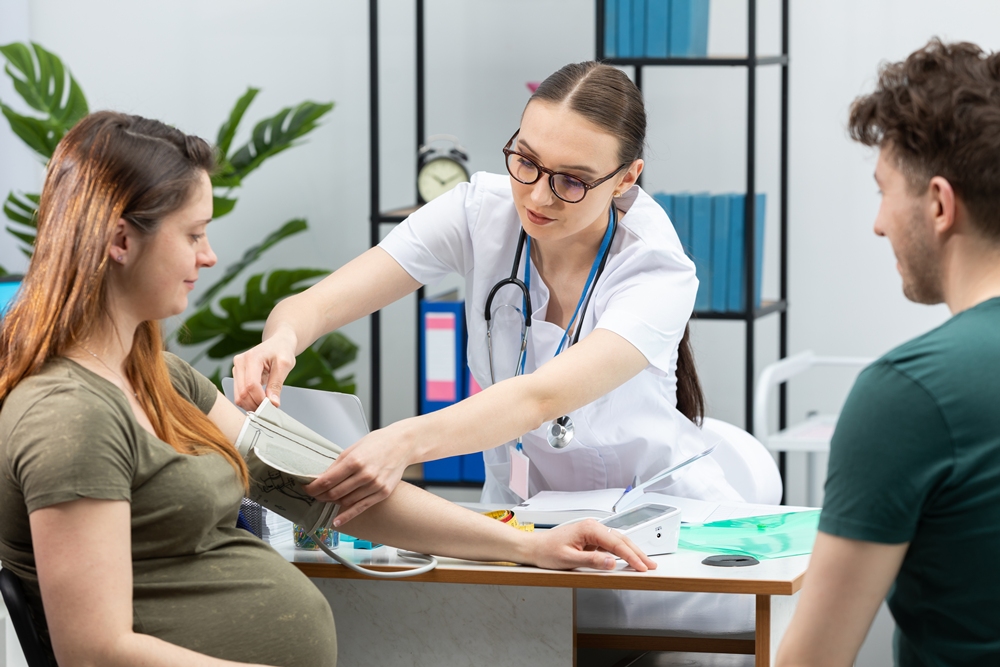
Phthalates found in plastics and personal care products may be linked to higher blood pressure during pregnancy, a study suggests.
Hypertensive disorders of pregnancy, including pre-eclampsia, are a leading cause of maternal mortality in the US.
Higher blood pressure during pregnancy has also been linked to adverse health outcomes for both mothers and children.
While family history and lifestyle are known risk factors, growing evidence suggests exposure to phthalates may also contribute to raised blood pressure during pregnancy.
Phthalates are chemicals found in plastics, personal care products and hundreds of other consumer goods. Some can interfere with the body’s natural hormones.
Kimberly Parra, of Harvard T.H. Chan School of Public Health, said: “Our study suggests that having higher concentrations of personal care products-associated chemicals, known as phthalates, in the body might contribute to elevated blood pressure in pregnancy.
“While our study does not show that phthalates cause high blood pressure during pregnancy, it suggests that reducing exposure to this class of chemicals by limiting personal care products containing these ingredients, particularly those with fragrance, may be a way to address high blood pressure in pregnancy and improve pregnancy health.”
Researchers measured phthalate exposure and blood pressure in 338 pregnant women from the Environmental Reproductive and Glucose Outcomes Study at three points during pregnancy.
They analysed whether higher levels of the chemicals, individually and in combination, were linked to higher blood pressure or an increased risk of pregnancy-related high blood pressure disorders.
Women with higher urine concentrations of phthalates associated with fragrances and personal care products had higher systolic and diastolic blood pressure, markers of increased risk of hypertensive disorders of pregnancy.
Systolic blood pressure is the pressure in the arteries when the heart beats, while diastolic pressure measures it between beats.
Around 13 per cent of participants developed a pregnancy-related high blood pressure disorder.
Women with higher levels of certain phthalates, particularly those found in personal care products, tended to have higher blood pressure later in pregnancy.
Parra said: “More research is needed to better understand these findings, particularly whether the effects are driven by changes in oestrogen-related pathways. Additional studies should also examine the potential role of other phthalates and their replacement chemicals.”
Entrepreneur
Applications close August 18 for Women’s Health Innovation Summit 2026 Innovation Showcase
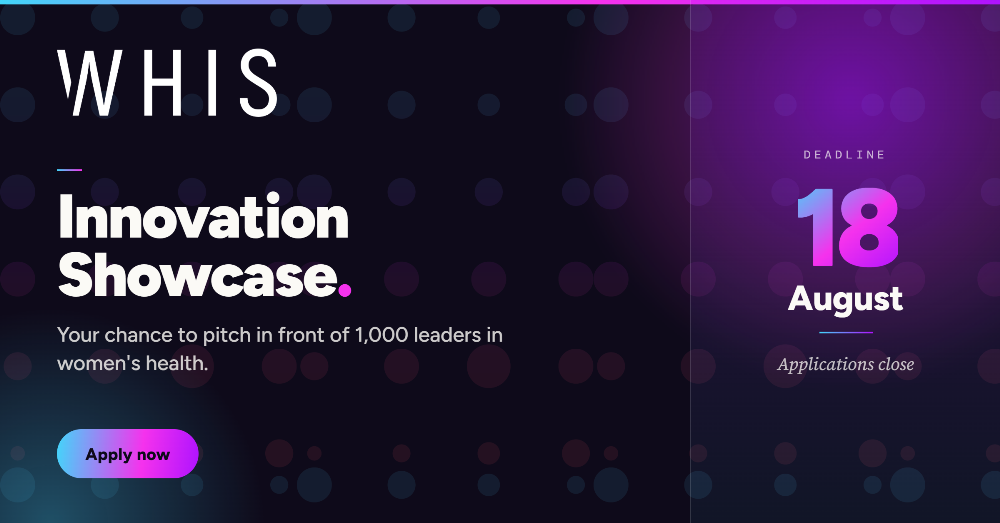
The Women’s Health Innovation Summit (WHIS) has reminded startups that applications for its 2026 Innovation Showcase close on Tuesday, August 18.
The Showcase gives early and growth-stage companies the opportunity to pitch live on stage to the most influential audience in women’s health, at a summit that convenes more than 1,000 senior decision-makers from across the ecosystem, including payers, providers, pharma, and investors.
Now in its eighth year, WHIS takes place October 13–15, 2026 at Encore Boston Harbor.
The event has built a reputation as the leading platform uniting the full women’s health ecosystem, from health systems and health plans to pharmaceutical leaders and the investors funding the next wave of innovation in the space.
A Direct Line to Funding, Partnerships and Adoption
Companies selected for the Innovation Showcase will present directly to an audience with the capital, clinical expertise and commercial relationships to move deals forward.
Past participants have gone on to secure investor introductions, commercial partnerships and clinical collaborations that started as presentations on the WHIS stage and turned into signed agreements.
Applications Reviewed by an Expert Selection Committee
Submissions are being reviewed by a selection committee of leading investors and industry operators, including:
- Parambir Bhangu, Executive Director, External Innovation & Emerging Science, Organon
- Elizabeth Bailey, Co-Founder & Managing Partner, Foreground Capital
- Karla Loken, Founder, Loken and Associates
- Mané Mikayelyan, Associate Partner, DeciBio
- Anna Valcheva, Founder, Managing Director & CEO, Astra Ventures
- Azin Radsan van Alebeek, Co-founder & General Partner, Emmeline Ventures
WHIS is where the women’s health ecosystem comes together to get deals done,” said Poppy Howard-Wall, Event Director of WHIS.
How to Apply
Early and growth-stage companies across digital health, therapeutics, diagnostics, med device and consumer health are encouraged to apply before the August 18 deadline.
Full details and the application form are available at whisusa.com/attend/start-ups.

A third of women surveyed did not know perimenopause could affect mental health, with many experiencing symptoms for months before recognising them.
The survey of 1,000 women found many had been caught off guard by mental health symptoms linked to perimenopause or menopause.
It was conducted by Dynata on behalf of LifeStance Health in June 2026 and included women born between 1960 and 1990 who had, or suspected they had, perimenopause or menopause.
Respondents described anxiety as somewhat or extremely severe in 66 per cent of cases and depression in 54 per cent, with many initially attributing the symptoms to a separate condition rather than a hormonal transition.
Stephanie Eken, chief medical officer at LifeStance Health, said: “Women’s mental health needs change across their life stages, and perimenopause and menopause are among the biggest transitions of all.
“Specialised, life-stage-specific care should be standard practice, and I believe the organisations that build care around this reality, rather than taking a one-size-fits-all approach, will define the next era of women’s health.”
Around 33 per cent of respondents said they did not know perimenopause could cause mental health symptoms.
Almost half, 49 per cent, were surprised that mental health symptoms linked to perimenopause or menopause could last for several years.
A further 22 per cent were surprised that perimenopause could begin shortly after childbirth.
The survey found 74 per cent experienced symptoms for six months or longer before suspecting perimenopause or menopause, while 27 per cent recognised the transition within six months.
Before recognising the symptoms as potentially linked to perimenopause or menopause, 49 per cent believed they were experiencing anxiety as a standalone condition and 39 per cent thought they had depression.
Around 36 per cent were surprised that symptoms linked to perimenopause or menopause could resemble a standalone mental health condition.
Among respondents who tried therapy for perimenopause or menopause-related symptoms, 83 per cent said it was helpful.
Around 82 per cent of those who tried medications such as antidepressants or oestrogen also found them helpful.
Nearly half, 47 per cent, said mental healthcare should be a standard part of perimenopause care, while 59 per cent said they would be more likely to seek mental healthcare if they knew it could meaningfully improve their symptoms.
Around 35 per cent said perimenopause or menopause had a slight to significant negative impact on their overall mental health, while 42 per cent reported a negative impact on mood.
However, 32 per cent reported no impact on their overall mental health and 22 per cent reported no impact on mood.
The survey points to women experiencing mental health symptoms for an extended period before connecting them to perimenopause or menopause, with many initially attributing anxiety or depression to an unrelated cause.
That delay may help explain why nearly half did not realise how long these symptoms can persist and why more than a third were surprised they could resemble a standalone mental health condition.
Despite the awareness gap, most respondents who sought treatment, whether therapy or medication, said it had been helpful.
Separate research published in 2023 estimated that menopause symptoms cost the US economy around US$1.8bn a year in lost work productivity.
The estimated cost rose to US$26.6bn when associated healthcare costs were included.
That research was based on more than 4,400 employed women aged 45 to 60, with its authors saying further studies in larger and more diverse populations were needed to confirm the findings.









 News5 days ago
UK femtech investment surges 194% in a decade, research finds

 Cancer1 week ago
Cancer patient receives ‘landmark’ treatment in world-first

 Entrepreneur6 days ago
TidalSense raises £14m to expand five-minute COPD test across NHS

 Sponsored Content2 weeks ago
The room is filling up at WHW Europe 2026 with super early bird pricing ending this Friday

 News5 days ago
Cross-Border Impact Ventures raises US$58m for women and children’s health

 Insight2 weeks ago
Johnson & Johnson offers to pay US$5.5bn to settle talc cancer lawsuits

 Insight1 week ago
Women urged to be wary of menopause misinformation on social media

 News2 weeks ago
Premature menopause is a high blood pressure risk, study finds