




Hormonal health
Menstrual data is missing a critical layer: The mind


By Aleena Ashraf, neuroscientist, published author and part of Véa’s Clinical Advisory Board
Menstrual data is missing a critical layer: the mind.
The menstrual cycle won’t be fully understood until we track the mind alongside the body.
We measure the body exceptionally well.
Just three period-tracking apps, Clue, Flo and Period Tracker, have been downloaded over 200 million times combined.
Dates, symptoms, mood and fertility windows are all diligently monitored.
Still, logging when a period starts doesn’t document what it’s like to live inside a cycle.
A recent survey reported 61.9 per cent of participants used period-tracking apps for more than two years, yet only surface-level data could be observed.
Mental clarity, motivation, resilience, mental load, none of this gets recorded.
Which is why the data can’t answer one of the most common questions women ask themselves: why does the same task feel manageable one week and impossible the next?
Get this right and the payoff is significant: more precise, predictive and personalised care.
Neuroscience and the menstrual cycle
The menstrual cycle isn’t only a reproductive process.
It’s a neurobiological rhythm that the brain actively regulates.
Ignoring that means overlooking the system driving much of what gets logged as “mood”.
After menstruation, rising estradiol lifts serotonin and dopamine, sharpening mood, motivation and mental efficiency.
This is the phase where pushing hard toward a goal tends to feel the easiest.
Later, progesterone takes over and increases GABA, the brain’s calming neurotransmitter.
The body shifts toward rest and recovery: slower pace, more introspection and less drive for risk.
The brain isn’t weaker in one phase and stronger in another. It’s continuously realigning to match hormonal change.
This isn’t a drop in capability but a shift in cognitive mode.
Hormonal changes aren’t disruptive – they’re informative.
The subjective experience of every woman living through them is exactly where current data systems fall short.
The lived experience is missing
What it actually feels like to think and function differently across the month remains almost entirely undocumented.
Women keep pushing through their cycle to meet constant demands at work and at home.
The cost doesn’t show up immediately but builds quietly, then surfaces as burnout, anxiety or withdrawal.
The turning point is rarely dramatic. It lives in small, recurring thoughts:
“Why does this feel harder today?”
“Why can’t I think straight?”
“Why is everything triggering me?”
During the luteal phase, irritability is usually treated as a symptom to control or tolerate.
There is lower tolerance for social demands, heightened sensitivity to routine tasks and occasional emotional outbursts.
But tracked over time against the cycle’s stages, it stops looking random.
It becomes a measurable signal of cognitive and emotional load.
The same is true for the urge to withdraw.
Read in isolation, it looks like disengagement, a dip in performance or a personal shortcoming.
Read longitudinally, it frequently lines up with the phase where the brain is shifting toward introspection and recovery.
Rather than seeing it as avoidance, it’s regulation.
Picture a professional in a high-pressure role.
In one phase of her cycle she is sharp, decisive and efficient.
In another, she is re-reading the same email, struggling to focus and disproportionately overwhelmed by routine tasks.
Without context, that looks like inconsistency.
With context, it’s a pattern that can be understood, anticipated and supported.
Journaling reveals the missing layer
Journaling is already a proven way to surface this deep layer.
It’s well established for improving mental health and stress regulation.
A 2022 systematic review reported a 9 per cent decrease in anxiety levels through writing.
But its potential goes further than that.
Journal entries build a longitudinal record of how someone’s inner state and hormone-linked rhythms evolve across the cycle, across roles, across time.
The problem is journaling can be hard to sustain without structure.
It’s also tricky to know what to write, as it’s self-directed.
Insights end up buried in raw writing, disconnected from the neurological pattern actually driving it.
Véa is a digital platform that guides women to document their lived experience over time, surface recurring trends and put words to what they’re going through.
It develops freeform writing into systematic self-reflection through a framework supported by neuroscience.
This captures snapshots of how women are thinking and feeling across different phases of the cycle.
Guided support peels back layers of cognition and emotion, surfacing what current menstrual data misses.
No single narrative gets imposed on every user.
Instead, the method leaves room for genuinely different perspectives of productivity to emerge.
Performed well, this turns journaling into a system of signals, not a pile of disconnected entries.
Done responsibly, privately and anonymously, this kind of data could help understand more about female health.
It isn’t diagnostic and it isn’t here to label anyone. But it can feed clinical understanding and future research alike.
What changes if we take this seriously
Treat the menstrual cycle as a neurological framework rather than a purely reproductive one, and the entire model of care begins to change.
It’s possible to identify strain earlier.
Work can be paced differently.
For clinicians, it means treatment plans that account for cyclical variation in symptoms and inner state.
For researchers, it gives a richer dataset that moves past static and linear measurements toward dynamic patterns.
For employers, it’s a chance to build more personalised ways of working around shifting cognitive load.
For families, it’s a reason to recognise and redistribute the invisible load carried by female homemakers.
This also fits within the broader shift toward preventative healthcare.
Catch the early signs and intervention can happen before burnout or more serious conditions take hold.
The menstrual cycle may be one of the richest data systems we have, if we are willing to read it correctly.
Learn more about Véa at veajournal.com


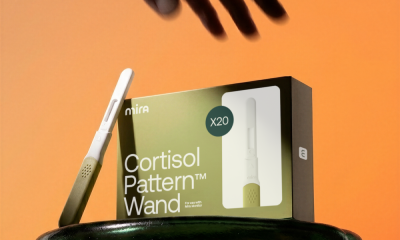











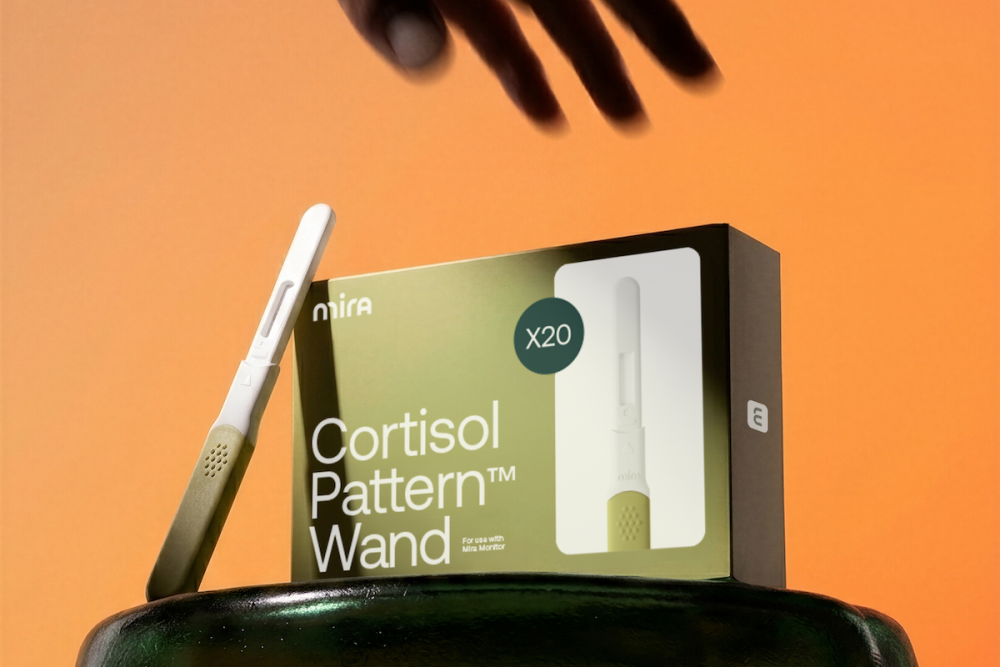
Mira has launched an at-home cortisol tracking kit that allows women to monitor stress-related patterns over time using urine samples.
The Cortisol Pattern Kit measures urinary free cortisol directly from a urine sample and displays results through the company’s existing monitor and app.
The system is intended for repeated testing rather than a single measurement, allowing users to compare results with a personal baseline built from their own data.
Mira said consistent daily testing can establish a baseline in about a week. It recommends testing in the morning and evening to see how cortisol patterns change throughout the day.
Cortisol is involved in the body’s stress response but is not a direct or complete measure of stress. The company said the kit is intended for general wellness use and is not designed to diagnose stress, an endocrine condition or any other medical condition.
The Cortisol Pattern Wands use the same lateral-flow testing format as Mira’s existing hormone tests. Users dip a wand into a urine sample, insert it into the Mira Monitor and view the result in the app within minutes.
The company said cortisol data can be viewed alongside cycle, hormone and daily routine information.
Sylvia Kang, founder and chief executive of Mira, said: “The Cortisol Pattern™ Kit gives women a new way to understand their stress patterns over time, in the context of their own biology.”
She added: “We built Mira to give women answers they had spent far too long searching for, beginning with the TTC journey and expanding into hormone and cycle tracking across life stages, including perimenopause. Now, we’re taking Mira beyond reproductive health and into everyday wellness, bringing personalised stress-pattern tracking directly into women’s homes.”
Mira said more than 350,000 women already use its platform to track their cycle and hormones.
Waitlist sign-ups for the Cortisol Pattern Kit and Cortisol Pattern Wands opened on 22 September, with wand refills available to pre-order in 20- and 30-count options.

Manchester City has launched a female athlete health platform covering menstrual, pelvic and breast health, as well as nutrition.
The Her City website is designed for the club’s women’s first-team players, coaches, support staff, academy players and parents.
Manchester City says the platform is the first of its kind in the Women’s Super League and was developed over two years.

The project was led by director of performance services Emma Deakin, physical performance scientist Rosie Anderson and PhD student and first-team nutritionist Sarah Malone.
It grew out of PhD research into menstrual, pelvic and breast health and nutrition, with the team seeking to turn that work into an online educational resource.
The website divides the four areas into separate sections and provides peer-reviewed information that the club says has been critically analysed by experts.
Content will continue to be reviewed and updated as further evidence emerges.
Resources include posters, visual explainers, audio materials and downloadable educational content, with information tailored to different groups including players and parents.
The platform aims to improve knowledge, develop critical analysis skills and strengthen communication within football and at home.
It also includes material to help users assess misinformation they encounter on social media or elsewhere.
A confidential contact form allows users to raise concerns or ask questions directly of experts at Manchester City.
Parents of academy players can also access the platform, with resources intended to help them support their children during a key phase of their development.
Manchester City said its longer-term aim is to make the platform available to all women working across City Football Group.

Michigan State University researchers are launching a novel project to transform how medications are developed and prescribed for women.
A US$4.6m award will fund computer models designed to predict how hormonal changes affect the way medicines move through and act in women’s bodies.
The funding is the first instalment of an award worth up to US$12.8m over three years, supporting work intended to account for hormonal changes throughout women’s lives.
Researchers plan to examine factors including menstrual cycles, pregnancy, contraceptive use, menopause and hormone replacement therapy, which can affect responses to medicines.
Teresa K. Woodruff, lead investigator on the project, said: “Because female hormone levels are constantly shifting, precision medicine allows us to map out these complex interactions.
“This NIH-backed initiative will create the first computationally driven clinical tool designed to guide medical care across every stage of a woman’s life.”
The project is led by researchers at Michigan State University and funded by the National Institutes of Health, with collaborators from Rutgers, Emory, Tulane, the University of Colorado Anschutz, the University of Michigan and the University of Utah.
Thirteen researchers will develop computational models to predict how changes in female hormones influence the way medicines move through and act within the body.
The work is part of the NIH Computational Modeling of Hormone Homeostasis Initiative, which is awarding US$21m nationally to support research into sex-specific hormonal biology.
The team plans to use artificial intelligence to digitise and organise more than 40 years of hormone research data in a publicly accessible database.
Researchers will also develop a standard computer model of a 28-day menstrual cycle, alongside models of how hormones regulate organs and tissues involved in processing nutrients, including the liver, muscle and fat.
Real-world patient data will then be used to expand the models to represent groups including women going through menopause or taking birth control, as well as women with conditions such as diabetes and obesity.
The project will also use three-dimensional human tissue models and lab-grown organoids, including liver, muscle and ovarian tissue, to test and refine the computer predictions.
Researchers plan to examine medicines including metformin, insulin and GLP-1 drugs, with the aim of developing tools that could help clinicians tailor doses and avoid harmful side effects.
Qiang Zhang, associate professor at Emory University, said: “Empowered by AI, novel assays and legacy human data, we will develop mechanistically based computational models of female physiology that can make translational, quantitative predictions for women’s responses to metabolic therapies.”
The researchers said the work could help address differences in how women respond to treatments for metabolic conditions including obesity, type 2 diabetes, cholesterol imbalances and thyroid disorders.
Nanette Santoro, professor at the University of Colorado Anschutz and president of the Endocrine Society, said: “Women experience large shifts in reproductive hormones at several points in their lifespan: puberty, pregnancy and menopause.
“During reproductive years, women also undergo profound day-to-day changes in reproductive hormone levels, giving them a markedly different endocrine backdrop than men.
“Using state-of-the-art computational technology to examine how these changes interact with commonly used medications is a critical pathway toward supporting life-course women’s health.”
The project team said its computer models and data will be made freely available to researchers and healthcare professionals when the work is completed.







 Menopause1 week ago
Menopause may not explain rising heart condition in women – study

 Fertility2 weeks ago
Paracetamol use may impact future fertility, studies suggest
 Insight1 week ago
Women with birth trauma face 2.5x higher healthcare costs – study

 Menopause2 weeks ago
Cancer drug could tackle osteoporosis menopause weight gain

 News1 week ago
Medical cannabis may improve endometriosis symptoms – study
 Cancer1 week ago
Study could explain why obesity is a breast cancer risk factor

 Menopause2 weeks ago
Menopause hormone therapy may improve cardiovascular health outcomes, study suggests
 AI1 week ago
Evvy secures US$40m for AI-powered vaginal microbiome testing