




Wellness
Beetroot juice may benefit pregnant women with chronic kidney disease – study

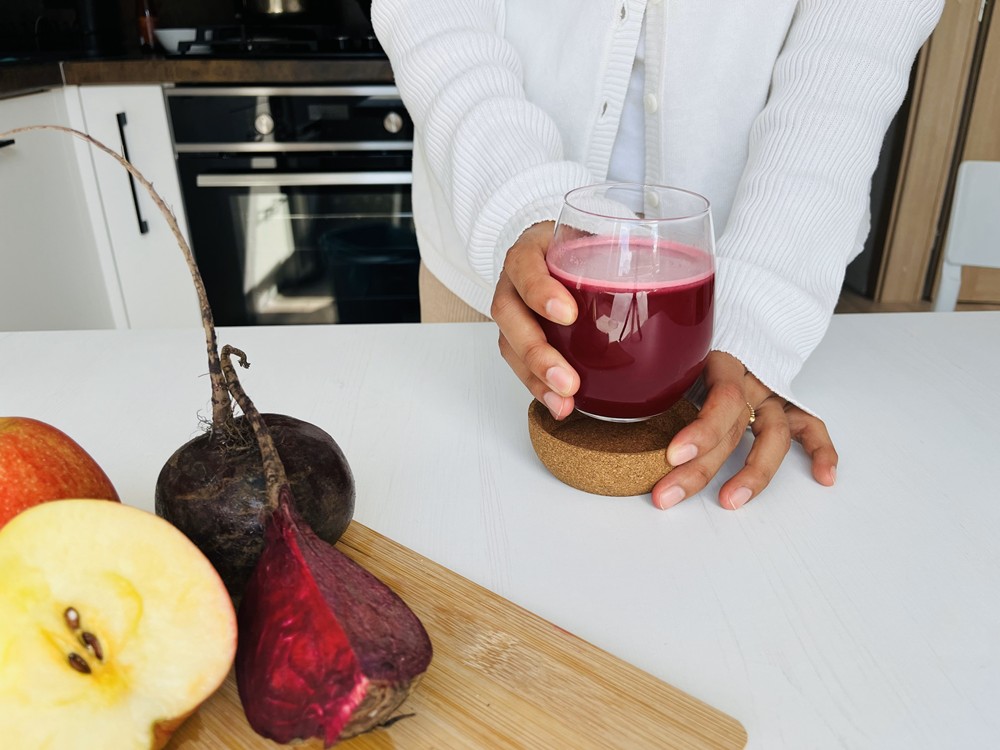
Daily beetroot juice may help support kidney health during pregnancy in women with chronic kidney disease, early research suggests.
Pregnancy puts additional strain on the kidneys. Around half of women with moderate to severe chronic kidney disease experience a decline in kidney function while pregnant.
Despite these risks, outcomes for pregnant women with the condition have changed little over the past 30 years.

Many medicines used to manage kidney disease are also unsuitable during pregnancy, meaning women often need to stop taking them for at least nine months.
Researchers at King’s College London examined whether dietary nitrate from beetroot juice could offer a simple and safe way to support kidney function during pregnancy.
Beetroot juice is naturally rich in nitrate, which the body converts into nitric oxide. Nitric oxide widens blood vessels and improves blood flow, which could reduce the strain placed on the kidneys during pregnancy.
The study involved 108 pregnant women with stage 2 to 5 chronic kidney disease across eight UK hospitals.
Before reaching 25 weeks of pregnancy, participants were randomly assigned to receive either standard care or a daily beetroot juice supplement containing dietary nitrate.
The study was mainly designed to assess whether a larger clinical trial would be practical. However, the findings also suggested possible benefits for mothers and babies.
Kate Bramham, consultant nephrologist at King’s College Hospital, professor at King’s College London and senior author of the study, said: “For women living with chronic kidney disease, pregnancy has always meant navigating a difficult trade-off between preserving their own health and keeping their baby safe, often with few tools to do both.
“These results are an encouraging first step towards a low-cost, low-risk intervention that could genuinely make a difference for this group of women, who have been underserved by research for far too long.”
Women receiving beetroot juice experienced around 70 per cent fewer serious adverse events overall than those receiving standard care. Of the serious adverse events that occurred, around half affected newborn babies.
Among women with more advanced kidney disease, researchers also observed trends towards better kidney function after pregnancy, fewer newborn admissions to neonatal care and a reduced need for blood pressure medication during pregnancy.
The researchers found no safety concerns linked to beetroot juice supplementation during pregnancy, including no increase in hyperkalaemia, which means unusually high potassium levels in the blood.
There have been concerns that beetroot juice could increase the risk of hyperkalaemia in pregnant women with chronic kidney disease, with some online advice recommending that they avoid it. However, no increase was recorded among women receiving the supplement.
Dr Priscilla Smith, a nephrologist, King’s College London PhD student and first author of the study, said: “Pregnancy can put additional stress on the kidneys, and for women with chronic kidney disease there are currently limited options to protect kidney function during this time.
“Our findings suggest beetroot juice could offer a simple and accessible approach that is safe and worth exploring further.”
The researchers said larger clinical trials are now needed to determine whether beetroot juice can significantly reduce kidney function decline and improve long-term outcomes for mothers and babies.
If confirmed, the intervention could offer an inexpensive and widely available way to support women with chronic kidney disease during pregnancy, when safe treatment options remain limited.
The research was supported by funding from Kidney Research UK.
Dr Andrew Webb, clinical senior lecturer at King’s College London and a co-author of the study, said: “By increasing nitric oxide production, dietary nitrate from beetroot juice may help improve blood vessel function and support kidney health.
“These early findings provide an important foundation for future research into protecting women with chronic kidney disease during pregnancy and their babies.”










Pregnant women are being advised to avoid runny or under-cooked eggs when eating out amid a developing salmonella outbreak.
The advice also applies to freshly made products that may contain uncooked eggs, including mayonnaise, soufflé and hollandaise sauce.

The FSA said well-cooked eggs served in restaurants, cafés and takeaways remain safe to eat.
The warning follows the UK Health Security Agency declaring a national outbreak of salmonella food poisoning after one person died and hundreds more fell ill.
Imported eggs or dishes containing them are thought to be behind the outbreak.
FSA chief scientific adviser Ian Young said: “If people are eating out or consuming eggs or egg-containing products from cafes and restaurants then for those people in particular who are young, elderly, pregnant or vulnerable, it’s important to make sure that any eggs or egg products that you consume in those settings have been very well cooked.”
He described the outbreak as “unusually large and rapidly increasing”, adding that “people need to be careful”.
The FSA said British eggs bought from supermarkets are not linked to the current outbreak because chickens bred in the UK are vaccinated against common strains of salmonella.
“There is no link to those eggs to this current outbreak,” Young said.
Mark Williams, chief executive of the British Egg Industry Council, said British eggs were safe to eat when runny, including for vulnerable people, and were widely available in restaurants and cafés.
“Customers who want to enjoy a runny egg should simply ask whether British Lion eggs are being used,” he said.
More than 200 cases in the UK have been linked to the outbreak, with the majority across England.
Genetic testing suggests the infections are part of the same outbreak and show similarities with previous outbreaks involving imported eggs.
Investigations into individual cases also suggest the eateries involved were buying eggs from abroad.
Salmonella are a family of bacteria that typically live harmlessly in the digestive systems of animals including cattle, pigs and chickens, which is why eggs and poultry are among foods commonly associated with infection.
People can become infected by eating contaminated food that has not been properly cooked, through cross-contamination between raw and cooked food or by coming into contact with infected animals.
Symptoms can include stomach cramps, diarrhoea, vomiting and fever.
Most people recover without further treatment, but older people, babies and people with weakened immune systems are at greatest risk of severe illness.
Hospital treatment with fluids and, in some cases, antibiotics may be needed for severe infections.
People who are concerned are being advised to contact their GP or out-of-hours service in the first instance.


Chelsea FC Women is to launch a fertility fund giving players access to assessments, treatments, counselling and workshops.
The initiative is part of a new partnership with London fertility clinic Fertility Plus, which has been named the club’s official fertility partner.
Chelsea said the fund will be available to every player in its women’s team, with support tailored to individual needs.
Giulia Mazzia, commercial director for Chelsea FC Women, said: “At Chelsea FC Women we are never done pushing for progress for our players and our community.
“This first-of-its-kind partnership with Fertility Plus will open up the conversation about fertility, help to raise awareness for our incredible fanbase and beyond, and give practical support to our players off the field as well as on it.”
Support through Fertility Plus will include fertility assessments and treatments, as well as counselling and workshops.
The partnership will also provide evidence-based information about reproductive health and address misconceptions around fertility.
Chelsea cited previous research on fertility knowledge which found that 41 per cent of respondents actively trying to conceive did not know when their fertile window was.
The club and Fertility Plus plan to provide educational content, resources comparing fertility myths with medical evidence and insights from Chelsea FC Women ambassadors.
Dr Amit Shah and Dr Anil Gudi, co-founders of Fertility Plus, said: “Elite sport asks a lot of women during the very years when fertility matters most, yet it’s a conversation the game has rarely had.
“Partnering with Chelsea FC Women allows us to help change that by giving players, staff and supporters access to trusted fertility expertise and compassionate, consultant-led care.
“We’re proud to work alongside a club that’s setting a new standard for supporting women’s health, both on and off the pitch.

Climbing during the third trimester was not linked to higher rates of self-reported pregnancy complications in a global study.
The findings provide direct evidence on an activity pregnant women have traditionally been advised to avoid because of concerns about falls.
Researchers surveyed 692 people about climbing during pregnancy, falls, maternal and baby health outcomes and their return to the activity after giving birth.
The study recorded almost 64,000 hours of climbing among participants.
During that time, participants reported 155 “hard falls”, defined as falls or catches forceful enough to be remembered or cause concern.
The rate of adverse clinical events, meaning negative medical outcomes affecting the pregnancy or baby, was 0.03 per 1,000 hours of climbing exposure. All babies in the study were born live.
Researchers found no significant difference in pregnancy or foetal health outcomes between participants who stopped climbing at or before 27 weeks and those who continued beyond that point.
The findings suggest continuing the activity into the third trimester was not associated with increased self-reported complications among those surveyed.
The survey also found 96 per cent of participants said that, despite concerns about climbing while pregnant, they felt “happy” or “very happy” that they had continued.
Margie Davenport, professor in the Faculty of Kinesiology, Sport, and Recreation and lead author of the study, said the preliminary findings challenge an assumption about maternal exercise that had been based on opinion rather than research.
She said: “For decades we have restricted pregnant women from activities like climbing due to concern for their health and the health of the baby, but our evidence suggests it’s beneficial for both mental and physical health.”








 Entrepreneur2 weeks ago
Applications close August 18 for Women’s Health Innovation Summit 2026 Innovation Showcase
 Menopause2 weeks ago
Third of women unaware of perimenopause mental health impact

 Fertility7 days ago
Chelsea FC Women to launch first-of-its-kind player fertility fund

 Events2 weeks ago
Women’s Health Week Europe 2026 releases fully populated agenda ahead of October summit

 Menopause1 week ago
Menopausal hormone therapy may lower dementia risk, study suggests

 Hormonal health2 weeks ago
We are wrapping our children in plastic and calling it care

 Opinion6 days ago
anna perimenopause app launches across 39 markets
 Diagnosis2 weeks ago
Chemicals in plastics may be linked to high blood pressure during pregnancy
1 Comment