




Diagnosis
CEM shows promise for screening high-risk breast cancer patients

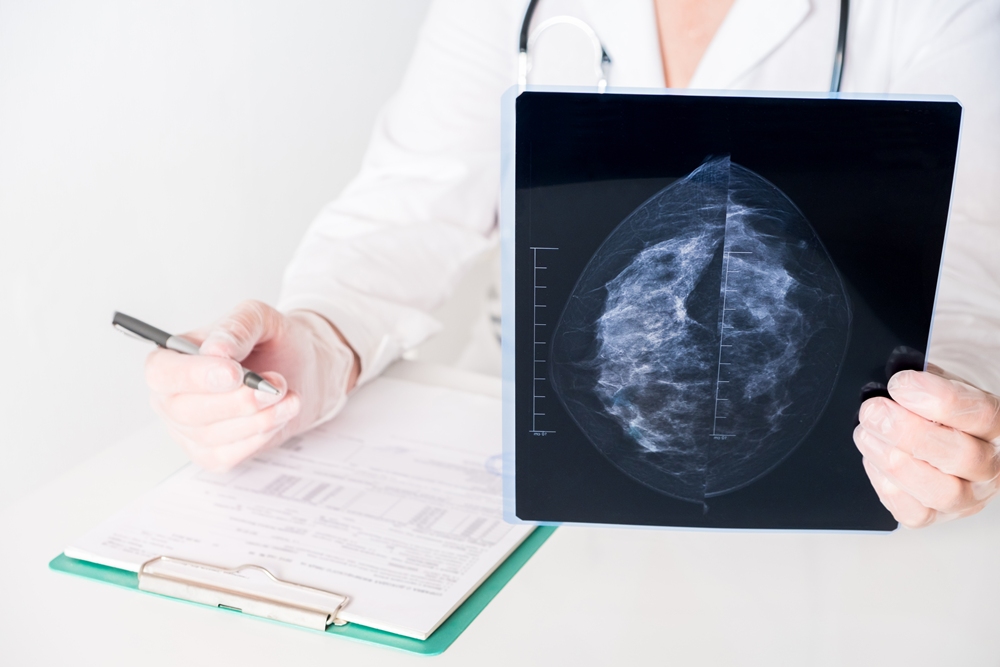
Contrast-enhanced mammography (CEM) has shown promise for women at higher risk of breast cancer, with follow-up screening showing greater specificity and accuracy.
Cancer detection rates remained consistent during repeat screening, while specificity improved compared with baseline examinations.
Specificity shows how accurately a test identifies people who do not have the disease, helping to reduce unnecessary follow-up procedures.
Researchers at Memorial Sloan Kettering Cancer Center analysed 6,911 contrast-enhanced mammography screens carried out among 2,756 women between 2015 and 2021.
Contrast-enhanced mammography, or CEM, combines standard mammography with an injected contrast agent that highlights areas of increased blood flow. Cancerous tumours often develop a greater blood supply.
The team compared 1,575 baseline screens with 3,336 incidence screens.
The researchers classified a screen as baseline if the woman had no previous CEM or had not undergone breast MRI in the previous three years.
Incidence screens were follow-up examinations carried out after previous screening.
After adjusting for the number of screens each woman received, the researchers found no statistically significant difference in cancer detection rates between the groups.
However, specificity reached 91.5 per cent during incidence screening, compared with 83.4 per cent for baseline screening.
Overall accuracy was also higher for incidence screening, at 91.4 per cent compared with 83.5 per cent.
“The ability of contrast-enhanced mammography to help detect cancer during prevalence screening in women at increased risk for breast cancer is maintained in subsequent incidence screens, with better specificity and accuracy,” the research team wrote.
Baseline screening detected 19 cancers per 1,000 examinations, compared with 11.6 per 1,000 incidence screens.
Sensitivity, which measures how well a test identifies people who have a disease, was 87.1 per cent for baseline screening and 86.1 per cent for incidence screening.
Contrast enhancement alone helped detect 18 of the 30 cancers found during baseline screening and 36 of the 62 found during incidence screening.
The researchers also identified 14 interval cancers across the examinations, with no evidence of a difference between the two groups.
An interval cancer is diagnosed after a screening result appears normal but before the next scheduled examination.
The retrospective study used previously collected clinical records rather than following participants in a newly designed trial.
The researchers described CEM as a reasonable screening tool for women with dense breasts.
Dense breasts contain more fibrous and glandular tissue, which can make cancer more difficult to detect with standard mammography.
CEM has previously shown greater sensitivity than ultrasound, digital mammography and digital breast tomosynthesis, according to the article.
Digital breast tomosynthesis takes several low-dose X-ray images from different angles to create a three-dimensional view of breast tissue.
The technique also takes less time and generally costs less than breast MRI, with previous research suggesting its performance is not inferior to MRI.
CEM is currently used for some screening purposes outside its approved indications.
The researchers said it could also help address health inequalities affecting women who face barriers to accessing MRI.
“In addition, women have reported a preference for CEM over MRI,” they wrote.
The researchers said a future article would provide full details about the interval cancers identified in the study.
An accompanying editorial said the technique could become a practical part of breast cancer screening for selected groups, although challenges remain around wider adoption.
“Whether this potential ultimately translates into widespread implementation will depend on future studies evaluating not only diagnostic performance, but also patient outcomes, health care utilisation, and real-world feasibility across diverse practice settings,” wrote Dr Vivianne Aguilera Freitas of the University of Toronto.



Menopause is often absent from women’s electronic health records, a study of nearly 396,000 women has found.
Researchers found menopause appeared almost seven times more often in participant surveys than in electronic health records (EHRs).
The findings suggest important reproductive health information, including age at menopause, may often be missing from health records used for research.

Audrey Hendricks, associate professor of bioinformatics at CU Anschutz and the study’s principal investigator, said: “Ultimately, we cannot study what we do not measure. We cannot treat what we do not know.
“Menopause has enormous implications for women’s health, but if we don’t consistently capture when menopause occurs and other important reproductive health information, we limit our ability to understand how this transition affects disease risk and health outcomes.”
Researchers at the University of Colorado Anschutz analysed data from women taking part in the National Institutes of Health’s All of Us Research Program.
They compared menopause information reported by participants in surveys with menopause diagnoses recorded in their electronic health records.
Around 193,000 menopause observations were identified in survey data, compared with approximately 28,000 diagnoses in EHR data.
Menopause was documented in electronic health records for only about 7 per cent of women in the dataset.
Nearly all participants with a menopause diagnosis recorded in their EHR also reported menopause in survey data. However, substantially fewer women had menopause documented in their health records.
Other important information was also frequently unavailable, including age at menopause, which researchers may use when examining links between menopause and chronic disease risk.
Menopause is a physiological transition that can affect cardiometabolic health and many other aspects of women’s health.
Researchers said relatively little is known about how factors including the timing and type of menopause influence health outcomes across diverse populations.
Large-scale programmes such as All of Us combine participant surveys, electronic health records and genomic data, but menopause-related research depends on relevant reproductive health information being available.
Missing menopause information can make it harder to investigate how the transition relates to health and disease.
The findings may also help researchers using All of Us data define menopause-related study populations, design studies and estimate how many participants are needed.
Hendricks said: “We have an enormous opportunity to use large-scale datasets to understand women’s health across the menopause transition and to identify who may be at greater risk for disease.
“But we need to make sure that the information researchers need is actually being collected.
“We must do a better job of capturing women’s health information, including reproductive health and measures related to menopause.”
Researchers said more complete and consistent collection of menopause and reproductive health information could help future studies examine factors such as age at menopause and their relationship with disease risk and health outcomes.












 Entrepreneur2 weeks ago
KOVE Medical raises €1.7 million to improve safety of foetal surgery

 Menopause1 day ago
Menopause may not explain rising heart condition in women – study

 Pregnancy2 weeks ago
UK study aims to transform maternity care for high-risk pregnancies

 Fertility5 days ago
Paracetamol use may impact future fertility, studies suggest

 Entrepreneur1 week ago
Last chance to save on Women’s Health Week and Women’s Sport Summit: Early Bird pricing ends 11 September

 Menopause2 weeks ago
Menopause hormone treatment may ease brain fog, study suggests

 Menopause1 week ago
Cancer drug could tackle osteoporosis menopause weight gain

 Insight1 day ago
Women with birth trauma face 2.5x higher healthcare costs – study
1 Comment