




Cancer
New meta-analysis further supports low re-excisions and high placement accuracy with the Magseed marker

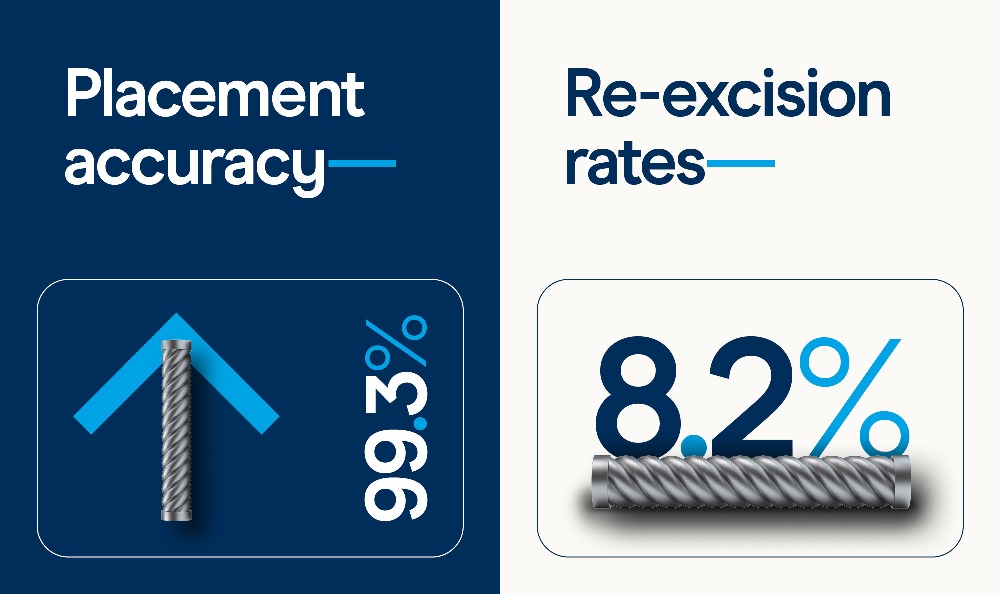
An independent meta-analysis from January 2026, pooling 2,117 patients and 2,176 Magseed marker placements, has reported low re-excision rates (8.2%) and low positive margins (7.6%) when the marker is used to localise non-palpable breast lesions prior to breast‑conserving surgery (BCS).
Al Darwashi et al. (2026) pooled 16 studies to evaluate safety and efficacy outcomes when the Magseed marker was used for preoperative localisation of non-palpable lesions prior to BCS.
The authors reported high placement accuracy, reliable intraoperative retrieval and low rates of positive margins, re-excisions and complications.
In a cohort cited by the review, Moreno‑Palacios et al. (2024) also observed that Magseed marker facilitates less extensive resections compared to guidewires, promising improved cosmetic outcomes while maintaining oncological efficacy.
The key findings
Low re-operation burden: Positive margins occurred in just 7.6% of cases, and only 8.2% required re-excision across the included series.
High placement accuracy: The success rate for Magseed marker placement showed 99.3% positioned within 10 mm of the lesion.
Of note, 96.6% of Magseed markers were placed within an even stricter 5 mm radius.
Reliable retrieval: The pooled intraoperative retrieval success was 99.6% for the Magseed® marker.
“This meta-analysis demonstrated Magseed as a safe and effective preoperative localisation technique for BCS in the management of selected non-palpable breast lesions.” Al Darwashi et al. (2026)
Ready to find out more about the Magseed marker and the Sentimag system?
→ Speak to a Magseed marker expert
Magseed® is a trademark of Hologic, Inc. or its subsidiaries in the United States or other countries. Intended for medical professionals and use in the U.S., UK and the EU only.













An experimental cancer drug reduced bone loss and body fat in mice modelling post-menopausal changes, early research suggests.
The compound, CADD522, appeared to strengthen bones and help the animals stay leaner after surgery designed to mimic hormonal changes seen after menopause.
The treatment remains at an early experimental stage and has so far only been tested in animals.

The study, led by the University of East Anglia, investigated CADD522, which was originally developed to block a protein involved in the growth and spread of several cancers.
Mice treated with the compound for eight weeks showed significant improvements in bone health. Scans found increased bone volume and better preservation of the honeycomb-like structures inside bones that are crucial for strength and resilience.
Blood tests suggested the treatment stimulated new bone growth without interfering with the body’s normal process of breaking down and rebuilding bone.
Dr Darrell Green, lead researcher from UEA’s Norwich Medical School, said: “Osteoporosis affects around one in three women over the age of 50, leaving sufferers vulnerable to painful fractures that can seriously impact quality of life.
“Current treatments exist, but many are plagued by side effects, safety concerns or inconvenient dosing schedules that make long-term use difficult.”
The researchers also found that mice receiving CADD522 weighed less than untreated mice despite eating the same amount of food.
They had less body fat and fewer fat deposits in their bone marrow, a process commonly seen after menopause and linked to declining bone health.
The team also examined brain tissue and found that the drug appeared to reverse several menopause-related changes in fatty acids.
Levels of omega-3 fats including DHA remained largely intact, while several other lipid abnormalities shifted back towards healthier patterns.
Green said: “We didn’t directly test for memory or thinking ability, but our work raises questions about whether this drug could one day help address wider menopause-related health problems.”
Safety experiments in mice, rats and dogs found that CADD522 could be taken orally and was well tolerated.
The compound also appeared to be metabolised more slowly in human tissue than in rodents, potentially improving its performance in people.
“This is still in the early stages and has so far only been tested in animals but we hope that the benefits will translate to humans to ultimately reduce fracture rates,” added Green.
The research was led by UEA in collaboration with the University of Maryland, the Scintillon Research Institute in San Diego and the University of Stirling.
Safety testing was funded by The Sir William Coxen Trust as part of the development of CADD522 as a childhood cancer treatment.













 Hormonal health2 weeks ago
Major UK study could be a ‘game-changer’ for heavy periods and endometriosis

 Entrepreneur1 week ago
KOVE Medical raises €1.7 million to improve safety of foetal surgery

 Pregnancy2 weeks ago
One week left to apply: W Accelerate with Merck KGaA and M Ventures

 Pregnancy1 week ago
UK study aims to transform maternity care for high-risk pregnancies

 Hormonal health2 weeks ago
PMDD after SSRIs or hormones: Why the brain may be the missing treatment target
 Diagnosis2 weeks ago
Ark Surgical secures further institutional backing to accelerate US expansion

 Hormonal health6 days ago
Menopause hormone treatment may ease brain fog, study suggests

 Entrepreneur3 days ago
Last chance to save on Women’s Health Week and Women’s Sport Summit: Early Bird pricing ends 11 September