



Connect with us

Menopause

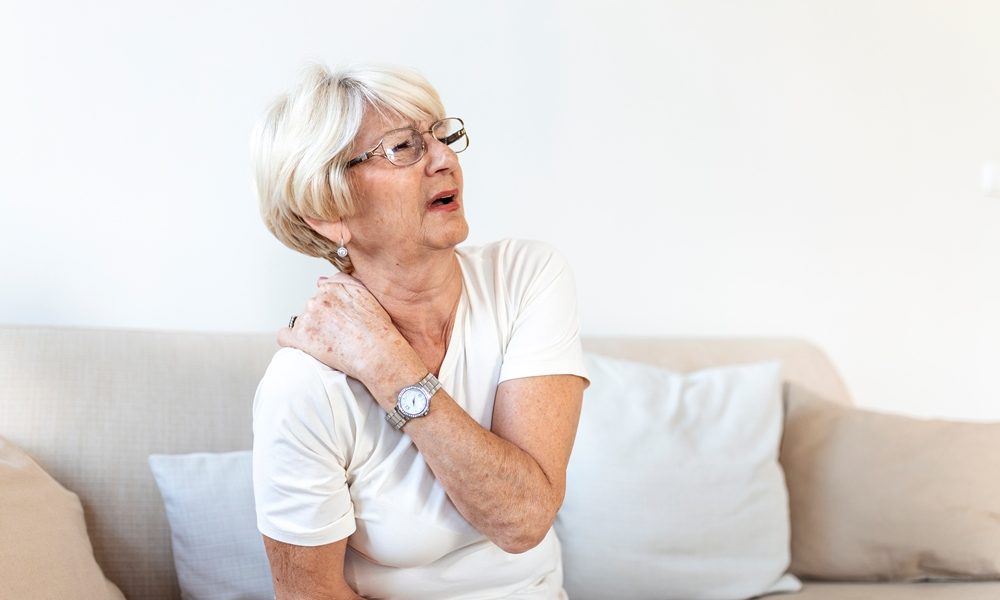
Study links heart health to fracture risk in postmenopausal women

Published

on

Postmenopausal women with high cardiovascular risk face almost double the hip fracture risk, a new study has found.

Postmenopausal women face a high risk of bone fractures.

Due to declines in oestrogen levels, which can lead to an increased risk of osteoporosis, even a low-impact fall can result in a serious hip, back or wrist injury.

An estimated one in three women over 50 will experience a fracture due to bone loss in their lifetime.

The study found that heart health may affect fracture risk after menopause, with women at a higher risk of cardiovascular disease more likely to experience hip and other major bone fractures.

The association between cardiovascular disease risk and fractures was also stronger in women under 65, compared with women aged 65 and older.

In the study, published in The Lancet Regional Health – Americas, researchers used the American Heart Association’s recently developed PREVENT score to estimate a patient’s 10-year risk of cardiovascular disease. Women in the study were grouped as low, borderline, intermediate or high risk.

The strongest link was seen with hip fractures. Women in the high cardiovascular risk group had a 93 per cent higher risk of hip fracture than women in the low-risk group.

Women in the intermediate-risk group had a 33 per cent higher risk.

Higher cardiovascular risk was also linked to a greater risk of fractures in weakened bones in major areas such as the hip, spine, forearm or shoulder.

The findings could indicate that the PREVENT score, developed by the AHA in 2024, may be a valuable tool in identifying patients who could benefit from a bone density screening or referral to a bone health specialist.

Given the prevalence of both conditions and the economic burden they impose, reducing risk for both could improve the lives of older adults.

“While previous studies have suggested a link between cardiovascular disease and fracture risk, we were surprised by the magnitude associated with hip fracture risk,” said lead author Rafeka Hossain, a researcher with the Tulane University School of Medicine. “

Both of these conditions are prevalent and costly, and reducing risk for both could improve the lives of older adults.”

The study included data from more than 21,000 women in the Women’s Health Initiative, one of the largest national women’s health studies.

The findings add to growing evidence that heart health and bone health are closely connected.

Researchers say several biological processes may help explain the link, including chronic inflammation, oxidative stress, changes in calcium regulation and reduced blood flow to bone caused by atherosclerosis.

Hormonal changes after menopause, especially declining oestrogen levels, may also raise the risk of both heart disease and bone loss at the same time.

“Many of the same factors that protect your heart, regular physical activity, a balanced diet rich in calcium and vitamin D, not smoking and managing conditions like diabetes and high blood pressure, also help protect your bones,” Hossain said.

“If you’ve been told you have intermediate or high cardiovascular risk, particularly if you are a postmenopausal woman, it may be worthwhile to talk to your doctor about bone health screening, given the many effective treatments available that reduce fracture risk.”

The study found that women in the high-risk group tended to experience fractures sooner than women in the low-risk group.

For hip fractures, the median time to fracture was 15 years in the high-risk group versus nearly 20 years in the low-risk group.

The researchers caution that more work is needed before cardiovascular risk scores are added to standard fracture screening tools.

But they say the findings suggest that women with intermediate or high cardiovascular risk may want to talk with their doctors about bone health, especially after menopause.

“Taking care of your heart and bones should go hand in hand,” Hossain said.

Menopause

Statins may worsen menopause symptoms, study suggess

Published

on

Statins have been linked to more severe menopause symptoms and a higher risk of muscle loss in postmenopausal women, a study suggests.

The medicines are among the most widely prescribed in the world, with strong evidence supporting their use to lower cholesterol and reduce cardiovascular risk.

However, some recognised side effects may resemble symptoms associated with menopause, raising questions about how the two could interact.

The US Food and Drug Administration has flagged potential adverse effects linked to statin treatment, some of which overlap with menopausal complaints.

Researchers examined data from 1,184 postmenopausal women across nine Latin American countries, assessing menopausal symptoms, sarcopenia risk and cognitive function.

They compared women taking statins with non-users after accounting for factors including age and body weight.

As the study was cross-sectional, meaning it examined information collected at one point in time, it could identify associations but could not prove that statins caused the outcomes.

Women taking statins were 56 per cent more likely to have severe menopausal symptoms than those who were not using the medicines.

The difference remained after researchers accounted for other variables.

Statin users were also 65 per cent more likely to be at risk of sarcopenia.

Sarcopenia is the gradual loss of muscle mass and physical function, which tends to accelerate after menopause.

Declining oestrogen levels already make muscle loss a concern at this stage of life. It is linked to a higher risk of falls, fractures and reduced quality of life.

Musculoskeletal symptoms were reported by 53.1 per cent of statin users, compared with 33.9 per cent of non-users.

Researchers said this was separate from the finding on sarcopenia risk and may point to a wider pattern of physical discomfort among women taking the medicines.

Women taking statins also recorded slightly lower scores in tests of delayed memory recall and visuospatial function.

Visuospatial function is the ability to understand the position of objects and their relationship to one another.

The study found no overall association between statin use and mild cognitive impairment, so the differences in individual tests are early signals rather than firm conclusions.

Researchers said effects associated with statins may overlap with menopausal symptoms and add to the overall symptom burden during midlife.

This means symptoms attributed to menopause and possible statin side effects may look similar and, in some cases, could compound one another.

Further research is needed to separate the possible effects of the medicines from symptoms linked to menopause.

The findings are not a reason for women to stop taking statins.

Their cardiovascular benefits are well established, and stopping treatment without medical guidance can carry serious risks.

The study provides more information about what statin treatment may mean specifically for postmenopausal women, who have historically been under-represented in cardiovascular research.

Women who notice more severe menopausal symptoms or changes in muscle strength or physical function while taking statins should discuss them with a doctor.

A healthcare professional may consider whether the symptoms could be related to the medication and whether screening for muscle loss is appropriate.

They may also review whether the current statin remains the most suitable option, as different statins can have different side-effect profiles.

Resistance training and consuming enough protein are well-supported ways to help preserve muscle mass during midlife.

Statins can be life-saving, but the findings suggest their possible side effects should receive greater attention in postmenopausal women.

The study adds to evidence supporting more individualised care for women during midlife.

Continue Reading

Hormonal health

Hormone therapy users report healthier lifestyles

Published

on

Menopausal women using hormone therapy reported healthier diet, exercise and sleep habits than non-users in a study of more than 10,000 women.

The menopause transition is associated with a higher risk of chronic health conditions and symptoms including hot flushes and problems affecting the urinary and genital systems.

Hormone therapy is often used to manage these symptoms, but it remains unclear whether it affects health outcomes directly or indirectly through changes in health behaviours.

Previous research has produced mixed results, with some studies suggesting that postmenopausal women pay greater attention to maintaining a healthy lifestyle.


The cross-sectional analysis examined whether menopause status and hormone therapy use were linked to diet, physical activity and sleep duration.

A cross-sectional study assesses participants at one point in time. It can identify associations but cannot establish whether one factor directly caused another.

Diet, exercise and sleep are described as modifiable health behaviours because people may be able to change them to improve their health.

The researchers found that postmenopausal women who had never used hormone therapy reported eating less fruit and vegetables.

Women who had never used the treatment were also 19 per cent less likely to meet guidelines for muscle-strengthening activity.

Sleep duration was shorter among postmenopausal women who had never used hormone therapy.

Compared with premenopausal and perimenopausal women, the likelihood of meeting sleep guidelines was 14 per cent lower among never-users, 26 per cent lower among current users and 24 per cent lower among past users.

Perimenopause is the transitional period before menopause, when hormone levels and menstrual periods can change.

Researchers said these findings may be linked to higher levels of follicle-stimulating hormone among postmenopausal women who do not use hormone therapy.

They may also relate to lower levels of oestradiol, a form of oestrogen, which have previously been associated with poorer sleep.

Hot flushes and urogenital symptoms can also disrupt sleep, although hormone therapy may ease these symptoms.

Dr Stephanie Faubion, medical director for The Menopause Society, said: “This large observational study underscores that women who use hormone therapy tend to adopt overall healthier lifestyles.

“Although this association may partly reflect better symptom control enabling healthier behaviours, healthy-user bias is likely a significant contributor.

“Women who choose to use hormone therapy are often more proactive in their healthcare and may systematically differ from nonusers in socioeconomic resources, access to care, and health literacy.

“This largely explains why early observational studies of hormone therapy suggested cardiovascular benefits that were not confirmed in subsequent randomised, controlled trials.”

Continue Reading

News

Spain triples women’s health research funding

Published

on

Spain will triple annual women’s health research funding to €18m under a programme focused on discrimination in medical research.

Spain’s Ministry of Science will increase investment in research and development projects focused on women’s health to €18m a year.

The initiative was announced on Monday by prime minister Pedro Sánchez during the presentation of Somos. Contamos: Fin de la discriminación de las mujeres en la investigación de la salud, which translates as We Are. We Count: Ending Discrimination Against Women in Health Research.

Sánchez said:

“This will boost research, diagnosis and treatment in areas that affect the lives of thousands of women in our country, who have not received the necessary attention.”

The plan is divided into three main areas.

These include a specific mission on women’s health through the centre for technological development and innovation, which will support companies and research centres working on research and development projects.

It also includes a new funding line for the Carlos III health institute and measures to build the research workforce in the field, including predoctoral contracts for projects focused on women’s health.

Sánchez said conditions such as endometriosis reflected discrimination faced by women in healthcare.

Endometriosis is a condition where tissue similar to the lining of the womb grows outside the uterus, often causing severe pain and, in some cases, fertility problems.

The prime minister said the condition affects one in seven women and can take a decade to diagnose.

He said:

“This cannot be allowed in Spain today.”

Sánchez added:

“If a disease affected one in seven men, causing chronic pain, difficulty working, and fertility problems, would we accept a decade-long delay in diagnosis? The answer is obvious: certainly not. So it’s high time we said ‘no’ with the same clarity when we talk about diseases that affect millions of women.”

Other diseases where diagnosis and treatment suffer from a lack of a gender perspective include chronic pain, autoimmune and thyroid diseases, cardiovascular and mental health conditions, menopause and hormonal imbalances.

Autoimmune diseases occur when the immune system mistakenly attacks the body, while thyroid diseases affect a gland in the neck that helps regulate metabolism, energy and hormones.

Sánchez said:

“There can be no equality while science continues to respond better to some lives than to others.”

The prime minister also addressed the delay in diagnosing women.

He said:

“It is a paradox that says a lot about our past, that challenges our present, but that also drives us to change the future, including through politics.”

Continue Reading

Trending

Copyright © 2025 Aspect Health Media Ltd. All Rights Reserved.
