




Hormonal health
Immune cells linked to longer-lasting pain in women


Differences in immune cells may explain why chronic pain lasts longer in women than men, according to new research.
The study identified a subset of monocytes, a type of white blood cell, that release interleukin-10, or IL-10, a molecule that signals pain-sensing nerves to switch off pain. These cells were found to be more active in males, linked to higher levels of sex hormones such as testosterone.
Females experienced longer-lasting pain and slower recovery because their monocytes were less active. The same pattern was observed in both mouse models and human patients.

Researchers first detected unexpectedly higher levels of IL-10 in males during a small pilot project. When a second test confirmed the finding, they used high-dimensional spectral flow cytometry, a laboratory technique that allows detailed analysis of immune cells, to investigate further. Blocking male sex hormones produced the opposite effect.
Geoffroy Laumet, associate professor of physiology at Michigan State University, said: “The difference in pain between men and women has a biological basis. It’s not in your head, and you’re not soft. It’s in your immune system.”
Pain occurs when specialised neurons throughout the body respond to stimulation. In people with chronic pain, these sensors can be activated by mild stimulation or even none at all. Doctors often rely on patients rating pain on a scale of one to 10, and when more women report persistent pain, the difference has often been attributed to perception or reporting rather than biology.
The team carried out at least five types of tests in mouse models to confirm the findings. They then worked with Sarah Linnsteadt at the University of North Carolina at Chapel Hill, who was studying psychological outcomes in people involved in car accidents. Her research showed a similar pattern, with men having more active IL-10-producing monocytes and resolving pain faster.
Jaewon Sim, a former graduate student in Laumet’s laboratory, said: “I feel extremely fortunate that we trusted those early, uncertain findings and chose to pursue them further.”
Laumet said: “This study shows that pain resolution is not a passive process. It is an active, immune-driven one.”
The findings shift attention from how pain begins to why it persists. The next step is to investigate whether treatments could target this pathway and boost IL-10 production. While any new treatment is likely to be decades away, the research could eventually support non-opioid approaches to managing chronic pain.
“Future researchers can build on this work,” Laumet said. “This opens new avenues for non-opioid therapies aimed at preventing chronic pain before it’s established.”











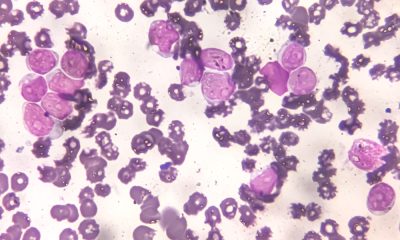


Women with PMOS may have a fourfold higher risk of heart disease, new research suggests.
PMOS, or polyendocrine metabolic ovarian syndrome, is a complex hormone condition affecting about one in eight women in the UK.
It can affect hair growth, periods, fertility and mood.

US researchers analysed health insurance data collected between 2000 and 2022 from 413,450 women with PMOS aged 18 to 50.
They compared the group with more than two million women who did not have the condition.
The study found that women with PMOS had a fourfold higher risk of heart disease than those without it.
The increased risk remained after researchers accounted for other factors linked to heart disease, including high blood pressure and diabetes.
International PMOS guidelines recommend screening all patients for heart disease risk at diagnosis and providing advice on lifestyle changes.
However, researchers said patient surveys “report delayed diagnosis and substantial dissatisfaction with counselling regarding long-term comorbidities”.
Comorbidities are additional health conditions that occur alongside a main condition.
Researchers added: “Our results emphasise the need for physician education and patient awareness of cardiovascular disease risk to improve implementation of early preventive interventions.”
The team called for further studies following women through menopause, when periods stop.
They also called for research into whether treatments such as GLP-1 drugs or hormonal contraception affect the link between PMOS and heart disease.
GLP-1 drugs are medicines used for conditions including type 2 diabetes and weight management.
The main symptoms of PMOS include irregular periods or long gaps between periods, excessive hair growth or hair loss, weight gain or difficulty losing weight, and difficulty becoming pregnant.
Other symptoms include depression or anxiety, oily skin and acne, tiredness, and thick, dark patches of skin on the neck or armpits, known as acanthosis nigricans.
Until recently, PMOS was known as polycystic ovarian syndrome, or PCOS.
Experts called for the name change after highlighting that misunderstandings about cysts and too much focus on the ovaries were delaying diagnoses.
Earlier this month, the National Institute for Health and Care Excellence said women with PMOS should be seen by health professionals annually to monitor symptoms and manage long-term risks.
NICE said the condition affects between three and four million women in the UK but is “frequently underdiagnosed and inconsistently managed”.
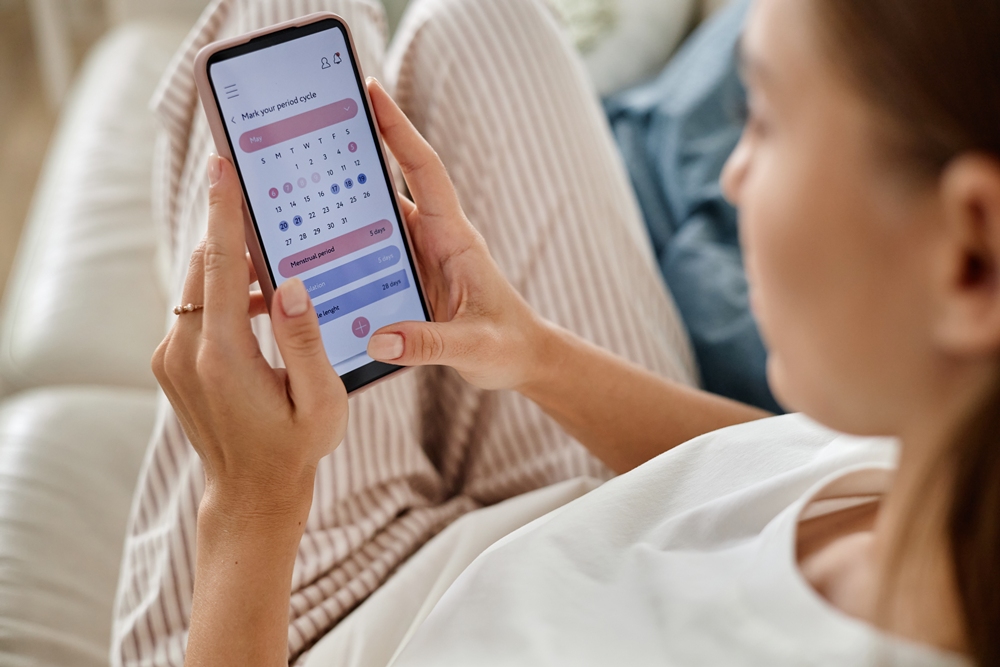
Stardust shared sensitive period tracking data with third-party analytics firms, according to new privacy research from Mozilla.
The findings expose a privacy divide in femtech, where users often trust apps with highly sensitive reproductive health information.

The research was carried out by Mozilla’s Privacy Not Included team, which tested several period tracking apps.
It found that Stardust, a period tracker used by millions, shared users’ reproductive health data with analytics companies, a practice the research said contrasted with its privacy-first marketing.
Analytics companies collect and examine information about how people use digital products, often to help businesses understand user behaviour or improve marketing.
The findings raise questions about whether privacy promises made by health apps match what happens to users’ data.
According to research reported by TechCrunch, one other period tracking app tested by Mozilla received what researchers called a “squeaky clean” rating, suggesting similar services can operate without sharing sensitive health data in the same way.
Period tracking apps have come under greater scrutiny in the US since the 2022 overturning of Roe v Wade, which removed federal constitutional protection for abortion.
Some users and privacy advocates have warned that menstrual and reproductive health data could potentially be sought in legal cases.
The research also points to a broader regulatory problem for consumer health apps.
In the US, many health apps are not covered by HIPAA, the health privacy law that applies to medical providers and some healthcare organisations.
That means some consumer apps may be able to collect, share or monetise sensitive health data under rules that differ from traditional healthcare privacy protections.
The femtech market, estimated in the report at US$50bn, has grown quickly, but privacy regulation has not always kept pace with app development.
Stardust had not publicly responded to Mozilla’s findings at the time of the original report, and its privacy policy remained live on its website.
The issue is particularly sensitive for period tracking because the data can reveal patterns around fertility, pregnancy, contraception and reproductive health.
Mozilla’s wider Privacy Not Included initiative has examined consumer technology products for privacy and security concerns since launching in 2017, including connected devices, children’s toys and health apps.
The findings come as US lawmakers continue to debate stronger federal privacy rules for sensitive health information collected by consumer apps.
The American Data Privacy and Protection Act, which has been stalled in Congress since 2023, includes provisions addressing sensitive health information collected by consumer apps.
Experts have also warned that anonymised health data can sometimes be re-identified when combined with other information, such as location data.
Re-identification means linking supposedly anonymous data back to a specific person.
A 2019 study found that menstrual cycle data combined with location information could identify individual users with high accuracy.
State-level privacy laws in places such as California, Virginia and Colorado have also given consumers new rights around personal data, although enforcement can vary.
Privacy advocates say the research underlines the need for clearer data practices, stronger safeguards and greater transparency in femtech.
For users, the findings are a reminder that health apps do not automatically protect health information in the same way as healthcare providers.
The report suggests period tracker companies that put privacy first may be better placed to build trust in a market where long-term use depends on confidence.
Mozilla’s investigation suggests privacy promises in femtech do not always match practice, and that period trackers can function without sharing sensitive user data in the same way.


By Nolynn Palmer, science and partnership lead, EmaEQ and Heather Ritchie, COO, Embr Labs
Summer is reminiscent of many things: the smell of sunscreen, longer evenings, dedicated family time, vacations finally on the calendar, maybe even a wardrobe refresh.
There’s a particular kind of joy that settles in this time of year, a collective breath of excitement.
But for people living with Postural Orthostatic Tachycardia Syndrome (POTS), summer’s signature feature, heat, can turn that joy and excitement into something much harder to navigate.
POTS is a form of dysautonomia that disrupts the body’s ability to regulate blood flow when moving from lying down to standing.
Temperature dysregulation and heat intolerance are core symptoms in POTS.
Heat makes symptoms worse: blood vessels dilate, blood pressure drops, and symptoms like dizziness, fatigue, and heart palpitations intensify. What feels like a beautiful day to most can feel like an obstacle course to someone with POTS.
POTS affects an estimated 0.2 per cent to 1 per cent of the North American population, according to a 2020 NIH study; a figure that’s almost certainly undercounted, and one many researchers believe has grown significantly in the wake of COVID-19.
Roughly 75 per cent to 85 per cent of POTS diagnoses are female, and the average time from symptom onset to formal diagnosis is four to six years.
These individuals spend years researching their symptoms, becoming fluent in their own condition long before receiving a diagnosis.
Since launching its first-generation Embr Wave device, Embr has consistently heard from those with POTS looking for a solution for temperature intolerance and the symptoms that result.
Embr Wave’s temperature delivery system, providing immediate wearable cooling relief, maps directly to one of POTS’s most consistent symptoms, heat intolerance.
Embr’s implementation of Tempura, Embr’s app-based AI Assistant, has provided Embr with even more clarity on the impact Embr Wave can have in this statistically small population.
In the last 90 days, nearly 3 per cent of conversations with Tempura have touched on POTS. Relative to population prevalence, that’s a significant overrepresentation, confirming that individuals with POTS are actively seeking tools that are designed for their symptoms.
Embr Wave provides a model for how designing products for one use case, menopausal women managing hot flashes, can be found to have tremendous benefits for other populations.
The influx of advocacy by those with POTS led to a research study published this year that measured the improvement in Quality of Life factors when supported by thermoregulation wearables.
The product design by its nature, and how customers are using and talking about it, has had a snowball effect in the POTS community, amplifying awareness of a safe, always-available solution for this unmet need.
For someone with POTS, temperature isn’t a minor variable but a sizable trigger. Giving someone a way to manage temperature response hands them back a measure of control they didn’t have before.
Those in the Embr community living with POTS describe using their Wave devices both proactively and in-the-moment: some turn on their Wave’s cool-down signals before leaving the house or entering a crowded event, knowing what’s ahead.
Others use it reactively, when they feel their body beginning to respond poorly, and bring themselves back in balance.
Either way, Embr Wave provides its users with a sense of control around something they cannot control, their environment, allowing one to focus on and enjoy the moment.
No one should have to skip the places or events they love because their body can’t handle the heat. The goal is to help people stay in their lives fully, with less friction and more confidence in what their bodies can handle.
Nolynn Palmer holds a Masters of Global Public Health & Policy with a focus in Sexual & Reproductive Health & Rights. As the Science & Partnership Lead at EmaEQ, she leverages her knowledge of health policy and clinical science to advance AI safety and accuracy across the healthcare industry.
Heather Ritchie has a decades-long background in product management, launching enterprise and consumer solutions that improve health and wellness management. At Embr Labs, she serves as COO and leads the user design and market launch of Embr Wave (2nd Gen).











 News1 week ago
New menopause drug approved for use by NHS in Scotland

 Cancer2 weeks ago
Thousands of women could avoid painful cancer exam with new AI blood test

 Entrepreneur2 weeks ago
Applications open for the third W Accelerate with Merck KGaA and M Ventures

 Opinion2 weeks ago
We built Ema like a nurse: Here’s why that matters

 News1 week ago
Women’s health draws record $1.55bn in equity as capital spreads beyond the mega-rounds

 Mental health2 weeks ago
SSRIs may lower heat intolerance in women with depression – study

 Hormonal health5 days ago
Stardust period tracker shares health data, study reveals

 Wellness2 weeks ago
Alcohol and smoking linked to breast cancer and irregular heartbeat in women, study finds
5 Comments