




Pregnancy
Researchers achieve first pregnancy using AI to recover sperm in infertile men

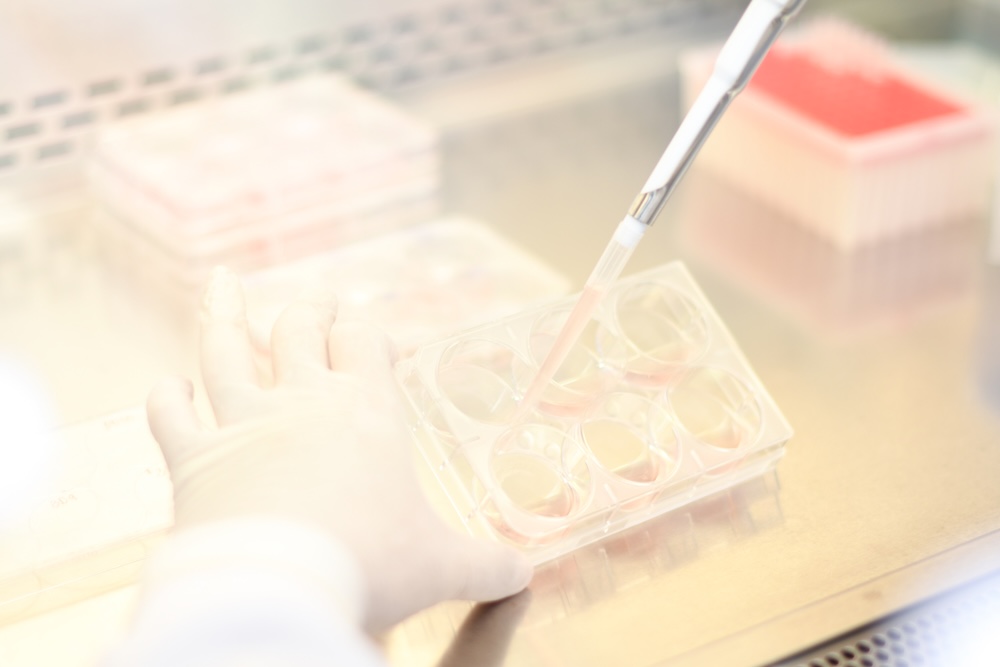
Researchers have reported the first successful pregnancy using an AI-guided sperm recovery method in infertile men with azoospermia, a condition where ejaculate contains little or no sperm.
The case involved a man who had spent nearly 20 years trying to start a family, undergoing multiple IVF cycles, manual sperm searches and two surgical procedures.
Male factors account for around 40 per cent of infertility in couples, and 10–15 per cent of infertile men have azoospermia.

Researchers at Columbia University Fertility Center developed the technique, detailed in a research letter published online on 31 October 2025.
Zev Williams is senior author and director of the Columbia University Fertility Center.
Williams said: “A semen sample can appear totally normal, but when you look under the microscope you discover just a sea of cellular debris, with no sperm visible.”
Many couples with male-factor infertility are told they have little chance of having a biological child.
Men with azoospermia may undergo a procedure to have sperm surgically extracted from the testes, but the procedure is often unsuccessful and can cause vascular problems, inflammation or a temporary drop in testosterone.
Currently, a few specialist labs manually inspect semen samples — a slow and expensive process — often after centrifugation or other treatments that can damage sperm.
“The field has really been challenged to find a better way to identify and retrieve viable sperm cells in men with exceedingly low sperm counts,” Williams said.
The new approach, called STAR (Sperm Tracking and Recovery), combines imaging, microfluidics and AI to identify and recover rare sperm cells from men with azoospermia.
The method uses high-powered imaging to scan semen samples, taking more than eight million images in under an hour.
AI then pinpoints sperm cells, and a microfluidic chip – a device with tiny, hair-like channels – isolates the portion containing sperm.
Within milliseconds, a robot gently removes the sperm so it can be used to create an embryo or frozen for later use.
Hemant Suryawanshi is assistant professor of reproductive sciences at Columbia University Vagelos College of Physicians and Surgeons and project leader.
Suryawanshi said: “Our team included experts in advanced imaging techniques, microfluidics, and reproductive endocrinology to tackle each step required to find and isolate rare sperm.”
STAR was tested in a patient who provided a 3.5 mL semen sample.
Within about two hours, it scanned 2.5 million images and identified two viable sperm cells, which were used to create two embryos and start a pregnancy.
“You only need one healthy sperm to create an embryo,” Williams said.
Although based on a single case, the findings demonstrate the feasibility of using this technology to help men with azoospermia overcome long-standing barriers to biological parenthood.
Larger clinical studies are now under way to assess STAR’s efficacy in broader patient populations.
The research team first unveiled the STAR method earlier this year, combining advanced imaging and microfluidic technologies to detect and extract rare sperm cells.
Once identified, the system can remove sperm within milliseconds for immediate use or freezing.














Women entering pregnancy with multiple long-term health conditions face higher risks of miscarriage and other complications, a UK study found.
Those with two or more pre-existing physical or mental health conditions had a 20 per cent higher risk of miscarriage than women with no long-term conditions.
They also had more than twice the risk of venous thromboembolism and around four times the risk of antenatal anxiety and depression.

The UK-wide research team analysed 2,225,701 pregnancies and birth events recorded between 2000 and 2022 across five datasets covering England, Scotland, Wales and Northern Ireland.
Women with multiple long-term conditions had a 69 per cent higher risk of nausea and vomiting during pregnancy and a 42 per cent higher risk of pre-eclampsia.
The women also had a 32 per cent higher risk of placental abruption and a 26 per cent higher risk of gestational diabetes.
Risks rose as the number of existing conditions increased.
Among women with three or more long-term conditions, the risk of venous thromboembolism was more than three-and-a-half times that of women with no long-term conditions.
Researchers said the findings had implications for maternity services, where care pathways are largely centred on individual conditions and may not adequately meet the needs of women with multiple long-term conditions.
Dr Kelly-Ann Eastwood, joint senior author and honorary lecturer at Queen’s University Belfast and consultant obstetrician at St Michael’s Hospital, Bristol NHS Foundation Trust, said the results “help define” the urgent clinical challenges facing women entering pregnancy with multiple long-term conditions and the clinicians caring for them across the UK.
“These findings highlight the pressing need to restructure existing maternity services to improve antenatal outcomes,” she added.
The authors cautioned that the study was observational and relied on routinely collected health records, meaning some conditions and outcomes may have been under-recorded, while residual confounding could not be excluded.
The researchers plan to examine birth and child outcomes and identify which combinations of long-term conditions carry the greatest risk.



Ultrasound Direct has extended its Trice Imaging partnership for three years, adding a reporting tool across its 70-clinic UK network.
The private ultrasound provider will continue using the Tricefy platform for secure image storage and patient engagement, alongside TriceIQ for efficiency and productivity analytics.
It will also introduce Trice Workspace Reporting across its network. The companies say the tool will help standardise ultrasound reporting templates and workflows and reduce variation between clinics.
Ultrasound Direct carries out an estimated 120,000 patient scans each year across services including pregnancy, fertility, women’s health, men’s health and other diagnostic pathways.
Its network uses a large pool of sonographers working across different ultrasound systems and serves referral routes including self-referring patients, GPs and commercial partners.
Mike Steward, founding director at Ultrasound Direct, said: “Having worked with Trice Imaging since 2018, we first partnered to replace manual methods of providing scan images to expectant parents with Trice’s secure electronic image-sharing platform. Today, every study performed across the Ultrasound Direct Network is recorded and stored on Tricefy, while our clinical services have expanded considerably beyond pregnancy into fertility, women’s health, men’s health and other diagnostic pathways.”
He added: “To continue futureproofing our image management strategy across a network of 70 clinics, a large team of sonographers, varying ultrasound systems and a growing number of referral partners with different needs, we decided to extend with Trice Imaging. This includes the introduction of the new Trice Workspace Reporting module to help us scale and standardise our ultrasound reporting templates and workflow, reducing variability between clinics.”
The partnership began in 2018, initially focusing on replacing manual methods of sharing pregnancy scan images with expectant parents.
Johanna Wollert Melin, founder and chief executive of Trice Imaging Europe, said: “Ultrasound Direct has been a valued partner in the UK for 8 years.”
She added: “At the heart of the relationship is a willingness to explore new ideas, test new tools and the spirit to solve real challenges across a large and complex clinical network.”
Mark A. Samii, chief revenue officer at Trice Imaging, said: “We are delighted to retain and extend our relationship with Ultrasound Direct.”
He added: “The addition of Trice Workspace Reporting addresses a challenge we hear from multi-site providers globally – keeping reporting quality consistent across many users, systems, referral or payer relationships.”
Steward said Ultrasound Direct continues to see growing demand for private diagnostics alongside NHS care from self-referring patients and an increasingly diverse range of professional and commercial referral partners.
He added: “As that development continues, scalable digital infrastructure becomes increasingly important. Our focus is on ensuring that a growing national network can support consistent clinical workflows, different referral pathways and the technology requirements of the future, while continuing to provide patients with accessible diagnostic services.”

Paracetamol use in pregnancy was not linked to autism or ADHD, while separate research found reproductive differences in girls exposed before birth.
One study analysed health records from more than 120,000 children and found no increased risk of autism following prenatal paracetamol exposure.
A separate analysis of nearly 100,000 children also found no increased risk of ADHD among those born to mothers who used the painkiller during pregnancy.
Researchers from the Hong Kong Hospital Authority examined electronic health records covering pregnancies between January 2001 and December 2023.
The autism analysis included 124,333 children, who were nine years old on average and split almost evenly between males and females. There were 3,445 autism diagnoses, representing 2.8 per cent of the group.
The ADHD analysis involved 97,285 children, who were seven years old on average and also split evenly between males and females. There were 5,168 ADHD diagnoses, representing 5.3 per cent.
Women prescribed paracetamol during pregnancy were more likely to be older and have pre-existing conditions including psychiatric disorders, as well as reasons for taking the drug such as infection, fever or chronic pain.
No association was found between prenatal paracetamol exposure and either autism or ADHD.
The findings did not differ according to the trimester in which paracetamol was taken or whether use was intermittent or daily. Advanced maternal age, defined as pregnancy in women over 35, did not alter the findings.
The researchers wrote: “Paracetamol remains a safe and essential analgesic [pain reliever] and antipyretic [fever reducer] during pregnancy, whereas alternatives, such as NSAIDs and opioids carry well-documented risks.
“Unwarranted reluctance to use paracetamol could lead to undertreatment of pain and fever, or the use of more harmful alternatives, both posing risks to the pregnancy and developing fetus.”
The authors said women should assess paracetamol use with guidance from their doctor.
A separate study involving 685 pregnant women without pre-existing conditions and 302 infant daughters found associations between prenatal paracetamol exposure and differences in reproductive organs and hormone levels.
Researchers from Copenhagen University Hospital enrolled the women during their first trimester and assessed them during the first trimester, third trimester and again when their babies were three months old.
At around three months, infants experience a temporary rise in reproductive hormones sometimes called mini-puberty.
Pregnant participants completed questionnaires every two weeks about their use of pain medicines including paracetamol. Infant girls underwent ultrasound scans of their reproductive organs and blood tests to measure hormone levels.
Researchers also examined a separate group of 1,210 girls followed from infancy to adolescence whose mothers reported paracetamol use during the third trimester.
Three-month-old girls exposed to paracetamol before birth had an average 40 per cent smaller ovarian volume, 13 per cent smaller uterine volume and 23 per cent fewer ovarian follicles.
Girls exposed during the first trimester also had lower levels of Anti-Müllerian hormone, a marker of ovarian function.
Among the older girls, those exposed before birth were more likely to have smaller uteruses at puberty and smaller ovaries during their teenage years.
Dr Margit Bistrup Fischer, lead study author and postdoctoral researcher in the Department of Growth and Reproduction at Rigshospitalet hospital in Denmark, said: “Animal studies have demonstrated that impaired formation of ovarian follicles can lead to reduced fertility and earlier reproductive aging.
“Whether the differences observed in our study have implications for fertility and age at menopause in humans remains unknown and will require long-term follow-up of the girls in our cohort.”
She cautioned that women who had used paracetamol during pregnancy “should not be alarmed by our findings”, as the study found associations rather than direct causation and outcomes for individual women and children are unclear.
“Importantly, our study does not evaluate whether [acetaminophen] causes reproductive problems, nor does it provide evidence that prenatal exposure affects future fertility or age at menopause,” she said.
“Although we observed similar associations in an independent cohort, long-term follow-up is needed to determine whether these early-life differences have any clinical significance later in life.”









 Menopause5 days ago
Menopause may not explain rising heart condition in women – study

 Fertility1 week ago
Paracetamol use may impact future fertility, studies suggest

 Events2 weeks ago
Last chance to save on Women’s Health Week and Women’s Sport Summit: Early Bird pricing ends 11 September

 Insight5 days ago
Women with birth trauma face 2.5x higher healthcare costs – study

 Menopause2 weeks ago
Cancer drug could tackle osteoporosis menopause weight gain

 News4 days ago
Medical cannabis may improve endometriosis symptoms – study

 Cancer5 days ago
Study could explain why obesity is a breast cancer risk factor

 Diagnosis2 weeks ago
FDA approves AstraZeneca breast cancer drug