




Insight
Higher success rate using a simple oral swab test before IVF


About 15 per cent of all couples of reproductive age are involuntarily childless. A major reason why so many need assisted reproduction is that nowadays more and more people are putting off starting a family.
“This is a global trend that is expected to increase in the coming years. In Europe alone, one million IVF treatments are carried out each year; in Sweden, the corresponding number is 25,000,” said Yvonne Lundberg Giwercman, professor at Lund University who led the research. She has been researching fertility in both men and women for many years.
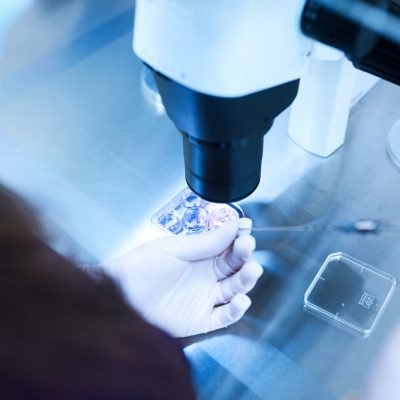
IVF treatment involves stimulating the woman’s ovaries to mature many eggs, which are then retrieved and fertilised with sperm in the laboratory before being returned to the uterus.

There are two different types of hormone treatments to choose from for egg maturation: biological or synthetic. But the powerful hormone therapy also carries the risk of serious side effects, sometimes requiring women to go into intensive care – and many attempts at IVF fail. In Sweden, the government subsidises up to three IVF cycles.
“There is an over-reliance on IVF treatments. Around 75 per cent of all attempts fail and up to 20 per cent of women experience side effects, some serious enough to require emergency treatment,” said Ida Hjelmér, laboratory researcher at Lund University and first author of the study.
“The choice of hormone therapy is a contributing factor, and a major challenge is that healthcare today to some extent has to guess which treatment is best for the woman.”
To find out who responds best to which hormone treatment, the researchers turned to genetics. A total of 1,466 women undergoing IVF treatment at the Reproductive Medicine Centre at Skåne University Hospital in Malmö, Sweden were included in the study.
Women with endometriosis or polycystic ovary syndrome (PCOS) were excluded. Of the 1,466 women, 475 were randomised to two different hormone treatments while the rest were controls.
One candidate gene that is involved in fertilisation by mediating the action of follicle-stimulating hormone (FSH), which is known to play an important role in egg maturation, was of particular interest and mapped by gene sequencing.
The study identified that women with a particular variant of the FSH receptor (FSHR) gene that mediates the action of the hormone responded best to the biological hormone treatment, while others benefited from receiving the synthetic type of hormone.
By knowing the woman’s genetic profile in advance, we can increase the number of successful pregnancies, said Yvonne Lundberg Giwercman: “We see an increase in the number of pregnancies and a relative number of 38% more babies born among women who received hormone therapy that matched their gene variation compared with those who did not. This means that for every 1,000 women undergoing IVF treatment, the equivalent of four more school classes are born: 110 more babies.”
But mapping genes is costly and takes time. That is why the researchers have now developed a simple oral swab test, which within an hour shows which hormone therapy is most suitable. The result can be seen with the naked eye as a pink or yellow coulour.
The researchers have applied for a patent for the test, set up the company Dx4Life AB and are supported in the process by LU Innovation, LU Ventures and the SmiLe Incubator with a view to commercialising the product.
“Our hope is that this will reduce the risk of suffering for women, increase the number of successful treatments and cut costs for taxpayers. Our goal is for the test to be available by the start of 2026,” said Giwercman, who is also the CEO of the company that developed the oral swab test.














Women are being urged to seek evidence-based advice and avoid menopause misinformation shared on social media.
A seminar co-hosted by the World Health Organization (WHO) mainly examined what is known about the cognitive effects of menopause and current research in the field worldwide.
Dr Nicole Jaff, a South African academic and certified menopause practitioner, said research into menopause and its effects was now at a peak.

She said: “There’s a lot of information out there.
“But I would say please look for the evidence-based information, not for the influencers and the misinformation, but those who are giving guidelines, who are giving information.”
Jaff highlighted research into cognitive changes during menopause and how some women experience brain fog, a term for difficulties with memory, concentration and clear thinking.
She said: “I’m very excited about the non-hormonal treatments that are now available, especially for women who could never take hormone therapy because of breast cancers and various cancers, who can now take it.
“I’m extremely excited about people who are standing up for evidence-based medicine, for science, who are actually fighting back against a lot of the social media and influencers who are not giving evidence-based information and making life very difficult for women because they think they should be forever young or buying this or buying that.”
Jaff advised women and healthcare workers to read new guidelines recently issued by the International Menopause Society. They are available free to download from its website.
The seminar also heard from Professor Aimee Spector, professor of clinical psychology of ageing at University College London.
She raised similar concerns about misinformation, particularly claims linking hormone replacement therapy, known as HRT, to dementia. Some claims suggest HRT reduces dementia risk, while others suggest it increases the risk.
Spector said: “I think there’s also lots of misinformation.
“And I think that there’s huge variations in how even professionals and doctors interpret this information.”
She was part of an international research team commissioned by the WHO last year to assess published studies on the issue.
The institutions involved also included the Global Brain Health Institute at Trinity College Dublin.
Spector said: “The first thing to say is that the quality of evidence was very low.
“Nine out of the 10 studies we looked at were observational, which means that you’re observing patterns over time. But you don’t necessarily know whether that’s due to the hormone therapy or not.
“Our overall recommendation was that there’s insufficient evidence for menopause hormone therapy in terms of either increasing or reducing the risk of dementia. In other words, we don’t know either way.”
Spector said women should therefore decide whether to use HRT to treat menopause symptoms rather than based on concerns about dementia.
She said: “It’s recommended for menopause symptoms, but it’s not recommended to reduce dementia. And I think a lot of people are saying that.”
The Menopause on the Brain webinar was part of an ongoing series hosted by the WHO and other global health agencies.


An endometriosis musical by two US writers will debut at the Edinburgh Festival Fringe in August.
“Endometriosis: The Musical” follows Jane, a woman trying to discover why she is living with chronic pain.
Maria Bartholdi and Kristin Stowell first developed the production for the 2022 Minnesota Fringe Festival.
The full show premiered at Theater in the Round in Minneapolis in 2025.
Stowell said the play drew on personal experience, although neither writer realised it at the time.
“So it’s like my goal to let women see themselves in this who are dealing with this and have a question they can bring back to their doctor,” she said.
“Like, could it be endometriosis?”
Bartholdi said she did not realise she might have the condition herself until after the play premiered.
“This show helped diagnose me, which I think is just one of the miraculous things that we hope this the show does for other people as well,” Bartholdi said.
Dr Wendy VanBuren, a radiologist at Mayo Clinic in Rochester, said she was a fan of the musical and its role in raising awareness of a common but underdiagnosed disease.
“Cells that are similar to but not identical to the cells that comprise the lining of the uterus, the inside of the uterus, are located outside the uterus,” said VanBuren.
“When they’re outside the uterus, there isn’t the right environment to deal with that. So basically, what you get is bleeding, and then you get inflammation.”
Roughly one in seven women live with the disease, and receiving a diagnosis can take nearly a decade.

Johnson & Johnson has offered an estimated US$5.5bn settlement covering about 76,000 claims that its talc products caused ovarian cancer.
The proposed agreement could end a contentious legal dispute over the company’s baby powder and other talc-based products that has lasted around a decade.
Johnson & Johnson said the settlement covers claims consolidated in a federal court in New Jersey and related cases in state court.
The claims represent nearly all the remaining talc cases against the US multinational, according to the company.
Johnson & Johnson has previously settled most claims alleging that its talc contained asbestos and caused mesothelioma.
Mesothelioma is a rare cancer affecting the lining of organs, most commonly the lungs, and is usually linked to asbestos exposure.
Law firms representing claimants confirmed the proposed deal, describing it as a good resolution after around 10 years of litigation.
The agreement must be accepted by 95 per cent of ovarian cancer claimants in state or federal court before it becomes final.
Erik Haas, vice-president of litigation at Johnson & Johnson, said the claims were “meritless” and that the company was willing to settle to bring the litigation to a close.
“While we are confident the company would have ultimately prevailed with further litigation, as it has in the vast majority of cases tried to date, this resolution allows the company to put this matter behind it and remain focused on its mission to develop medicines and devices that save lives,” Haas said.
The company expects to pay US$3bn in 2027, with further payments due in 2028.
The deal could be worth more, depending on how many people take part in the settlement.
Chris Seeger, a lawyer representing around 2,500 clients with talc claims who helped negotiate the agreement, said Johnson & Johnson could ultimately pay US$7bn or more.
The settlement assigns specific values to qualifying ovarian cancer claims but does not cap the company’s total payout.
“We got a fair settlement, and our clients are going to be happy with it,” Seeger said.
Johnson & Johnson reached the agreement after a series of court victories, including wins in individual trials and successful efforts to disqualify claimants’ lawyers from the litigation.
The company also secured court rulings against experts used by claimants to support their cases.
A federal judge last week questioned whether individual claimants could prove that talc had specifically caused their ovarian cancer.
Johnson & Johnson has consistently denied that its talc products caused cancer, maintaining that the products were safe and did not contain asbestos.
The company stopped selling talc-based baby powder in the US in 2020 and switched to a cornstarch-based product.
Litigation resumed in March 2025 after being paused for more than three years while Johnson & Johnson pursued a bankruptcy strategy known as the “Texas two step”.
The company filed three bankruptcies through a shell-company subsidiary in an attempt to settle the cases. Each bankruptcy was dismissed.
Before the bankruptcy attempts, Johnson & Johnson had a mixed record in talc trials.
These included a multibillion-dollar verdict for 22 women who said baby powder caused their ovarian cancer, alongside trials won by Johnson & Johnson and other verdicts later reduced on appeal.
Unlike the proposed bankruptcy settlements, the latest agreement applies only to existing claims and does not cover future lawsuits.
Seeger said excluding future claims made more money available for current claimants than the bankruptcy proposal and would allow all claims to be paid within 18 months rather than over more than a decade.









 News5 days ago
UK femtech investment surges 194% in a decade, research finds

 Fertility2 weeks ago
Natural Cycles receives sixth FDA clearance for fertility algorithm
 Wellness1 week ago
Cancer patient receives ‘landmark’ treatment in world-first

 Entrepreneur6 days ago
TidalSense raises £14m to expand five-minute COPD test across NHS

 Sponsored Content2 weeks ago
The room is filling up at WHW Europe 2026 with super early bird pricing ending this Friday

 News5 days ago
Cross-Border Impact Ventures raises US$58m for women and children’s health

 Cancer2 weeks ago
Johnson & Johnson offers to pay US$5.5bn to settle talc cancer lawsuits

 Insight1 week ago
Women urged to be wary of menopause misinformation on social media