




Wellness
Scientists develop mini-ovaries that could advance infertility research


Scientists have successfully created laboratory-grown human ovary models from stem cells, marking a potential breakthrough in infertility and reproductive disorder research.
The findings, presented at the Joint Congress of the European Society of Paediatric Endocrinology and the European Society of Endocrinology, offer new insights into female reproductive development.
The miniature organoids replicate key structural and functional features of ovarian follicles, which contain eggs and the cells that nurture them.

Researchers at the Institut Pasteur in Paris developed the models by differentiating human induced pluripotent stem cells into granulosa-like cells—essential for egg maturation—and primordial germ cell-like cells, then combining them to form human ovaroids.
While other ovaroid models exist, this is the first to combine these cell types without using exogenous transcription factors.
“Transcription factors are proteins that bind to specific DNA sequences and turn nearby genes on or off, so using external ones can override the innate genetic programme of the cells, which makes the derived populations unsuitable for disease modelling,” said senior author Dr Anu Bashamboo.
The models could improve understanding of differences in sex development (DSDs), conditions in which sex chromosomes and gonadal or anatomical sex do not align. Though rare (1 in 4,500 births), milder forms affect around 1 in 200 people.
During early human development, gonads begin forming at four weeks and develop into testes or ovaries by week six, making the process difficult to study.
Over the past 15 years, scientists have identified numerous genes involved in atypical gonad development, but around half of DSD cases due to gonad formation still lack a genetic diagnosis.
The same team previously generated Sertoli cells—testicular support cells commonly affected in DSDs—from human stem cells. They showed that Sertoli cells with male chromosomes (XY) and a genetic variant linked to atypical testis development could not form the 3D tubular structures of testis cords.
“By creating human-specific, lab-grown models of both testicular and ovarian development using induced pluripotent stem cells, the research overcomes key limitations in the field—particularly the lack of suitable animal models due to poor conservation of developmental genes and mechanisms across species—and provides a powerful platform for studying gene function in a controlled environment,” said Dr Bashamboo.
The new models offer a scalable system that could aid reproductive disorder research and lead to treatments for ovarian dysfunction and infertility.
“Our work more broadly contributes a scalable, human-relevant model system to developmental biology, reproductive medicine and genetic diagnostics. It bridges the gap between basic science and clinical application, offering tools that could improve diagnostic yields and support the development of targeted treatments for individuals with DSDs and related reproductive disorders, including infertility and certain types of ovarian tumours,” said Dr Bashamboo.
Dr Bashamboo added: “Our model also opens up new possibilities for screening drugs and environmental toxins affecting human gonads, personalised medicine and future therapeutic interventions.”

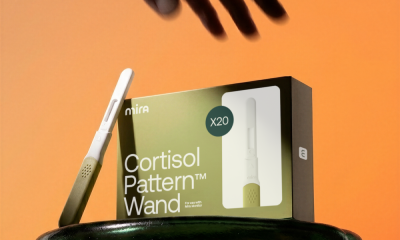











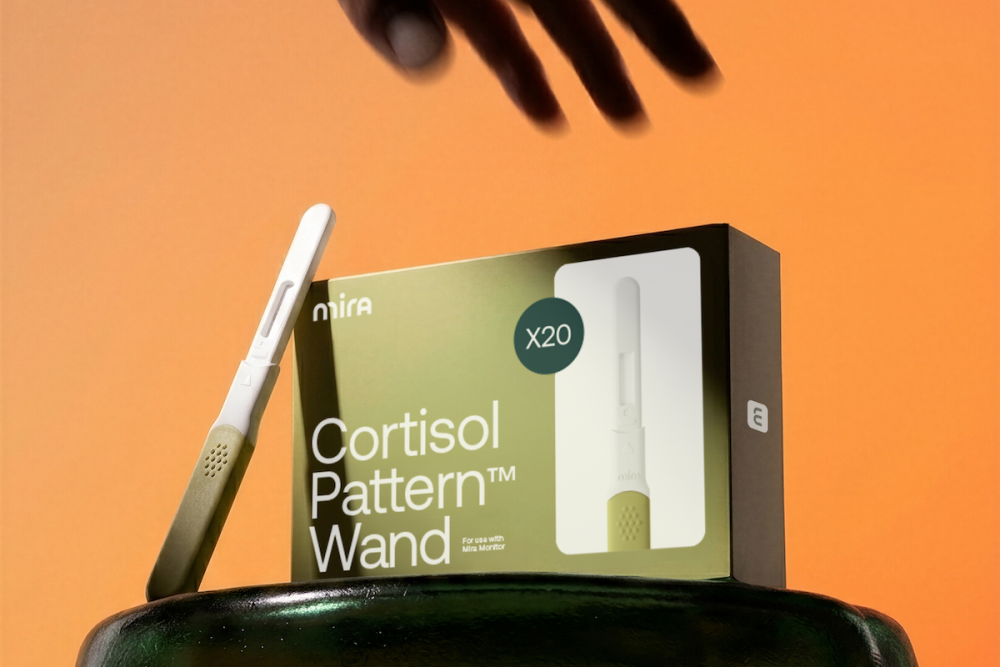
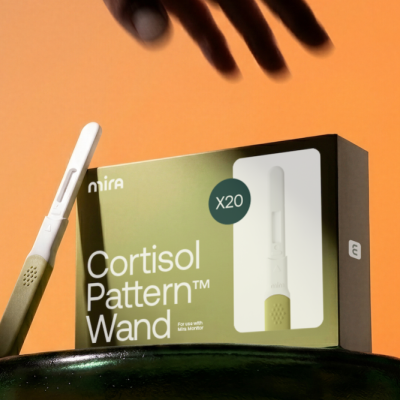
Mira has launched an at-home cortisol tracking kit that allows women to monitor stress-related patterns over time using urine samples.
The Cortisol Pattern Kit measures urinary free cortisol directly from a urine sample and displays results through the company’s existing monitor and app.
The system is intended for repeated testing rather than a single measurement, allowing users to compare results with a personal baseline built from their own data.
Mira said consistent daily testing can establish a baseline in about a week. It recommends testing in the morning and evening to see how cortisol patterns change throughout the day.
Cortisol is involved in the body’s stress response but is not a direct or complete measure of stress. The company said the kit is intended for general wellness use and is not designed to diagnose stress, an endocrine condition or any other medical condition.
The Cortisol Pattern Wands use the same lateral-flow testing format as Mira’s existing hormone tests. Users dip a wand into a urine sample, insert it into the Mira Monitor and view the result in the app within minutes.
The company said cortisol data can be viewed alongside cycle, hormone and daily routine information.
Sylvia Kang, founder and chief executive of Mira, said: “The Cortisol Pattern™ Kit gives women a new way to understand their stress patterns over time, in the context of their own biology.”
She added: “We built Mira to give women answers they had spent far too long searching for, beginning with the TTC journey and expanding into hormone and cycle tracking across life stages, including perimenopause. Now, we’re taking Mira beyond reproductive health and into everyday wellness, bringing personalised stress-pattern tracking directly into women’s homes.”
Mira said more than 350,000 women already use its platform to track their cycle and hormones.
Waitlist sign-ups for the Cortisol Pattern Kit and Cortisol Pattern Wands opened on 22 September, with wand refills available to pre-order in 20- and 30-count options.

Manchester City has launched a female athlete health platform covering menstrual, pelvic and breast health, as well as nutrition.
The Her City website is designed for the club’s women’s first-team players, coaches, support staff, academy players and parents.
Manchester City says the platform is the first of its kind in the Women’s Super League and was developed over two years.

The project was led by director of performance services Emma Deakin, physical performance scientist Rosie Anderson and PhD student and first-team nutritionist Sarah Malone.
It grew out of PhD research into menstrual, pelvic and breast health and nutrition, with the team seeking to turn that work into an online educational resource.
The website divides the four areas into separate sections and provides peer-reviewed information that the club says has been critically analysed by experts.
Content will continue to be reviewed and updated as further evidence emerges.
Resources include posters, visual explainers, audio materials and downloadable educational content, with information tailored to different groups including players and parents.
The platform aims to improve knowledge, develop critical analysis skills and strengthen communication within football and at home.
It also includes material to help users assess misinformation they encounter on social media or elsewhere.
A confidential contact form allows users to raise concerns or ask questions directly of experts at Manchester City.
Parents of academy players can also access the platform, with resources intended to help them support their children during a key phase of their development.
Manchester City said its longer-term aim is to make the platform available to all women working across City Football Group.












 Menopause1 week ago
Menopause may not explain rising heart condition in women – study

 Fertility2 weeks ago
Paracetamol use may impact future fertility, studies suggest

 Insight1 week ago
Women with birth trauma face 2.5x higher healthcare costs – study

 Menopause2 weeks ago
Cancer drug could tackle osteoporosis menopause weight gain

 News1 week ago
Medical cannabis may improve endometriosis symptoms – study

 Cancer1 week ago
Study could explain why obesity is a breast cancer risk factor

 Hormonal health2 weeks ago
Menopause hormone therapy may improve cardiovascular health outcomes, study suggests
 AI1 week ago
Evvy secures US$40m for AI-powered vaginal microbiome testing