




News
Digital Transformation in Healthcare: Leveraging Technology for Effective Weight Loss


It’s no secret that all industries are being transformed by developing technology, and healthcare is no exception.
The healthcare industry has always been at the forefront of technological advancements, but today, these changes are creating a more personalized and convenient approach to healthcare, particularly in the realm of weight loss.
We now know more about our own health than ever before. But how does this affect us day in and day out, especially when it comes to managing weight?
Let’s explore the digital transformation in healthcare and how it leverages technology to aid in effective weight loss.
Electronic Health Records (EHRs)
Digital health records allow healthcare providers to easily access and share patient information, resulting in better care coordination and faster diagnoses.
EHRs also help reduce medical errors, as they can automatically flag potential drug interactions or allergies. This seamless integration of patient data supports more personalized and effective weight loss strategies.
Virtual Appointments
Telehealth has been a significant advancement, particularly noted during the global pandemic. It made doctors and patients realize that not all appointments require an in-person visit. Telehealth saw a 45% increase by March 2021, offering numerous benefits for weight loss management:
- Accessibility: More patients can access healthcare without taking time off work or needing transportation.
- Convenience: Reduced wait times and no-shows improve patient satisfaction and allow more time for personalized care plans.
On-Demand Health Care Through Online Portals and Apps
On-demand healthcare through apps and online portals provides an array of services that enhance patient care. For weight loss, these platforms offer:
- Direct Communication: Patients can message healthcare advisors and doctors for quick answers to non-urgent queries.
- Health Tracking: Apps like MyFitnessPal, Zero, etc help users monitor their diet, exercise, and fasting schedules to manage weight loss routine.
- Easy Access to Records: Patients can view their medical records, book appointments, and stay updated on their health status.
ESG Treatment
Endoscopic Sleeve Gastroplasty (ESG) is a minimally invasive weight loss procedure that has gained significant attention in recent years. Leveraging advanced technology, ESG offers a non-surgical option for individuals struggling with obesity.
As this procedure becomes more popular, particularly in regions known for advanced medical care like endoscopic sleeve gastroplasty Miami is emerging as a go-to option for patients seeking effective weight loss solutions without the need for traditional surgery. Here’s how it fits into the digital transformation of healthcare:
- Minimally Invasive: ESG is performed using an endoscope inserted through the mouth, requiring no external incisions. This reduces recovery time and lowers the risk of complications.
- Effective Weight Loss: Studies have shown that ESG can lead to substantial weight loss, making it a viable alternative to traditional bariatric surgery.
- Personalized Treatment: The procedure can be tailored to each patient’s needs, offering a customized approach to weight management.
- Technological Integration: Follow-up care often involves digital health tools such as telehealth consultations and health monitoring apps to track progress and ensure sustained weight loss.
Wearable Technology
Wearable technology plays a crucial role in weight loss by providing real-time health data. Devices such as Apple Watches and Fitbits monitor:
- Activity Levels: Track steps, workouts, and calories burned.
- Vital Signs: Measure heart rate, blood oxygen levels, and perform EKGs.
Updated Medical Devices
Advanced medical devices play a crucial role in managing and facilitating weight loss. These devices, continually refined to offer smarter and more responsive care, highlight the broader impact of technology in the weight loss journey. Here are some examples:
- Modern Insulin Pumps: For individuals with diabetes, maintaining optimal blood sugar levels is critical for weight management. Advanced insulin pumps help regulate insulin delivery more precisely, aiding in better metabolic control and facilitating weight loss efforts.
- Continuous Glucose Monitors (CGMs): CGMs provide real-time feedback on blood sugar levels, helping users make informed decisions about their diet and activity, which are essential for weight loss.
- Wearable Fitness Trackers: Devices like smartwatches and fitness bands monitor physical activity, calorie burn, heart rate, and sleep patterns. This data empowers individuals to track their progress, set goals, and stay motivated on their weight loss journey.
- Body Composition Analyzers: These devices measure body fat percentage, muscle mass, and other key metrics. Understanding these metrics helps tailor weight loss plans to individual needs, ensuring more effective and personalized outcomes.
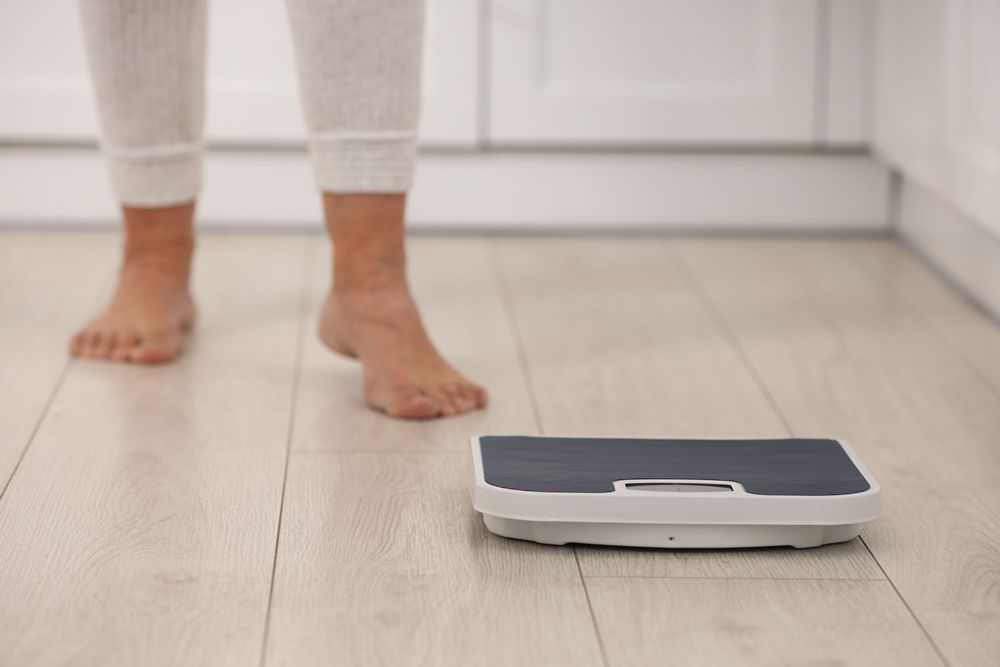
- Smart Scales: Integrated with mobile apps, smart scales track weight trends over time, offering insights and visual progress reports that can boost motivation and adherence to weight loss programs.
Telemedicine & Online Therapies
Telemedicine allows patients to receive healthcare services remotely, which is particularly beneficial for weight loss consultations and therapy sessions. This approach:
- Expands Access: Especially helpful for individuals in rural or remote areas.
- Reduces Wait Times: Improves access to care for those with mobility issues or disabilities.
Artificial Intelligence (AI) & Blockchain
AI and blockchain technologies offer groundbreaking benefits for weight loss management:
- AI: Analyzes large amounts of data to identify patterns and predict outcomes, helping to tailor weight loss programs and provide early interventions.
- Blockchain: Ensures secure storage and sharing of medical data, enhancing data privacy and reducing the risk of breaches.
Digital transformation in healthcare also impacts insurance, streamlining claims processes, improving customer service, and reducing costs through automation and chatbots.
Overall, digital transformation has the potential to significantly improve healthcare and weight loss services. By leveraging technology, providers can offer more accessible, efficient, and personalized care, helping individuals achieve their weight loss goals effectively. With technology advancing daily, the future of weight loss management looks promising and boundless.



Hormone therapy started in peri- or early post-menopause was linked to a 22 per cent lower risk of cardiovascular events in women with vasomotor symptoms in a recent study.
The findings came from an observational analysis of 20 years of health data and do not show that hormone therapy caused the reduction in cardiovascular risk.
The association was strongest among Black women and women who started treatment within 10 years of menopause onset, although researchers cautioned that the findings should not guide clinical practice.

The study is the first of its kind in the US to assess the risk of future cardiovascular events among women with vasomotor symptoms who use hormone therapy during peri- and early postmenopause.
Samar R. El Khoudary, professor and chair of the Department of Epidemiology at the VCU School of Public Health and one of the study’s senior researchers, said: “The menopause transition represents a critical window for understanding how hormone therapy may relate to cardiovascular disease risk. Our findings suggest that timing of initiation may influence cardiovascular outcomes.”
The researchers stressed that the findings do not support using hormone therapy to prevent cardiovascular disease.
Potential benefits must also be weighed against risks, including the increased breast cancer risk observed with longer-term use.
The study was not a randomised controlled trial, the gold-standard method for testing biomedical treatments.
Rebecca C. Thurston, associate dean for Women’s Health Research at the University of Pittsburgh School of Medicine and one of the study’s senior researchers, said: “These findings point to women with vasomotor symptoms as those who may show cardiovascular benefit from hormone therapy initiated during the perimenopause and postmenopausal years.
“However, conclusions should be tempered by the observational nature of the study, and findings should not guide clinical practice.”
Vasomotor symptoms, meaning hot flushes and night sweats, affect up to 80 per cent of women during the menopause transition and last for an average of seven to ten years.
Their frequency and severity build through perimenopause and typically peak in early postmenopause.
Hormone therapy replaces oestrogen and progesterone that women’s bodies stop producing after menopause and is currently the most effective treatment for these symptoms.
Clinical trials led by the Women’s Health Initiative in the early 2000s raised concerns about hormone therapy’s impact on heart disease, stroke, breast cancer and other risks, leading to years of reluctance among patients and providers to use the treatment.
El Khoudary said: “Hot flashes and night sweats have a significant impact on a woman’s quality of life and ability to work productively.
“While hormone therapy is an effective treatment for these symptoms, questions have remained about its cardiovascular effects, particularly the importance of when treatment is initiated during the menopause transition.”
More recent research suggests the effects of hormone therapy on the heart and vascular system may vary by age and treatment timing, with women younger than 60 who start treatment closer to menopause onset having different levels of risk.
In 2026, the US Food and Drug Administration removed “black box” warnings from hormone therapy products, reflecting evolving evidence on the benefits and risks of treatment.
Researchers from Virginia Commonwealth University and the University of Pittsburgh analysed data from more than 2,700 women taking part in the Study of Women’s Health Across the Nation (SWAN).
The women reported vasomotor symptoms and had not previously experienced cardiovascular events.
Clinical data collected between 1997 and 2017 were used to examine whether women who started hormone therapy for vasomotor symptoms were more or less likely to experience stroke, congestive heart failure, heart attack or revascularisation procedures than women who did not start treatment.
El Khoudary said: “By using data from the SWAN study, we essentially were able to emulate a series of hypothetical clinical trials to gain a deeper understanding into how hormone therapy taken to mitigate vasomotor symptoms during peri- and early postmenopause influences cardiovascular risk over time.
“It allowed us to examine clinically meaningful cardiovascular disease events over long-term follow-up in a population and treatment window that has been challenging to study prospectively.”
Starting hormone therapy during peri- or early postmenopause was associated with an estimated 22 per cent lower risk of cardiovascular disease events.
Women who began hormone therapy within 10 years of menopause onset had an estimated 27 per cent lower risk compared with women who did not start treatment.
Among Black women, starting therapy during peri- or early postmenopause was associated with an estimated 49 per cent lower risk of cardiovascular disease events.
No clear reduction was seen among women who started therapy more than 10 years after menopause onset or among White women and other racial and ethnic groups.
El Khoudary said: “The differences in cardiovascular outcomes by race and ethnicity are notable, particularly because Black women are more likely to experience severe vasomotor symptoms.
“These findings highlight the need to better understand how hormone therapy timing may influence cardiovascular outcomes across diverse populations.”
It remains unclear why cardiovascular risk differed according to when hormone therapy was started, although researchers believe differences in blood vessel health with age may play a role.


An experimental cancer drug reduced bone loss and body fat in mice modelling post-menopausal changes, early research suggests.
The compound, CADD522, appeared to strengthen bones and help the animals stay leaner after surgery designed to mimic hormonal changes seen after menopause.
The treatment remains at an early experimental stage and has so far only been tested in animals.
The study, led by the University of East Anglia, investigated CADD522, which was originally developed to block a protein involved in the growth and spread of several cancers.
Mice treated with the compound for eight weeks showed significant improvements in bone health. Scans found increased bone volume and better preservation of the honeycomb-like structures inside bones that are crucial for strength and resilience.
Blood tests suggested the treatment stimulated new bone growth without interfering with the body’s normal process of breaking down and rebuilding bone.
Dr Darrell Green, lead researcher from UEA’s Norwich Medical School, said: “Osteoporosis affects around one in three women over the age of 50, leaving sufferers vulnerable to painful fractures that can seriously impact quality of life.
“Current treatments exist, but many are plagued by side effects, safety concerns or inconvenient dosing schedules that make long-term use difficult.”
The researchers also found that mice receiving CADD522 weighed less than untreated mice despite eating the same amount of food.
They had less body fat and fewer fat deposits in their bone marrow, a process commonly seen after menopause and linked to declining bone health.
The team also examined brain tissue and found that the drug appeared to reverse several menopause-related changes in fatty acids.
Levels of omega-3 fats including DHA remained largely intact, while several other lipid abnormalities shifted back towards healthier patterns.
Green said: “We didn’t directly test for memory or thinking ability, but our work raises questions about whether this drug could one day help address wider menopause-related health problems.”
Safety experiments in mice, rats and dogs found that CADD522 could be taken orally and was well tolerated.
The compound also appeared to be metabolised more slowly in human tissue than in rodents, potentially improving its performance in people.
“This is still in the early stages and has so far only been tested in animals but we hope that the benefits will translate to humans to ultimately reduce fracture rates,” added Green.
The research was led by UEA in collaboration with the University of Maryland, the Scintillon Research Institute in San Diego and the University of Stirling.
Safety testing was funded by The Sir William Coxen Trust as part of the development of CADD522 as a childhood cancer treatment.











 Diagnosis2 weeks ago
Major UK study could be a ‘game-changer’ for heavy periods and endometriosis

 Entrepreneur1 week ago
KOVE Medical raises €1.7 million to improve safety of foetal surgery

 Fertility2 weeks ago
One week left to apply: W Accelerate with Merck KGaA and M Ventures

 Pregnancy1 week ago
UK study aims to transform maternity care for high-risk pregnancies

 Mental health2 weeks ago
PMDD after SSRIs or hormones: Why the brain may be the missing treatment target

 Diagnosis2 weeks ago
Ark Surgical secures further institutional backing to accelerate US expansion

 Menopause5 days ago
Menopause hormone treatment may ease brain fog, study suggests

 Motherhood2 weeks ago
Thousands of UK women develop undiagnosed PTSD after childbirth each year – study