




News
Beyond the Hug: The Psychological Benefits of Weighted Blankets and Huggable Pillows for Females


We live in a paradoxical age in which we’ve never had better life conditions, yet women have never been more mentally and emotionally stressed. Thankfully, there are more and more effective ways to help us manage our anxieties over time, it’s just a matter of finding the one that works for you.
For some women, it’s meditation; for others, it’s cold plunges and sauna. Some people try different aids and tools to help them get their well-being to the next level. One of the more recent and simple methods to reduce stress and instigate a sense of calm is deep touch pressure therapy (DTP), which can be experienced by incorporating weighted blankets and pillows into your sleep and relaxation routine. Here’s what you need to know!
How can weighted blankets and pillows help you ease anxiety?
The connection between relaxation and DTP may not be obvious at a glance, but it’s closely connected to the human need to feel held and protected. Some say that using a weighted blanket makes you feel safe, just like swaddling did when we were babies, while others say that it emulates a hug, which is known for helping us regulate our sympathetic nervous system.
Deep touch pressure helps us switch off our fight or flight response, the number one culprit of our hectic thoughts and feelings of anxiety and heightened stress. As the sympathetic nervous system takes the back seat, our parasympathetic nervous system comes to the forefront, bringing with it serotonin, melatonin, oxytocin, and dopamine. These neurotransmitters help keep us relaxed, and they prepare us for rest and deep sleep, which are necessary for optimal functioning.
This means that when you use a weighted blanket or a premium weighted pillow by Quiet Mind, your body gets a signal that you’re not in danger, so you can let go of stress. This allows your high cortisol levels to go down, letting your body and your mind prepare for sleep or relaxing after a long day.
Benefits of Weighted Blankets and Huggable Pillows
We talked about how weighted blankets and pillows affect your nervous system, now let’s look into the benefits that come with using them regularly. The truth is that these aids can help you with a variety of stress-related issues, whether it’s mood disorders or having trouble sleeping.
- Weighted blankets can improve your sleep quality. One of the most effective ways to use weighted blankets is to boost the quality of sleep. If your mind keeps racing after you’ve gone to bed or you’re struggling with insomnia, the gentle pressure of a weighted blanket could be just the thing to help you get some much-needed shut-eye.
- Weighted pillows can give you a sense of security and comfort. Huggable pillows can help you get the comfort you need when you’re feeling stressed, and there’s no one around to give you a proper hug. Just the physical act of hugging can release oxytocin, a neurotransmitter that boosts the feeling of connection and contentment while reducing stress and enhancing overall emotional well-being.
- Weighted blankets can help you deal with anxiety. If you’ve got an anxious mind, you know that it can lead to all kinds of physical ailments, and the lack of quality sleep only exacerbates those effects. DTP can provide a simple yet effective way to manage and slow your busy mind. The sensation of being gently held can slow your heart rate and create a sense of calm, making it easier for you to relax and fall asleep more easily.
- Huggable pillows can be used to elevate mindfulness practices. If you’re already working on incorporating meditation or calming breathing exercises into your routine, weighted pillows can help elevate the whole experience. You can hug your pillow while you’re doing the exercises or place it on your thighs while you’re meditating on the ground, which will help you feel more grounded, letting the excess energy slowly dissipate.
The list of benefits continues, but the ones listed above are the most prominent, as they cause a chain reaction that can gradually improve the overall quality of your life. Before you buy your first weighted blanket, though, do your research to ensure you get the right weight (about 10% of your body weight), and introduce it gradually into your routine. This will allow your body to adjust to DTP without feeling overwhelmed.
Conclusion
The psychological benefits of weighted blankets and pillows are universal, and for women who are under a lot of pressure and stress, these aids could be a game changer. Whether you’re looking for ways to soothe your overactive mind, deepen your mindfulness practices, or sleep better, weighted blankets and pillows could be a big help in your quest. Just remember to take it slowly and give yourself plenty of time to get used to the new sensations – you’ll be glad you did!







Menopausal women using hormone therapy reported healthier diet, exercise and sleep habits than non-users in a study of more than 10,000 women.
The menopause transition is associated with a higher risk of chronic health conditions and symptoms including hot flushes and problems affecting the urinary and genital systems.
Hormone therapy is often used to manage these symptoms, but it remains unclear whether it affects health outcomes directly or indirectly through changes in health behaviours.

Previous research has produced mixed results, with some studies suggesting that postmenopausal women pay greater attention to maintaining a healthy lifestyle.
The cross-sectional analysis examined whether menopause status and hormone therapy use were linked to diet, physical activity and sleep duration.
A cross-sectional study assesses participants at one point in time. It can identify associations but cannot establish whether one factor directly caused another.
Diet, exercise and sleep are described as modifiable health behaviours because people may be able to change them to improve their health.
The researchers found that postmenopausal women who had never used hormone therapy reported eating less fruit and vegetables.
Women who had never used the treatment were also 19 per cent less likely to meet guidelines for muscle-strengthening activity.
Sleep duration was shorter among postmenopausal women who had never used hormone therapy.
Compared with premenopausal and perimenopausal women, the likelihood of meeting sleep guidelines was 14 per cent lower among never-users, 26 per cent lower among current users and 24 per cent lower among past users.
Perimenopause is the transitional period before menopause, when hormone levels and menstrual periods can change.
Researchers said these findings may be linked to higher levels of follicle-stimulating hormone among postmenopausal women who do not use hormone therapy.
They may also relate to lower levels of oestradiol, a form of oestrogen, which have previously been associated with poorer sleep.
Hot flushes and urogenital symptoms can also disrupt sleep, although hormone therapy may ease these symptoms.
Dr Stephanie Faubion, medical director for The Menopause Society, said: “This large observational study underscores that women who use hormone therapy tend to adopt overall healthier lifestyles.
“Although this association may partly reflect better symptom control enabling healthier behaviours, healthy-user bias is likely a significant contributor.
“Women who choose to use hormone therapy are often more proactive in their healthcare and may systematically differ from nonusers in socioeconomic resources, access to care, and health literacy.
“This largely explains why early observational studies of hormone therapy suggested cardiovascular benefits that were not confirmed in subsequent randomised, controlled trials.”


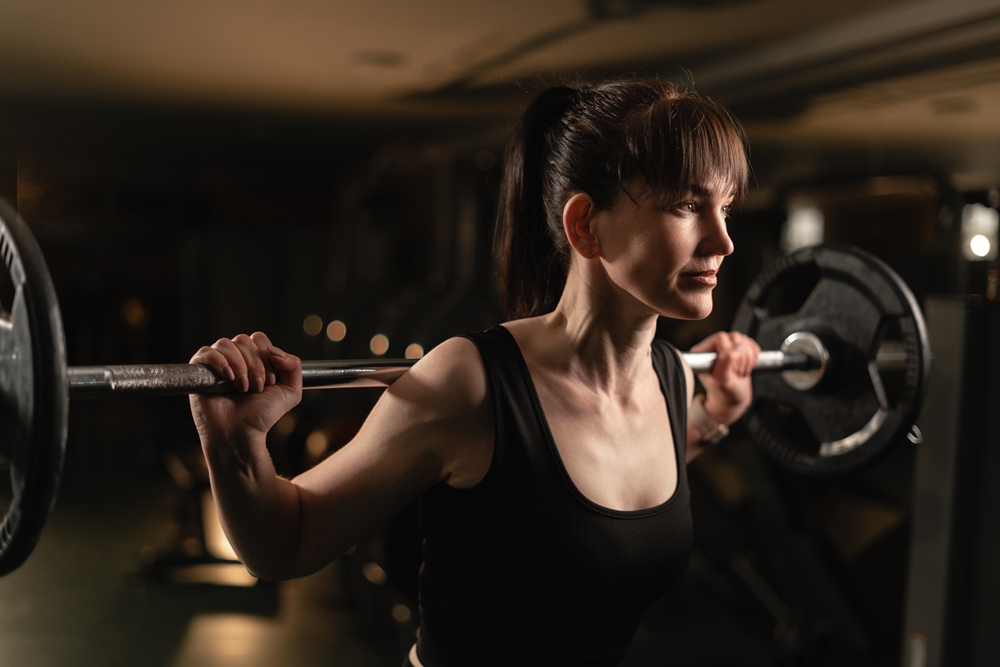
Women who do strength training may have a lower risk of major cardiovascular disease, particularly alongside aerobic activity, a study suggests.
Cardiovascular disease is the leading cause of death worldwide. Aerobic activities such as brisk walking, jogging, cycling and swimming are already established ways to help reduce the risk.
Strength or resistance training, also known as RT, is less established as a prevention strategy. It makes muscles work against a force and can involve body weight, free weights, resistance bands or machines.

Current US guidelines recommend at least two days of strength training and 150 minutes of moderate-to-vigorous aerobic activity each week.
They also recommend limiting sedentary behaviour, including prolonged television viewing, which is considered an independent risk factor for cardiovascular disease.
Dr Tianyue Zhang, lead study author and scientist in the department of nutrition at the Harvard T.H. Chan School of Public Health, said: “Despite its established health benefits, RT is often overlooked as a prevention strategy for CVD, and its impact on CVD risk, especially in middle-aged and older women, remains understudied.
“A key question is, how much does it add beyond aerobic activity alone?”
Researchers analysed data from 117,025 women participating in the Nurses’ Health Study and Nurses’ Health Study II.
The two groups had average starting ages of 66.8 and 48.1 years respectively.
The women reported their resistance training every four years, with exercises involving the arms and legs recorded separately.
Time spent watching television was used as the main measure of sedentary behaviour.
The researchers examined exercise and television-viewing habits alongside the incidence of major cardiovascular disease.
Major cardiovascular events included fatal or non-fatal heart attacks, strokes, coronary artery bypass surgery and percutaneous coronary intervention.
Coronary artery bypass surgery redirects blood around narrowed or blocked heart arteries. Percutaneous coronary intervention uses a small balloon, often followed by a stent, to open a narrowed artery.
Higher levels of strength training were associated with a lower risk of major cardiovascular disease, particularly heart attacks.
No statistically significant link with stroke was found when resistance exercise was considered separately.
Women completing at least two hours of strength training a week had a 20 per cent lower risk of major cardiovascular disease and a 44 per cent lower risk of heart attack than those doing none.
Each additional hour a week was associated with a five per cent lower risk of major cardiovascular disease and a 14 per cent lower risk of heart attack.
The associations weakened somewhat after researchers accounted for body mass index and conditions including diabetes, high blood pressure and high cholesterol, but remained clear.
Body mass index, or BMI, compares weight with height and is commonly used to assess whether someone is within a healthy weight range.
Strength training was also linked to additional benefits among women who did aerobic activity.
Women completing at least two hours of strength training and 150 minutes of aerobic activity each week had a 45 per cent lower risk of heart attack than those reporting no physical activity.
Women who met recommendations for strength training, aerobic activity and reduced television viewing had the lowest risks of major cardiovascular disease, heart attack and stroke compared with those who met some or none of the recommendations.
Zhang said: “These findings suggest that, within an already active population, RT is associated with additional reductions in CVD risk above and beyond overall aerobic activity.
“Alongside aerobic activity and reductions in sedentary behaviour, RT may be an important component of public health strategies for cardiovascular prevention in women.”
The study relied on participants reporting their own resistance training, meaning the data may not always have been precise.
Researchers also noted the possible influence of unmeasured factors and the limited diversity of participants.
They were unable to fully separate the effects of the type of resistance training performed from the overall amount completed.
Dr Harlan M. Krumholz, professor at Yale School of Medicine, said: “We have long encouraged resistance training, and this study provides strong evidence to reinforce that message.
“It should be included in a well-rounded health routine to support function and longevity.”

Women who develop pre-eclampsia face a higher risk of chronic kidney disease and high blood pressure later in life, new research suggests.
The amount of protein found in the urine during pregnancy may help identify those at greatest risk of developing long-term health problems.

Pre-eclampsia usually involves high blood pressure and increased protein in the urine. Some women also experience severe headaches and changes to their vision.
The condition cannot be treated during pregnancy and, in some cases, labour must be induced early to protect both the woman and baby.
The study found that the condition may be linked to longer-term health problems.
Anne Høy Seemann Vestergaard, a medical doctor and PhD at the department of clinical medicine at Aarhus University, said: “What we can see is a clear association between pre-eclampsia and the development of high blood pressure, chronic kidney disease and cardiovascular disease later in life.”
The researchers found that the amount of protein passed in the urine during pregnancy was linked to the risk of developing chronic conditions after giving birth.
Protein in the urine can indicate that the kidneys are not filtering blood normally.
Vestergaard said: “The most surprising finding was how clearly the amount of protein in the urine during pre-eclampsia was linked to the risk of later high blood pressure and chronic kidney disease. Women with moderate to severe protein excretion had a higher risk of both conditions compared with women with low or no protein excretion.”
Among women with pre-eclampsia and moderate to severe levels of protein in the urine, around one in 20 developed chronic kidney disease within 10 years and around one in six developed high blood pressure.
Most women in the study did not develop long-term complications, but the researchers said the increased risk should still be taken seriously because the potential effects can be severe.
Vestergaard said: “At first glance, this may sound like a low number, but it represents a markedly increased risk when the groups are compared. In the group with pre-eclampsia and high levels of protein in the urine, around 1 in 20 women developed chronic kidney disease within ten years, including early stages of the disease, compared with around 1 in 100 in the group with lower or no protein excretion.”
She added: “That is a considerable number in light of the fact that chronic kidney disease is a potentially serious condition that can progress to kidney failure if isn’t diagnosed early.”
The findings suggest women who experience pre-eclampsia may benefit from more systematic monitoring after pregnancy.
Vestergaard said: “Our study suggests that these women may benefit from monitoring of blood pressure and kidney function after pregnancy.”











 Menopause4 weeks ago
Perimenopause misinformation ‘putting women at risk’
 Events3 weeks ago
Women’s Health Innovation Summit opens submissions for 2026 Innovation Showcase

 Insight2 weeks ago
British women among angriest in Europe, health survey reveals

 News3 weeks ago
Women still being failed when they reach menopause, experts say

 Menopause3 weeks ago
Sweden eyes domestic production of oestrogen patches amid menopause treatment shortage

 News3 weeks ago
Three menopause innovators shortlisted for Femtech World Award

 News1 week ago
Femtech World Awards 2026: Winners revealed

 Menopause2 weeks ago
Apple Health adds menopause and perimenopause tracking