




Fertility
“There is a huge need for both support and education about women’s health”
By Afua Basoah, Head of Health Strategy for RAPP UK


For generations, women have lived with health and care systems that are mostly designed by men, for men.
Despite representing 51 per cent of the population, women are still significantly underrepresented in clinical trials and research. This has meant that not enough is known about conditions that only affect women, or about how conditions that affect both men and women impact women in different ways.
This gender gap contributes to worse health outcomes for women, with much less known about female health conditions than those that also or only affect men. In the UK, women have a longer life expectancy than men, with life expectancy at birth being 83.1 for women and 79.4 years for men in 2017 to 2019. However, women in the UK spend a greater proportion of their lives in ill health and disability.
In summer 2021, the UK government opened a consultation process to inform the development of a national Women’s Health Strategy. The ambition is to build a health system that better understands and is, therefore, responsive to the realities and needs of women throughout their lives.
There is a huge need for both support and education about all aspects of women’s health. Personalised, accessible and delivered in a way that evolves as their lives change. As women’s healthcare becomes an increasing priority, the femtech industry is rising to meet the challenge. The industry has already demonstrated impressive early wins and with appropriate access to funding, greater disruption could be ahead.

Afua Basoah, Head of Health Strategy for RAPP UK
In 2019, the femtech industry generated $820.6m in global revenue and received $592m in venture capital investment. Femtech pioneers, many of whom are female-founded, have benefited from cultural shifts, sparked by events such as the #MeToo movement, a growing interest in diversity and inclusion and pandemic-related digital acceleration.
While the US accounts for the lion’s share of femtech startups, the UK comes second in a market predicted to be worth in excess of $75.1B (£60.7B) by 2025. The industry represents a broad range of companies that are focused on developing technology aimed at improving women’s health and wellbeing that tend to fall into four categories: healthcare and diagnostics, reproductive health, pregnancy and family care and general health and wellness.
Of these, reproductive health, pregnancy and family care currently dominate the market and according to a recent McKinsey report “there are still significant white spaces” for growth.
The disruption in this space is driven by the need to create inclusive, individualised experiences that meet the unique identities, values and personal needs of women. The one size fits all approach has been sized out.
“The ability to understand the whole woman – her genetics, aspirations, experiences as well as unmet her health needs, provides an opportunity to holistically signpost the right solutions that takes her on a journey that touches every aspect of her well-being”.
Here, Idia Elsmore Dodsworth, co-founder of the AI-based reproductive health monitoring app, Tinto, has highlighted the fact that there is a real shift towards ‘well-care’ versus ‘sick-care’ in the femtech space.
Embedding AI into their own product has helped ensure granularity of data inputs that allows for “super-tailored” content that empower users to manage their health as seamlessly and effortlessly as with other aspects of their lives, and on their terms.
Below are a selection of femtech organisations to keep an eye on:
Founders: Dr Hannah Allen and Idia Elsmore Dodsworth
Year founded: 2019
Total funding: Undisclosed seed funding
As a provider of AI-based software solutions for reproductive health monitoring, the mission of the Tinto app is to nurture women through modern motherhood, enabling mothers to understand the full picture of their wellbeing, and to build a network through meaningful connection and proactive, personalised guidance.
The company offers a mobile app that allows users to communicate with health and wellbeing providers. It provides a curated online community where members can access information and advice from like-minded women going through similar challenges. It also provides online articles regarding baby health, women’s health and topics beyond motherhood.
Founder: Tania Boler
Year founded: 2013
Total funding: £116m
Elvie is a London-headquartered firm that manufacturers technology hardware for women. The first product by the company was the Elvie Trainer, an app-connected Kegal trainer. Followed by the Elvie Pump a quiet, wireless electric pump.
Last September it closed £70m in its Series C funding round to continue diversifying its product range.
Founders: Andrea Berchowitz and Dr Rebecca Love
Year founded: 2020
Total funding: £11.2m
London-based Vira Health focuses on women’s healthcare and improving the gathering and use of female data in healthcare.
Its first product is a menopause subscription app called Stella which guides women through menopause with tailored treatments based on the users’ symptoms.
Last month Vira Health raised £9m in a funding round to add new features to its menopause app, including telehealth and prescriptions.
Founder: Kim Palmer
Year founded: 2017
Total funding: £1m
Clementine is a mental health app for women that uses hypnotherapy to lower stress levels and build confidence. In the subscription-based app there are sleep sessions, confidence courses, anti-anxiety courses and mantras.
The app was created after founder Kim Palmer suffered with panic attacks during pregnancy. Earlier in the year, Clementine partnered with singer and songwriter Becky Hill to encourage young people on a journey to self-care.
Headquartered in London, Clementine raised $1.3m (£1m) in its seed funding round in October 2020.
Because women are not just consumers but the primary healthcare decision-makers for themselves and often for their families, better health outcomes for women can lead to better outcomes for society.
In sickness and in health, at RAPP we stand up for individuality to co-create better outcomes for all. We leverage deep understanding of the realities, values and intersectional identities creates personalised and connected brand experiences that drive healthier outcomes. We believe that predictive, preventive and inclusive health is enabled by creativity, behavioural science, data and technology.




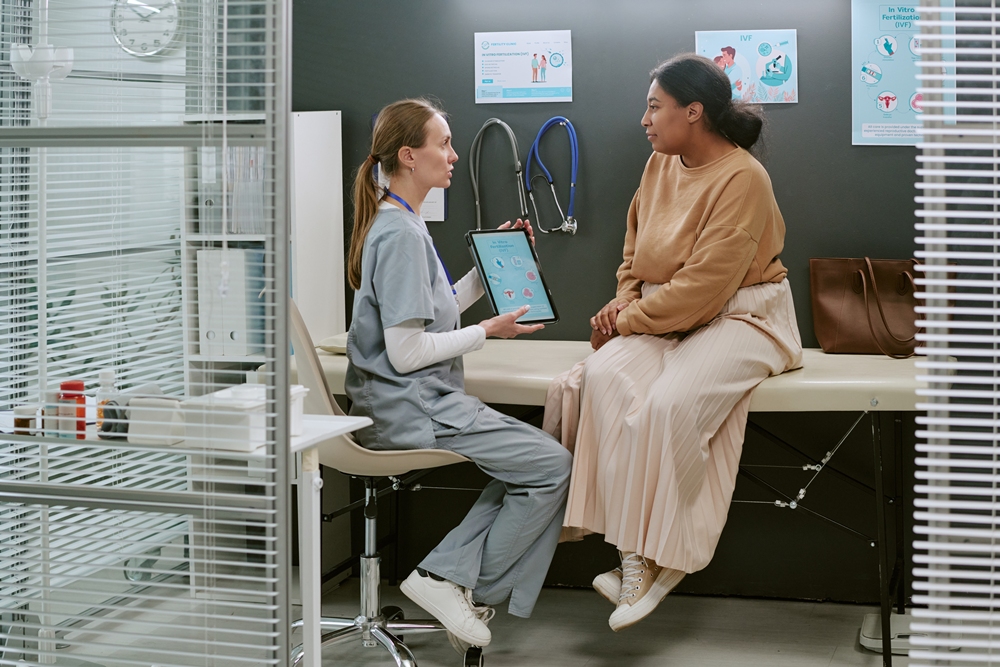
The Scottish government has launched a national review into whether NHS IVF access should be extended to single women.
The review will also consider whether wider access should be offered to couples who have children from previous relationships.
Health secretary Angela Constance said: “Access to NHS IVF treatment should be fair, timely and reflect the way people’s lives and families look today.”

Most single women are not currently eligible for NHS IVF treatment in Scotland.
Campaigners have welcomed the review.
Katie Rollings of Fertility Action said: “It’s an essential and long-awaited decision that will impact a huge number of people who are struggling to grow their families.
She said there is “no evidence” that having two parents rather than one determines whether a child will thrive.
She added: “What matters is whether a child is loved, safe, supported and has stable, positive relationships around them.”
Figures from the Human Fertilisation and Embryology Authority show Scotland is the only UK nation where NHS-funded IVF cycles outnumber privately funded cycles.
In 2024, more than 6,000 cycles of fertility treatment were carried out among more than 4,000 patients in Scotland. Both figures were slightly lower than the record highs recorded in 2022.
The past 20 years have also seen a rise in the number of same-sex female couples and single women receiving fertility treatment.
In 2024, 625 IVF cycles were carried out for women in same-sex couples in Scotland, with more than one third funded by the NHS.
There were 330 cycles involving single women, of which 50 were NHS-funded.
In England, single women can access IVF through the NHS, although eligibility varies according to the local health trust’s policy.
Current Scottish rules state that couples are eligible if they have been living in a stable relationship for two years and neither partner has been sterilised.
Couples where one partner already has a child can be eligible, but those where both partners have children from previous relationships are not.
Eligibility rules also require a body mass index above 18.5 and below 30, and state that couples must not smoke, drink alcohol or take drugs during treatment. The mother must be under 42.
The Scottish government said the review would also examine consistency of access to fertility preservation, including during cancer treatment, as well as reducing waiting times for donor eggs and sperm.
Same-sex female couples already have access to NHS IVF, but they can face long waits for donor eggs or sperm, as can heterosexual couples who require donor treatment.
The National Fertility Group will lead the review and make “costed, demand-modelled recommendations”, which are due to be published by early summer 2027.
The group will include fertility experts from Scotland’s four NHS-assisted conception units in Glasgow, Edinburgh, Aberdeen and Dundee.
Prof Sarah Martins Da Silva, an NHS consultant and chair of fertility medicine at Dundee University, said there were questions to be answered in a resource-stretched NHS.
“As a fertility specialist I’m never going to be disappointed if the criteria is widened,” she said.
“But with single people, as an NHS clinician looking at the competing demands we have, I’d ask the question about whether being single is a health condition that needs to be funded.”
Da Silva said NHS waiting lists were full of couples who require donated eggs or sperm because of medical conditions including cancer and could face longer waits.
“It’s slightly a disservice to them,” she said.
“There would need to be a real investment and resource without making everybody wait an extraordinary long time.
“With the current financial environment we work in, if you’re talking about new money, where would that come from?”
She said she would welcome changes that encouraged more people to donate eggs or sperm and questioned whether arguments about children needing two parents were necessarily relevant to the debate.
“On the one hand bringing up a child is quite an expensive process, and if you don’t have that support, it can be very difficult.
“But on the other hand, many people start off as a couple and divorce.”
Da Silva also welcomed plans for the review to consider eligibility for couples who already have children, describing the move as “fantastic”.



Jersey is launching a pilot PMOS health check clinic for women to improve follow-up care and access to specialist support.
The clinic will operate at the Assisted Reproductive Unit in St Brelade from October, providing health checks rather than diagnosing or treating the condition.
Women with polyendocrine metabolic ovarian syndrome (PMOS) will need to see their GP before being referred to the service.
Jessica Pinel, chair of PMOS Jersey, described the service as “a good start” but said more could be done.
She said the clinic was in line with draft guidance from the UK’s National Institute for Health and Care Excellence (NICE), which advises annual checks to identify health issues associated with the condition.
Pinel was diagnosed with PMOS in 2023 after spending more than £3,100 on treatment.
She said: “We need to realise that cost may be a barrier to people getting support, even if the cost is going to their GP. But I think we do have to be grateful that we have had this service approved.
“Because the clinic is part of the government health system, it allows for referrals to be made into different pathways like endocrinology, dermatology, so it could actually allow for better support and reduce costs for women with PMOS.
“I think it’s great to see things moving forward and, for women who are newly diagnosed, there’s going to be a more joined-up approach and we’re now taking the long-term health consequences of PMOS more seriously.”
PMOS, which was renamed from polycystic ovary syndrome (PCOS) in May, is a metabolic condition that changes how the ovaries work and affects up to one in eight women, according to the UK’s NHS.
The new name was introduced to reflect the condition’s effects across the body. PMOS has been linked to infertility and weight gain.
The Jersey government said the clinic would help women access further care for PMOS and associated conditions, including type 2 diabetes.
Screening clinic nurse Corrinne Purdy said reviews would take a holistic approach, covering medication, height and weight, sleep, management of the condition, fertility aspirations and mental health.
She said: “We will see whether they’re getting on alright with their medication, how they’re feeling about themselves; we will do height and weight reviews, we will ask them questions about their sleep, how they’re managing their condition.
“We will also speak to them about any particular fertility aspirations and how they’re getting with their mental health as well.”
Purdy said PMOS had been “overlooked” for a long time and that many women struggle with associated symptoms.
The government said women who require specialist management for heavy menstrual bleeding, fertility concerns or other gynaecological conditions would be referred to the appropriate specialist service.
It said existing waiting lists for gynaecology or surgical capacity would not be affected because additional clinical capacity had been identified.
Assistant Minister for Health and Social Services Andy Howell said many women “have been suffering” with PMOS and that the trial was intended to show “that we’re taking them seriously and they’re not going to be dismissed”.
Howell said funding for the clinic would be “managed within the budget that we have at the moment, so it’s not going to cost us any more”.
The Health Department was allocated £381m for 2026 as part of the government’s 2026-2029 budget.
The clinic will also offer investigations including ultrasound scans and endometrial biopsies during the same visit.
Howell said Jersey would base its review of the service on NICE guidance, while Pinel said feedback from women using the clinic would be shared with practitioners to help improve the support provided.








 Hormonal health2 weeks ago
Major UK study could be a ‘game-changer’ for heavy periods and endometriosis

 Entrepreneur5 days ago
KOVE Medical raises €1.7 million to improve safety of foetal surgery
 Fertility2 weeks ago
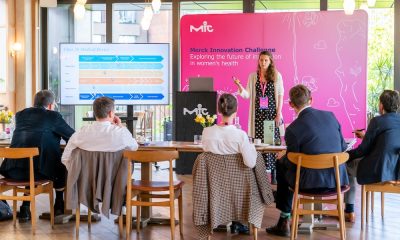
One week left to apply: W Accelerate with Merck KGaA and M Ventures

 Pregnancy6 days ago
UK study aims to transform maternity care for high-risk pregnancies

 Menopause2 weeks ago
Quarter of women miss work due to menstual symptoms, survey finds

 Mental health1 week ago
PMDD after SSRIs or hormones: Why the brain may be the missing treatment target
 Diagnosis1 week ago
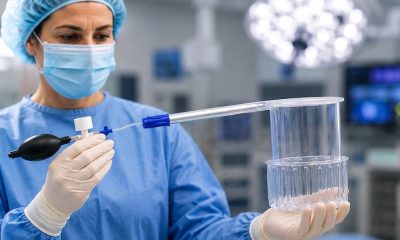
Ark Surgical secures further institutional backing to accelerate US expansion

 Insight2 weeks ago
Study to tackle years-long delays in endometriosis diagnosis
Pingback: URL
Pingback: tga168
Pingback: รับจัดงานศพ
Pingback: สมัครเน็ต ais
Pingback: สล็อต เครดิตฟรี
Pingback: Passive income
Pingback: 789BET
Pingback: pgslot
Pingback: เว็บพนันออนไลน์เกาหลี
Pingback: แทงบอลออนไลน์เกาหลี
Pingback: สล็อตเกาหลี
Pingback: altogel
Pingback: fox888
Pingback: lottorich28
Pingback: trovent.lv
Pingback: pool installation near me
Pingback: betflix wallet
Pingback: Agent Pepe AI
Pingback: stapelstenen