




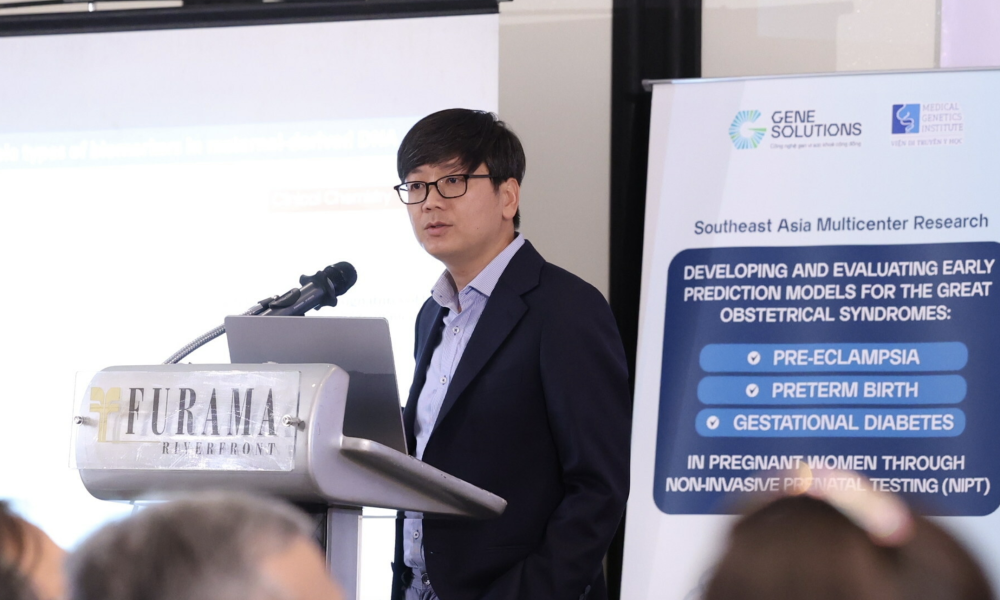
A leading company in the field of genetics is to collaborate with reproductive health experts to develop a prenatal genetic screening test that could predict pregnancy complications.
Gene Solutions launched a multi-centre research collaboration with leading OB/GYN centres in Vietnam, Singapore, Indonesia and Philippines on the early prediction of pregnancy complications.
The research was announced by Dr Hoa Giang, co-founder of Gene Solutions, at a workshop held in Singapore earlier this month, where 70 obstetricians and leading geneticists from Vietnam, Indonesia, the Philippines discussed the pathogenesis, clinical burden and new evidence in prediction of severe pregnancy syndromes.
Giang said the two-phase study would run from 2024 to 2026, across South-East Asia, laying the groundwork for “next-generation” non-invasive prenatal testing (NIPT) as a triage screen in early prediction of pregnancy complications.


The clinical study involving more than 10,000 women would be the first of its kind and is hoped to enable earlier prediction of potential pregnancy complications.
Experts at the Beyond the First-line Prenatal Screening workshop cited studies where more than 15 per cent of pregnancies suffer from great obstetrical syndromes causing severe adverse short and long-term outcomes for both the mother and foetus.
Professor Dr Noroyono Wibowo, head of maternal foetal medicine of University of Indonesia, said: “According to current guidelines, screening for the risk of premature birth, preeclampsia and gestational diabetes usually takes place in the later stages of pregnancy, while identifying high-risk patients early in the first trimester help in better identification and management of pregnancies.”
Associate professor Dr Matthew Warren Kemp from the National University of Singapore presented research data demonstrating that biomarkers in maternal blood may be used as effective prediction models for pathological risks in severe pregnancy syndromes, including preeclampsia and chorioamnionitis, an infection of the amniotic fluid and tissue that surround the foetus during pregnancy.
He said this could potentially lead to advancements in early detection of pregnancy complications before clinical presentation.
To receive the Femtech World newsletter, sign up here.


Newsletter
Sign up for free weekly updates
The latest femtech news, research and investment, straight to your inbox.




