




With research showing 85 per cent of women who give birth vaginally experiencing some degree of tearing, we explore how perineal massage could help expectant mothers prepare for labour.
For many women, having a birth plan can be a reassuring idea. On the other hand, there are women with no set plan in place, they just want to go with the flow. However, whichever direction their birth story takes, there are things which they can do which will prepare the body for labour and delivery.
One of these preparations is perineal massage. Perineal massage can reduce chances of perineal trauma – bruising, grazing, tearing, episiotomy – and helps to become familiar with the feeling of pressure or stretching of the perineum that mums-to-be will feel during the birth of their baby.
Unfortunately, 85 per cent of women who give birth vaginally will experience some degree of tearing, which can lead to issues post-birth with the pelvic floor, incontinence and sexual discomfort.

The purpose of massaging the perineum is to stretch the perineal tissues, promoting elasticity and loosening the tissue to support a natural and gentle vaginal birth.
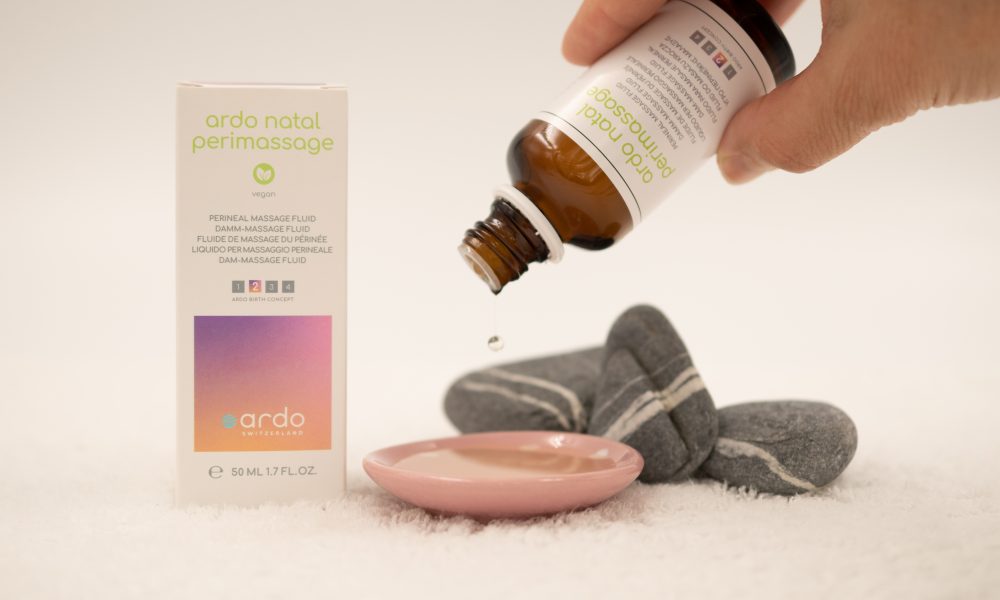
It is recommended massaging three to four times a week for 10-15 minutes from the 34th week of pregnancy, using a special oil such as the Ardo Natal Perimassage. The massage can be done by the expectant mum, or with the help from a partner.
https://www.youtube.com/watch?v=691jh9oEcfQ
Ardo Natal Perimassage contains valuable oils to support the massage – wheatgerm oil which is rich in vitamin E and stimulates elasticity and almond oil which penetrates deep into the tissue and nourishes it. Alongside this, the oil is vegan and contains all-natural ingredients, free from synthetic preservatives and synthetic fragrances.
Most expectant mums can be apprehensive about how to do a perineal massage. However, there’s no need for them to be anxious, as research shows that most mums-to-be who tried perineal massage felt comfortable and positive about their experience and said they would do it again in another pregnancy and would recommend it to others.
The best time for mums-to-be to perform the massage is during or after a bath or shower, when they are feeling relaxed. This is a particularly good time due to the blood vessels in the area being dilated, making the perineum softer and more comfortable to massage.
The Perimassage fluid combined with the massage itself will make the perineum softer, yet more resilient, reducing the chances of perineal trauma.



Newsletter
Sign up for free weekly updates
The latest femtech news, research and investment, straight to your inbox.




