




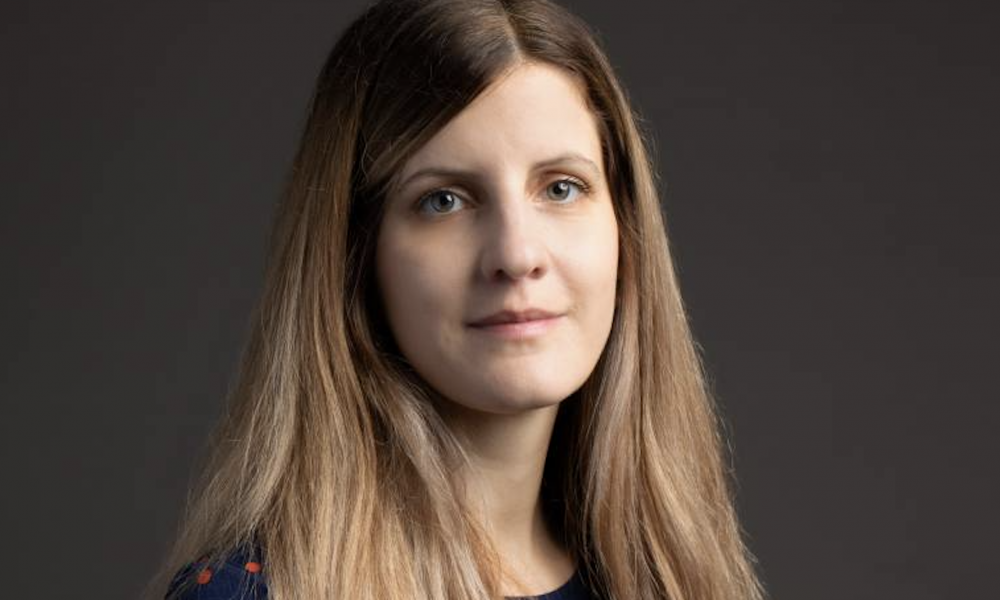
When Dora Koller noticed her first endometriosis symptoms, she was 14, but it wasn’t until she turned 29 that she got a diagnosis.
“They say diagnosis time is between four and 11 years. In my case, it was 15,” she explains.
One might have thought her background would have made a difference – Dora is a postdoctoral researcher in computational genomics at Yale University and the University of Barcelona. However, it didn’t.
“I had to keep insisting because I knew something was wrong,” she says. “I understand biology, but I can’t imagine how it must be for someone who doesn’t have my background.”

One in 10 women of reproductive age has endometriosis, yet often their primary care doctors do not know what it is and the specialists to whom they are sent are ill-informed.
Vast numbers of women go undiagnosed or under-treated, with some scientists arguing endometriosis is an example of “undone science”. However, Koller thinks the issue goes beyond research.
“Often patients with endometriosis get diagnosed when they present with infertility and the fact that women are not properly represented in the medical profession is partly responsible for that,” she says.
“Gynaecology has been a very male-dominated field and [conditions like endometriosis] have not been a priority. The priority was for us to procreate. When that didn’t happen, they may have started thinking about what’s happening to us. Otherwise, pain wasn’t important.”
The under-representation of women, the lack of research in endometriosis and her experience of the disease have prompted Koller to study the condition herself.
“I work in the field of psychiatry, but having endometriosis made me interested in knowing as much as possible about it,” she says.
“I wanted to connect the two and understand the link between endometriosis and mental health.”
Her latest research – the largest epidemiological study to date on the psychiatric factors that can accompany endometriosis – has demonstrated that depression, anxiety, and eating disorders are not only a result of the chronic pain endometriosis generates, but also have their own underlying genetic mechanisms.
“It’s a great result, because now we can say that it’s not women’s fault. For a long time, researchers thought endometriosis was just a gynaecological disease — that it didn’t affect anything but female reproduction, and so women were often only treated when they presented with infertility.
“Now, we have to acknowledge that the effects of endometriosis extend far beyond reproduction.”
Although she thinks understanding the impact of endometriosis is important, Koller says diagnosis and treatment should remain a priority.
“The fact that it’s 2023 and the only available diagnostic method for endometriosis is surgery is unacceptable.”
‘This is not just a conversation between scientists’
There is still a long way to go to address the challenges in diagnosing and managing endometriosis, but by raising awareness the researcher believes we can open up the conversation.
“I always like to talk about this based on what happened 10 years ago with breast cancer,” she says.
“We saw women and campaigners talking about breast cancer and now everyone is aware how common it is. I think something similar is happening with endometriosis.”
However, not all countries are involved in this discussion. According to the World Health Organization, in many places, the general public and healthcare providers are not aware that life-altering pelvic pain is not normal, leading to a normalisation and stigmatisation of endometriosis.
“The change is happening mostly in the West, but we need to make more efforts to bring it everywhere and raise awareness everywhere,” Koller agrees.
“Most of the things [we are seeing] appear in English or Spanish which makes it harder to reach people who don’t speak those languages. We need to translate that information to other languages to reach as many people as possible.
“Scientists, myself included, also need to work on translating the information to the public, because often we’re using difficult language that people can’t understand.
“This is not just a conversation between scientists. This is a conversation that needs to involve patients and the general public.”

Newsletter
Sign up for free weekly updates
The latest femtech news, research and investment, straight to your inbox.




