




Connect with us

News

One in five women reported mistreatment while receiving maternity care, CDC finds

Black, multiracial and hispanic women reported the highest rates of discrimination, CDC has found

Published

on

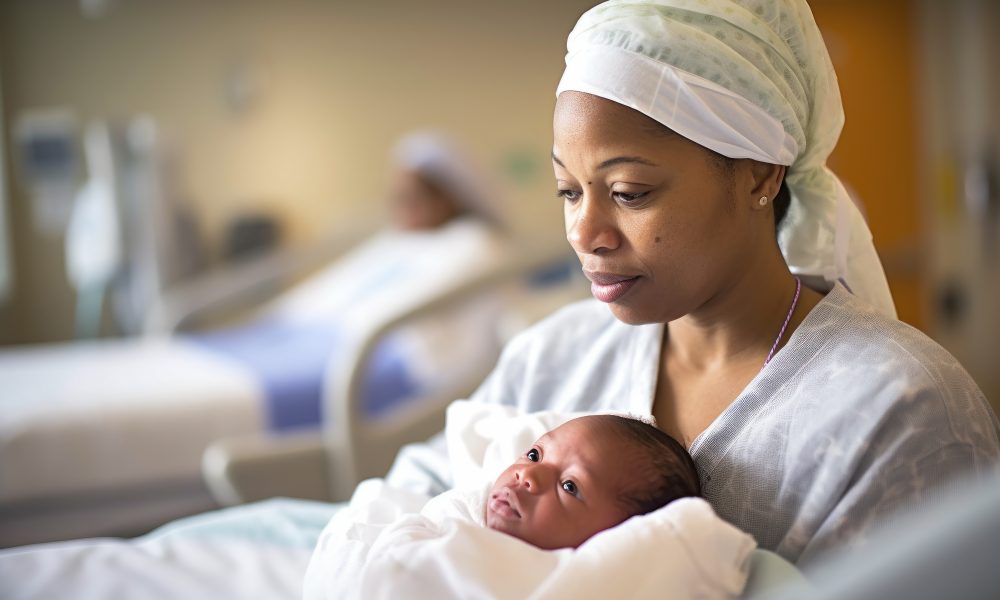
One in five women reported experiencing mistreatment during pregnancy and delivery care, a new report from the Centers for Disease Control and Prevention has found, with black women and women of colour facing the highest rates.

The Vital Signs report, conducted in April 2023, analysed data from the Porter Novelli View Moms survey to examine components of respectful care.

It showed that women with no insurance or public insurance at the time of delivery experienced more mistreatment during maternity care than women with private insurance.

While most of the 2,402 survey respondents reported overall satisfaction with the maternity care they received, satisfaction was lower among those who experienced mistreatment.

The most common types of mistreatment reported were receiving no response to requests for help, being shouted at or scolded, not having their physical privacy protected and being threatened with withholding treatment.

Twenty-nine percent of women reported discrimination during maternity care, with the most common reasons for reported discrimination being age, weight, and income.

Black (40 per cent), multiracial (39 per cent), and hispanic (37 per cent) women reported the highest rates of discrimination. Experiences of racial discrimination have previously been associated with pregnancy complications.

Additionally, nearly half of the women surveyed reported holding back from asking questions or discussing concerns with their provider during maternity care.

“As a healthcare community, we need to do all we can to make sure we are delivering equitable and respectful care to women during pregnancy and delivery,” said CDC chief medical officer, Debra Houry.

“Health systems, hospitals, and providers can take steps to improve care and lower the risk of pregnancy-related complications and death for all women. These data show that we must do better to support mums.”

CDC division of reproductive health director, Wanda Barfield, said: “As a doctor, mother, and black woman, it is disheartening to hear how common mistreatment is and to see differences in mistreatment and discrimination during maternity care based on things like race and insurance coverage.

“We know that racism and discrimination can lead to delays in treatment and sometimes tragic and preventable deaths.

“Healthcare provider trainings on unconscious bias and culturally appropriate care may be a first step in understanding how to provide respectful maternity care to all women.”

Improving the quality of maternity care is one approach that can prevent pregnancy-related deaths and complications. Effective communication among healthcare providers and patients is vital in building trust and ensuring patients feel comfortable sharing health concerns with their doctors.

The US Department of Health and Human Services Secretary, Xavier Becerra, said: “Every mother deserves to be treated with dignity and respect.

“Maternal care is a core component of this nation’s health care, and the Biden-Harris Administration is committed to improving maternal health outcomes. Bias, stigma, and mistreatment have no place in our healthcare systems.”

News

Femtech World Awards 2026: Celebrating initiatives that move women’s health forward

Published

on

By Wolfgang Hackl, CEO, OncoGenomX Inc., Allschwil, Switzerland

As the FemTech World Awards 2026 winners are revealed, it is a privilege to reflect on the Research Award 2026 sponsored by OncoGenomX Inc., and on the exceptional standard set by this year’s finalists.

On behalf of OncoGenomX Inc., sincere thanks to every applicant and congratulations go to the nominees whose work continues to push women’s health innovation forward.

Research Awards matter because they do more than recognize excellence in a single moment; they help elevate the science, courage, and systems thinking needed to transform women’s health at scale.

This year’s three finalists represented three different but equally important forms of progress. Natural Cycles brought forward one of the largest studies ever conducted on menstrual and ovulatory patterns in perimenopause, analysing nearly one million cycles from more than 197,000 women across over 140 countries.

That project stood out for both its dataset scale and its ability to translate new evidence into a regulated product designed to support women navigating a historically under-researched life stage.

IVI RMA stood out for scientific rigor and clinical precision. Its multicenter, double-blinded, non-selection study on non-mosaic segmental aneuploid embryos offered high-quality evidence on implantation and live birth outcomes, helping move fertility care away from assumption and toward a more evidence-based approach to embryo management and patient counseling.

UN ESCAP’s ‘Femtech in South-East Asia: Unlocking innovation for women’s health’ stood out for a different reason.

Rather than focusing on one product area or one clinical question, it mapped an entire emerging ecosystem.

The report examined the state of femtech across key South-East Asian markets, documented barriers such as financing gaps, stigma, weak ecosystem support, and data challenges, and then translated that research into practical recommendations for governments, investors, founders, and ecosystem builders.

In many ways, all three finalists are winners.

Each project excelled on core evaluation criteria including originality, relevance, coherence, effectiveness, efficiency, impact, and sustainability.

Each also offered something genuinely valuable to the future of women’s health: stronger evidence, clearer decision-making, more informed product development, and greater visibility for unmet needs that have gone too long without sufficient attention.

The final decision was therefore a genuine head-to-head race.

The jury supported its discussion with a numerical scoring approach, but it also looked carefully at systems impact: the extent to which a project not only advances one intervention, but improves the wider conditions under which innovation can emerge, scale, and endure.

That perspective mattered in this category, because the strongest research is not always only the most technically impressive; sometimes it is the research that opens doors for many future innovations to follow.

On that basis, the OncoGenomX Jury selected UN ESCAP as the winner of the Research Award.

The decisive factor was not simply that the report was comprehensive, though it was.

It was that the project helps change the environment around innovation itself.

It provides a practical roadmap for strengthening research, improving data governance, expanding founder support, addressing gender bias in investment, scaling innovative finance, and integrating women’s health more fully into policy and development agendas.

That broader enabling effect is what distinguished the UN ESCAP project. Natural Cycles demonstrated outstanding research translation, and IVI RMA demonstrated exceptional clinical rigor.

UN ESCAP, however, showed how research can influence the structures that determine whether many other femtech solutions will ever be funded, adopted, trusted, and scaled. In that sense, its impact reaches beyond one company, one product, or one clinical pathway, and toward a healthier innovation landscape overall.

Warm congratulations again to all finalists and nominees.

And special congratulations to UN ESCAP on receiving the OncoGenomX Research Award at the Femtech World Awards 2026.

The jury’s decision reflects deep respect for all three projects and a shared belief that women’s health advances fastest when excellent science is paired with the power to reshape the systems around it.

Continue Reading

News

WEC Chair calls out Health Minister’s delay on banning BBLs and other harmful cosmetic procedures

Published

on

WEC chair Sarah Owen has criticised delays over a ban on high harm cosmetic procedures, including liquid BBLs.

The Women and Equalities Committee has published a letter from health minister Karin Smyth after the government missed the 18 April deadline to respond to the committee’s report on cosmetic procedures.

The report, published on 18 February, recommended that high harm procedures such as liquid Brazilian butt lifts, known as BBLs, should be banned immediately without further consultation.

MPs said the government is “not moving quickly enough” in introducing a licensing system for non-surgical cosmetic procedures and “should accelerate regulatory action”.

They also warned that “this lack of timely action is fostering complacency in self-regulation” within the industry.

In her letter, Smyth said the Department of Health and Social Care had “taken the decision to first of all focus on introducing legal safeguards for the cosmetic procedures posing the highest risks and I can confirm that we plan to consult on draft regulations in June”.

The letter added:

“Our intention is to issue a formal government response to the WEC report, once our consultation setting out our proposed approach and underpinning legislation is published.

“I acknowledge the concerns around the government’s pace of delivery in this area but, as you will appreciate, this is a complex area of policy and striking the balance between increased patient safety, placing new requirements on businesses and introducing proportionate and enforceable regulation is challenging.

“I recognise that regulation has not kept pace with the expansion of the aesthetics industry and, on that basis, I can assure you that we are committed to implementing licensing in the current parliament.”

Owen, chair of the Women and Equalities Committee and Labour MP, said:

“Further consultation and delay on clamping down on high harm procedures such as liquid BBLs is unacceptable. It allows unscrupulous people to continue to put women at risk and lets down those who have lost loved ones following these practices or who have come to serious harm themselves.

“As WEC’s report warned back in February, procedures that are deemed high risk such as liquid BBLs and liquid breast augmentations, which have already been shown to pose a serious threat to patient safety, should be banned immediately.

“While it is positive to hear a licensing system for non-surgical cosmetic procedures will be introduced within this Parliament, this issue requires faster regulatory progress, particularly in high harm areas, and the Government is not moving quickly enough.

“The Committee previously heard a powerful and shocking testimony from a woman who developed sepsis after having a liquid BBL. Her experience and those of many others provides clear evidence of the need to tackle this evolving wild west.”

A liquid BBL is a non-surgical procedure intended to alter the shape of the buttocks.

Sepsis is a potentially life-threatening response to infection that can lead to organ damage if not treated quickly.

Continue Reading

Menopause

Menopausal hormone therapy could prevent bone loss or lower fracture risk – study

Published

on

Women who do not use menopausal hormone therapy have a greater risk of developing osteopenia or osteoporosis, conditions that weaken bones and can lead to fractures, disability and loss of independence, new research suggests.

The retrospective cohort study included 387 postmenopausal women who underwent DXA scans between 2021 and 2025. A DXA scan is an imaging test used to measure bone mineral density.

Participants were classed as menopausal hormone therapy users, who made up 33 per cent of the group, or non-users, who made up 67 per cent.

Low bone mineral density was defined as osteopenia, where bones are weaker than normal, or osteoporosis, where bones become more fragile and more likely to break.

Women taking menopausal hormone therapy had about 69 per cent lower risk of low bone mineral density in the spine and hip compared with those not using it.

The association remained after researchers accounted for age, time since menopause, vitamin D levels, smoking and other health conditions.

Diego Espinoza-Peralta, vice president of the Mexican Society of Nutrition and Endocrinology and principal investigator at Investigación Médica Sonora, said: “For years, many women have avoided menopausal hormone therapy because of safety concerns and warning labels.

“This study revisits that narrative and shows that menopausal hormone therapy may have an important added benefit: protecting bone health. That shifts the conversation from ‘avoid if possible’ to ‘reconsider in the right patient.’

“In simple terms: menopausal hormone therapy appears to independently protect bones, not just by coincidence.”

The findings suggest hormone therapy could help some women find relief from menopausal symptoms while preventing bone loss or lowering fracture risk.

Espinoza-Peralta said: “Clinicians may begin to weigh its benefits more carefully, especially in women early after menopause, potentially improving long-term health and quality of life.”

Continue Reading

Trending

Copyright © 2025 Aspect Health Media Ltd. All Rights Reserved.

