




News
Breaking barriers: How WUKA’s Tackle Anything campaign ss changing grassroot sports


At WUKA, we strongly believe that no girl should have to skip sports because of her period. Our Tackle Anything campaign isn’t about making headlines with national level sports partnerships, but rather supporting thousands of girls in grassroots sports.
Girls in Sports
Many girls are simply taught about the menstrual cycle from a biological perspective in primary and secondary school without truly understanding the impact their hormone cycle has whilst doing sports.
With 71% of girls avoiding sports and physical activities on their periods according to Women in Sport, we see the figure rise to 78 per cent amongst girls who drop out of sports.
The statistics are shocking:
- 43 per cent of girls drop out of sport after primary school
- Moreover, 1 in 3 children leave primary school unable to swim, a statistic expected to worsen without intervention

A period should never be the reason a girl stops doing her favourite sport. What if we could change this?
That’s why WUKA are stepping up to ensure that we equip grassroot communities with knowledge, period underwear and the confidence to change that.
Why Grassroots?
Because this is where it all begins.
Grassroots clubs are where girls take their first shot, their first sprint, their first “I did it!” moment.
These early years shape how they see themselves in sport, whether they keep going or quietly drop out. The support, accessibility and confidence they get here will change their entire future in sport.
But here’s the reality: grassroots sport doesn’t have the money or resources the pros do. Changing rooms might not have a single bin for pads or tampons.
Period products? Often nowhere in sight. And while so many coaches care deeply, some, especially male coaches, just haven’t been given the tools to talk about menstrual health in a way that makes girls feel comfortable and supported.
Most people forget that grassroot sports rely on volunteers.
The big sponsorship deals? They chase headlines and high-profile athletes.
But those deals forget about the muddy pitches, the cold swimming pools, and the tiny sports halls where the real make-or-break moments happen. That’s why WUKA’s going straight to the source.

Instead of working top-down, we’re working ground-up, giving local girls across the UK the kit, education and most importantly the confidence they need to play and tackle anything.
No girl should ever have to choose between her favourite sport and her period. That’s why we’re supplying grassroots clubs with free WUKA period underwear for thousands of youth players.
And we’re not stopping there, with Hannah Miley MBE, 3x Olympian and Commonwealth Champion, we’re bringing period education to coaches, players and parents, so the whole team knows how to support girls on and off the pitch.
We’re not creating transactional partnerships, we’re creating authentic environments to break period stigma in the community.
We’re normalising period education and kits in sports to build trust and empowerment.
Because period-inclusive sport isn’t a luxury. It’s a basic right. And every player, from the Sunday league striker to the future Olympian, deserves it.
The Journey So Far:
So far, we’ve been able to support over 1,600 girls from grassroots 4 different sports: football, rugby, netball and taekwondo across England and Scotland.
Each sport discipline comes with its own unique challenges when it comes to tackling periods.
With the runs in football, the dresses provided in netball, the physical intensity required in rugby and the white dobok worn in taekwondo, each athlete needs tailored period solutions.

Tackle Anything isn’t just a one-off campaign. It’s a commitment we’ve made to ensure that girls are fully equipped on their period so they don’t have to drop out.
By providing multi-various support to grassroots clubs, we’re creating a future where no girl is sidelined by her period.
This is just the beginning.


















Ovarian cancer cases are rising among younger adults in England, with bowel cancer showing a similar pattern, a new study suggests.
Researchers said excess weight is a key contributor, but is unlikely on its own to explain the pattern.

The authors wrote: “These patterns suggest that while similar risk factors across ages are likely, some cancers may have age-specific exposures, susceptibilities, or differences in screening and detection practices.”
They added: “Although overweight and obesity are linked to 10 of the 11 cancers evaluated and account for a substantial proportion of cancer cases, both BMI-attributable and BMI-non-attributable incidence rates have increased, though the latter more slowly, suggesting other contributors.”
The study analysed cancer incidence, meaning new diagnoses, in England between 2001 and 2019 across more than 20 cancer types, comparing adults aged 20 to 49 with those aged 50 and over.
Among younger women, cases of 16 out of 22 cancers increased significantly over the period, while among younger men, 11 out of 21 cancers increased significantly.
In particular, there was a significant rise in 11 cancers with known behavioural risk factors among adults under 50. These were thyroid, multiple myeloma, liver, kidney, gallbladder, bowel, pancreatic, endometrial, mouth, breast and ovarian cancers.
Rates of all 11 also rose significantly among adults aged 50 and over, with the notable exceptions of bowel and ovarian cancer.
Five cancers, endometrial, kidney, pancreatic, multiple myeloma and thyroid cancer, increased significantly faster in younger than in older women, while multiple myeloma increased faster in younger than in older men.
The researchers looked at established risk factors including smoking, alcohol intake, diet, physical inactivity and body mass index, a measure used to assess whether someone is underweight, a healthy weight, overweight or obese.
With the exception of mouth cancer, all 11 cancers were associated with obesity. Six, liver, bowel, mouth, pancreatic, kidney and ovarian, were also linked to smoking.
Four, liver, bowel, mouth and breast, were associated with alcohol intake. Three, bowel, breast and endometrial, were linked to physical inactivity, and one, bowel, was associated with dietary factors.
But apart from excess weight, trends in those risk factors over the past one to two decades were stable or improving among younger adults.
That suggests other factors may also play a part, including reproductive history, early-life or prenatal exposures, and changes in diagnosis and detection.
The study noted that red meat consumption fell among younger adults, while fibre intake remained stable or slightly improved in both sexes between 2009 and 2019, although more than 90 per cent of younger adults were still not eating enough fibre in 2018.
Established behavioural risk factors accounted for a substantial share of cancer cases.
Excess weight was the risk factor associated with most cancers in 2019, ranging from 5 per cent for ovarian cancer to 37 per cent for endometrial cancer.
The researchers said the findings were based on observational data, meaning the study could identify patterns but could not prove cause and effect.
They also noted there were no consistent long-term national data for several risk factors, that the analysis was limited to England rather than the UK, and that cancer remains far more common overall in older adults despite the rise in cases among younger people.













 Entrepreneur7 days ago
Future Fertility raises Series A financing to scale AI tools redefining fertility care worldwide

 Entrepreneur4 weeks ago
Three sessions that show exactly where women’s health is heading in 2026

 Pregnancy4 weeks ago
How NIPT has evolved and what AI NIPT means in 2026

 News4 weeks ago
Two weeks left to make your mark in women’s cardiovascular health
 Fertility2 weeks ago
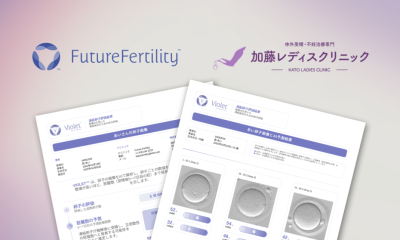
Future Fertility partners with Japan’s leading IVF provider, Kato Ladies Clinic

 Mental health1 week ago
Lifting weights shows mental health and cognitive benefits in older women, study finds

 Menopause2 weeks ago
More research needed to understand link between brain fog and menopause, expert says

 News4 weeks ago
Copper coil vs Mirena: Which is right for you?