




News
Building femtech that works in the exam room, not just the App Store

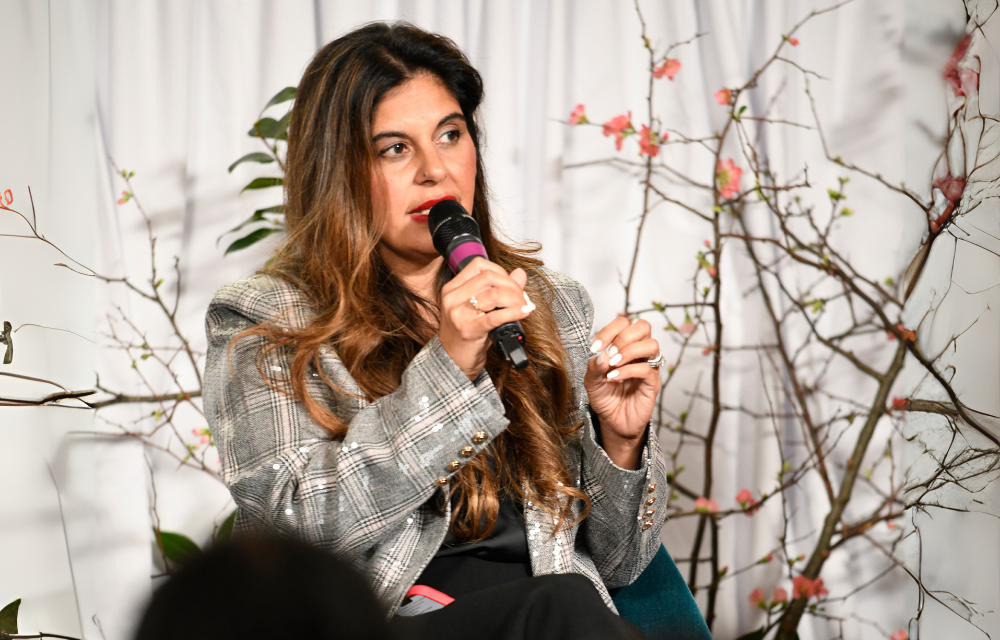
By Dr Somi Javaid, OB/GYN, surgeon and founder of HerMD
A patient once came to me with a folder full of app screenshots; five different trackers, each with its own opinion about her ovulation, hormone levels, and supposed “menopause stage.”
She was overwhelmed, confused, and frustrated. And she’s not alone.

In the last decade, femtech has exploded, period trackers, ovulation calculators, vaginal health apps, wearable menopause sensors.
The space is buzzing with innovation, but many of these tools fall short where it matters most: the exam room.
As an OB/GYN who’s led over 115,000 patient encounters and founded a women’s health company, I’ve seen firsthand the gap between what the tech world builds and what women actually need.
Here’s the hard truth: many femtech products are built for the app store, not the clinical workflow. They’re beautifully branded and investor-ready, but they often fail to integrate with medical realities.
Hormone health, for example, is complex, deeply individual, constantly evolving, and often mismanaged due to outdated care models and a lack of clinician guidance.
Yet, many apps offer templated advice, oversimplified dashboards, or outdated data that can leave patients more confused than empowered.
I’ve seen patients arrive at my office with data overload and decision paralysis. But when I ask about their symptoms, history, and labs, it tells a very different story.
That disconnect isn’t just frustrating, it can be dangerous. Women deserve tools that enhance care, not complicate it.
Part of the problem is who gets invited to build.
Too often, startups create in a vacuum, without OB/GYNs, menopause specialists, or sexual health experts at the table.
The result? Aesthetically beautiful products that don’t scale clinically; or worse, ignore the nuanced realities of women’s health altogether.
And here’s what often gets missed from a bird’s-eye view: solutions don’t get adopted in a 15-minute appointment.
It’s not because providers are unwilling, it’s because no one teaches how to take innovation and integrate it into the messy, high-pressure rhythm of everyday care.
If tech doesn’t reduce friction, it won’t last.
Providers don’t need gift wrapped solutions for problems that do not exist, they need the real problems addressed and solved. That involves MD leadership and adoption.
Take menopause.
It’s not a one-size-fits-all experience. It’s a physiological transition, yes, but it also intersects with sleep, mood, metabolism, sexual wellness, and identity.
An app that only tracks hot flashes is missing the point, and missing the patient.
And while AI and digital diagnostics are promising, without clinical oversight and validation, they risk reinforcing the same biases and gaps women have long endured in healthcare.
If we want to build femtech that truly transforms outcomes, we have to start in the exam room.
That means asking: What do patients actually bring to their providers? What slows down care? What enhances trust?
What helps us move from symptom management to real healing? How do we bridge the educational gap for providers and patients?
When technology is co-designed with clinicians, it can reduce admin burden, enhance decision-making, and make time for what matters most… listening.
At HerMD, we’ve worked to build systems that reflect this.
We integrate digital platforms with real-time patient input, personalised care plans, and evidence-based protocols.
Our tech is designed not to replace the clinician, but to empower the patient; to give her language, agency, and support.
That only works because it’s grounded in the realities of what patients and providers experience every day.
This also means thinking globally.
In many parts of the world, women still face significant barriers to specialist care.
Femtech can help bridge that gap, but only if it’s designed with cultural context, medical integrity, and inclusive research in mind.
Femtech doesn’t need more features. It needs more feedback loops between innovation and lived experience.
It needs fewer pitch decks and more peer-reviewed pilots. And it needs founders and funders to prioritize function over flash.
If we get this right, we won’t just digitise women’s health.
We’ll revolutionise it, with tech that earns its place in the exam room and in women’s lives.






























 Mental health4 weeks ago
What Maternal Mental Health Month reveals about where postpartum support actually breaks down

 News3 weeks ago
NIH Grant terminations disproportionately impact minority scientists, research finds

 Menopause5 days ago
Perimenopause misinformation ‘putting women at risk’

 Wellness3 weeks ago
WUKA brings Period-Positive Pool Party to London Aquatics Centre to keep girls swimming through puberty
 Insight3 weeks ago
PCOS renamed after decade-long campaign to end ‘cyst’ misconception

 Events4 weeks ago
WHIS 2026 unveils agenda and first speakers for the leading women’s health summit

 Menopause3 weeks ago
CBT shows promise for menopause insomnia and hot flashes

 Insight4 weeks ago
Online abuse and deepfakes ‘pushing women out of public life’
1 Comment