




Cancer
Simplifying complex women’s health issues with AI


By Laurent van Lerberghe, managing partner at KELES
I often ask myself if technology is the solution to solving complexities in women’s health.
Women’s health has been a Cinderella area of research for some time, but increasing investment and technology innovation is changing the game, creating a vibrant ecosystem of companies offering exciting and innovative tech – are we finally getting to the heart of these complex problems by utilising the power of AI and data science to address gaps in health care?
Detecting endometriosis quicker with pain-free saliva test – Ziwig
Companies like Ziwig are at the forefront of tackling the long-standing challenge of diagnosing serious women’s health issues like endometriosis, a condition that often takes years to identify, leaving millions of women suffering without answers.
Endometriosis affects 1 in 10 women, impacting fertility in 30-50 per cent of cases, and takes on average 7-8 years to receive a diagnosis.
By creating a technology that detects biomarkers of the disease in saliva, Ziwig aims to provide earlier and accurate detection, and reduces the need for invasive procedures such as laparoscopy.
Ziwig’s technology extracts and analyses salivary RNA, enabling precise detection of diseases such as endometriosis, women’s pathologies, cancers and neurodegenerative diseases.
The sample is processed through a robotic platform housed in the Brain Institute in Pitié-Salpêtrière Hospital, France, and analysed with the latest next-generation sequencing techniques.
Once the RNA is extracted from saliva samples, Ziwig employs advanced artificial intelligence (AI) techniques to detect and differentiate the complex biomarker patterns associated with endometriosis, improving both the accuracy and reliability of the diagnostic process.
Red, Amber or Green? Guiding breast cancer diagnosis with AI – Therapixel

Laurent van Lerberghe
AI is incredibly good at packaging complex data in simple categories, but how is that useful in breast cancer diagnosis?
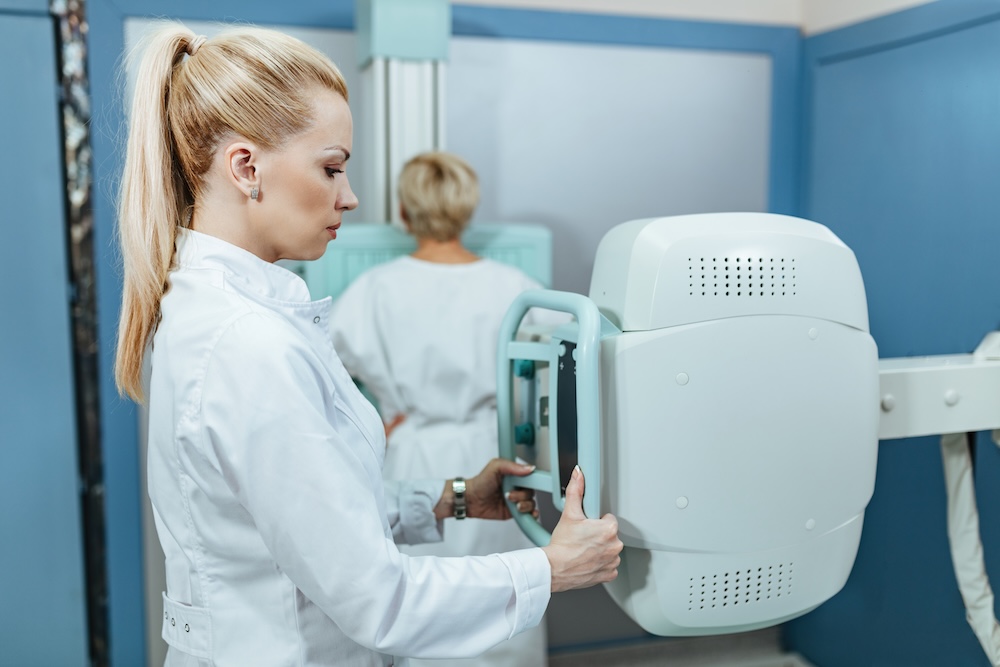
Therapixel’s AI product uses deep learning and neural network algorithms to guide decisions about breast cancer diagnosis.
1 in 8 women will be diagnosed with breast cancer during their lifetime, with annual mammograms recommended for women over the age of 40.
Therapixel’s technology, known as mammoscreen, validates a clinician’s suspicions by detecting potential lesions and characterising their malignancy on a simple colour graded scale of 1 to 10.
- 1-4, green = are very unlikely to contain cancers
- 5-6, orange = rely on radiologists expertise
- 7-10, red = are very likely to be malignant
Therapixel’s AI platform can process the image and deliver a report to the radiologist in under five minutes, significantly speeding up the diagnostic process compared to the traditional analogue methods.
It can also be used to compare images over time, helping to distinguish between stable and evolving features, which may indicate the development or progression of cancer.
This technology helps clinicians detect an average of 50 per cent of breast cancers a year earlier than traditional methods.
AI’s potential to give women’s health the diagnostic tools it deserves
Thanks to the innovative work of companies like Ziwig and Therapixel, new solutions combining AI and data science are addressing two of the most important women’s health issues, leading to better patient outcomes.
These are not potential technologies of the future; they already exist, and the impact will be delivered when they can effectively scale and the technology is more accessible.
Women’s health, like many other areas of health, is complicated, but AI tools hold immense potential to make diagnoses easier and provide more treatment options, rectifying long-standing disparities in the healthcare system.
When developed and applied responsibly, AI can significantly accelerate progress and act as a catalyst for change.
To fully realise this potential, it is imperative to ensure that AI systems are trained on inclusive data sets and developed by teams that actively involve women at every stage of the process.
That way, we can create a more equitable health system for all.


























 Menopause2 weeks ago
Perimenopause misinformation ‘putting women at risk’
 Hormonal health3 weeks ago
NHS urged to update website following renaming of PCOS
 Insight4 weeks ago
PCOS renamed after decade-long campaign to end ‘cyst’ misconception

 News1 week ago
Women still being failed when they reach menopause, experts say

 Entrepreneur2 weeks ago
Women’s Health Innovation Summit opens submissions for 2026 Innovation Showcase

 Diagnosis4 weeks ago
Artera receives FDA Clearance for breast cancer platform
 News2 weeks ago
Three menopause innovators shortlisted for Femtech World Award
 Fertility3 weeks ago
AI could transform ovarian care through personalisation, study finds
1 Comment