




News
US biotech company secures US$8.2m to improve maternal and newborn health in undernourished populations
The project focuses on the discovery of new solutions for undernourished pregnant and lactating women

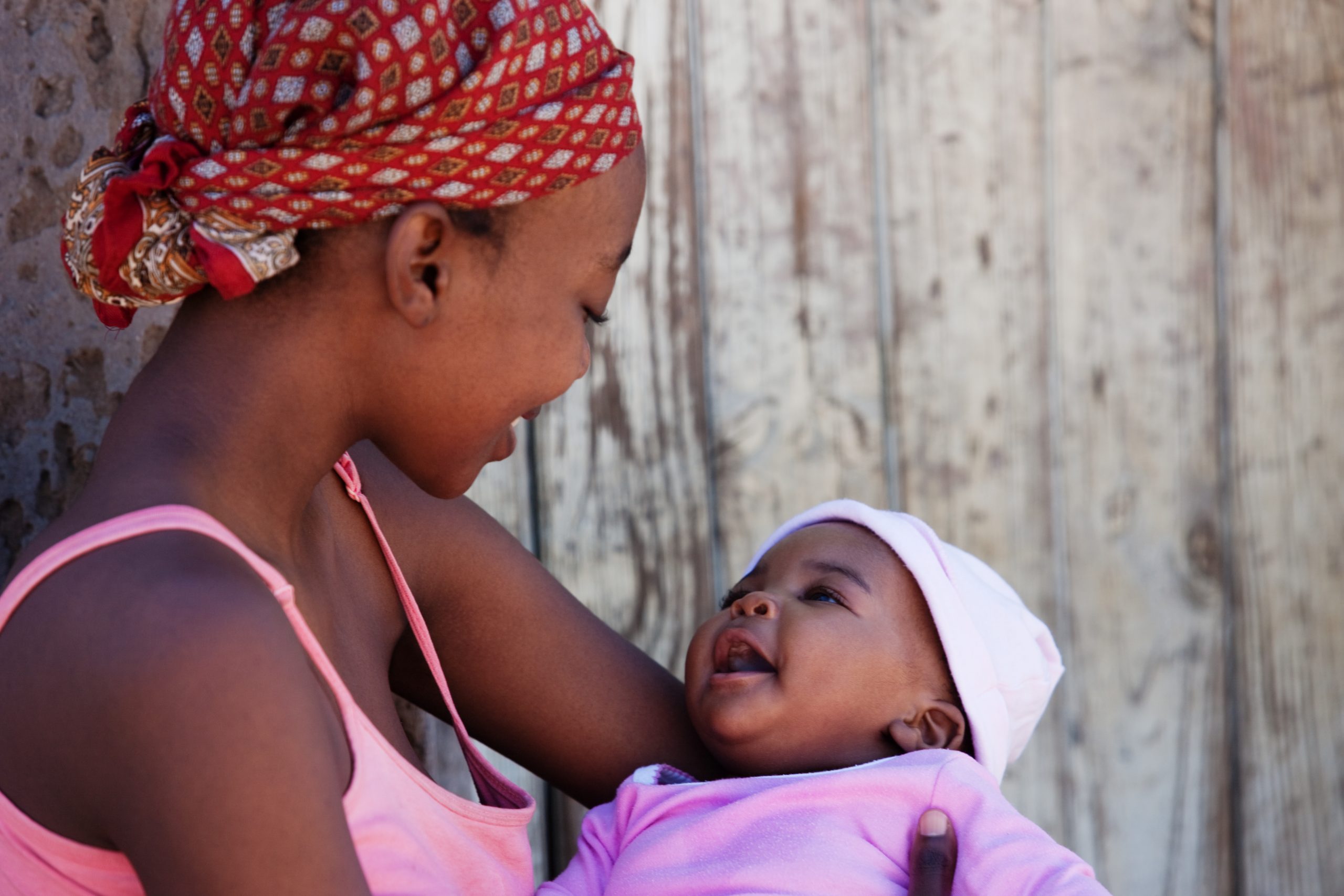
A US biotech company has received US$8.2m from the Bill & Melinda Gates Foundation to identify “novel” interventions for children and undernourished pregnant women.
In collaboration with other institutions affiliated with the foundation, New York-based Kallyope will use its gut-focused screening and validation capabilities to identify bioactive compounds for improving maternal, newborn, and children’s health in the epicenters of the global food and nutrition crisis.
The four-year agreement focuses on the discovery and characterisation of metabolites that can be developed and delivered to undernourished pregnant and lactating women who are experiencing environmental enteric dysfunctions (EED).
EED is an incompletely defined syndrome of inflammation, high enteropathogen burden, reduced absorptive capacity, and reduced barrier function of the small intestine. It is widespread in low and middle-income countries.
“This is a unique, inspiring opportunity for Kallyope to positively impact global health by leveraging our industry-leading research platform, Klarity, which integrates multiple sophisticated technologies to develop transformative therapeutics in the areas of metabolism, gastrointestinal disease, and neurological disorders,” said Jay Galeota, president and CEO at Kallyope.
“We are honoured to receive support from the Gates Foundation to make progress towards giving every person, everywhere, the chance to lead a healthy, productive life.
“We are especially energised to focus on health advancements for pregnant women and new mothers and to prevent disease early in the lives of children.”
According to a report issued in March by UNICEF, the number of pregnant and breastfeeding adolescent girls and women suffering from acute malnutrition has soared since 2020, with South Asia and Sub-Saharan Africa hit hardest.
Childhood EED has been associated with stunting – low height-for-age – with devastating, long-term consequences for child health and development.
Globally, 51 million children under two years are stunted due to malnutrition. Of those, about half become stunted during pregnancy and the first six months of life.
Stunting peaks at three months of age and is difficult to reverse after two years of age. Foetal growth restriction is predictive of stunting up to two years of age, and therefore early intervention with mothers during pregnancy can be a potential mechanism to improve infant outcomes later in life.
Under the agreement, the foundation will provide a grant to Kallyope of US$8.2m over four years.
The company will retain rights to develop compounds derived from the identified agents as possible therapeutics in other global regions, including as supplements in low-resource nations.



Apple announced menopause and perimenopause tracking for its Health app at WWDC 2026, with symptom logging and cycle alerts for some users.
The update expands the app’s cycle tracking beyond fertility and menstrual periods.
If logged cycle patterns suggest a user may be experiencing perimenopause, the app will send a notification prompting a conversation with a doctor.

However, this perimenopause-specific cycle deviation notification is only for users aged 40 and over and is not intended to replace a doctor’s diagnosis or treatment.
Stacey Ford, Apple’s vice-president of OS management, said users will also be able to log menopause and perimenopause symptoms in the Health app.
Educational content will also be available to help users learn more about these life stages and understand changes in their bodies.
Every year, about 2 million women enter perimenopause, the stage before menopause when levels of the hormone oestrogen decline.
According to a February 2025 survey involving 4,432 participants aged over 30, more than half of women aged 30 to 35 experienced moderate or severe perimenopause symptoms.
The findings suggest perimenopause does not affect only older adults.
About 6,000 women in the US enter menopause every day, according to the Society for Women’s Health Research.
Given the number of women affected by perimenopause and menopause, the update broadens the Health app’s scope.
The app launched in 2019, meaning it has gone seven years without these women’s health tracking features, which could help users better understand their bodies and prepare for informed conversations with doctors.



Peers have called for law reform after two House of Lords debates on fertility treatment, surrogacy, embryo research and declining birthrates.
The first debate was put forward by crossbench peer Baroness Ruth Deech, who previously chaired the UK’s fertility regulator, the Human Fertilisation and Embryology Authority.
She discussed proposals from the HFEA to reform the Human Fertilisation and Embryology Act, along with proposals from the Scottish Law Commission and the Law Commission of England and Wales to reform the Surrogacy Arrangements Act.

She called for parliamentary scrutiny of possible changes to regulatory powers, consent rules, donor information and future scientific developments.
Baroness Deech said: “Parliament should plan by setting up a Select Committee to examine the HFEA’s proposals to expand regulatory powers, simplify consent rules, modernise donor information provisions and create a flexible framework for future scientific developments.”
Former fertility professionals were among those contributing to the debate.
Professor Lord Robert Winston, a Labour peer who founded the IVF service at Hammersmith Hospital in London, said: “Infertility is not a disease; it is actually a symptom of something wrong.”
Professor Baroness Geeta Nargund, a Labour peer, current HFEA member and former medical director of CREATE Fertility, disagreed.
She said: “Infertility is a disease, as stated by the World Health Organisation.”
Liberal Democrat peer Baroness Caroline Pidgeon highlighted regional differences in access to NHS-funded fertility treatment.
She cited figures from the Progress Educational Trust’s NHS Fertility Funding Tracker showing that only two of England’s 42 integrated care boards comply with the recently updated fertility guideline published by the National Institute for Health and Care Excellence.
Integrated care boards are local NHS organisations responsible for planning and funding healthcare services in their areas.
Baroness Pidgeon said many boards were offering only a partial IVF cycle rather than a full cycle as defined by NICE.
A full IVF cycle generally includes ovarian stimulation, egg collection and the transfer of all suitable fresh and frozen embryos created during treatment.
Crossbench peer Professor Baroness Clare Gerada, a former president of the Royal College of General Practitioners, said: “The proportion of NHS-funded IVF cycles has fallen to just under 30 per cent, the lowest level since 2008.”
She added that, in relation to IVF, “the NHS system has collapsed”.
Liberal Democrat peer Lord Monroe Palmer said it was “very ironic that it is difficult for many patients to access publicly funded fertility treatment in the very country where IVF was originally pioneered”.
Conservative peer Edward Howard, Earl of Effingham, also raised concerns about the NICE fertility guideline.
He said: “Access remains highly variable across England, because ICBs are not required to implement that guidance.”
He described the situation as “a clear gap between guidance and enforceable entitlement”.
Baroness Deech called for “automatic record sharing between clinics and the NHS central records system”.
Baroness Nargund supported this and linked the ambition to the Single Patient Record in the government’s Ten-Year Health Plan for England and the Health Bill currently before Parliament.
Baroness Pidgeon said such ambitions were at odds with the exceptional degree of medical secrecy that currently applies to IVF.
She also pointed to “a clear desire for the HFEA to be able to permit patients to give generic consent for the use of their embryos in research”.
Patients cannot currently give broad consent for unspecified future research involving their embryos.
Responding for the government, Labour peer Baroness Judith Blake said “immediate legislative reform” was not possible because “the legislative programme for this Parliamentary session is very full”.
Baroness Deech replied: “It might well take some years, but the Government really needs to set up that Select Committee and do the legislative scrutiny right now.”
A second debate on related issues followed immediately afterwards.
Baroness Nargund asked the government “what assessment they have made of the UK’s declining birthrates in an ageing population”.
She also said: “We still have a postcode lottery for IVF provision, with nearly 70 per cent of ICBs funding only one cycle of treatment.”
Responding for the government, Labour peer Lord Philip Wilson said: “The Government are committed to improving fair and equitable access to fertility services, recognising the significant emotional and health impacts of infertility.”











 Menopause2 weeks ago
Perimenopause misinformation ‘putting women at risk’

 Hormonal health3 weeks ago
NHS urged to update website following renaming of PCOS

 Insight4 weeks ago
PCOS renamed after decade-long campaign to end ‘cyst’ misconception

 News2 weeks ago
Women still being failed when they reach menopause, experts say

 Entrepreneur2 weeks ago
Women’s Health Innovation Summit opens submissions for 2026 Innovation Showcase

 Diagnosis4 weeks ago
Artera receives FDA Clearance for breast cancer platform

 Fertility4 weeks ago
AI could transform ovarian care through personalisation, study finds
 News2 weeks ago
Three menopause innovators shortlisted for Femtech World Award