A Boston University researcher has received a US$7m grant to drive research into innovative contraceptive and multipurpose prevention technology products.
Deborah Jean Anderson, PhD, professor of medicine at Boston University School of Medicine (BUSM), has received the four-year grant from the NIH’s National Institute of Child Health and Human Development renewing support for a Contraceptive Research Center (CRC) at BUSM to further her research to develop innovative monoclonal antibody-based contraceptive and multipurpose prevention technology products.
With prior funding from the National Institute of Allergy and Infectious Diseases, Anderson and her team developed a vaginal film containing mAbs against HIV-1 and HSV-2 (herpes simplex virus type 2) that proved safe and effective in a phase one clinical trial.
Recently, with funding from her first CRC grant, Anderson developed an antisperm antibody for contraception.
With the new US$7m award, Anderson plans to advance these products through future clinical trials.
“This research has the potential to improve the lives of millions of women globally by addressing two concurrent reproductive health crises: an unacceptably high rate of unintended pregnancies in both developing and developed countries and an epidemic of sexually transmissible infections,” the researcher explained.
For the past 40 years, Anderson has directed a research laboratory that studies reproductive health, mucosal immunology and HIV sexual transmission.
Her laboratory was among the first to study immunological causes of infertility, and to identify risk factors for HIV transmission.
Cosmetic procedures may become addiction-like for some women, with low body esteem and problematic social media use linked to higher risk, new research suggests.
A study of 1,614 women aged 25 to 71 found that one in five who had undergone treatments met the threshold for moderate to severe risk of addictive cosmetic procedure use.
Low body esteem and problematic social media use emerged as the strongest risk factors.
Researchers from the Hebrew University of Jerusalem and the Israel Center for Addiction and Mental Health examined what they described as addictive cosmetic procedure use, or ACPU, among Jewish Israeli women.
ACPU refers to repeated cosmetic treatment behaviour that may resemble addiction, including feeling unable to stop, continuing despite negative effects or craving further procedures.
The study was led by Vera Skvirsky alongside Uri Lifshin, Dvora Shmulewitz and Mario Mikulincer, from the department of psychology at the Hebrew University of Jerusalem and the Israel Center for Addiction and Mental Health.
The researchers surveyed women from the general population rather than focusing only on patients at cosmetic clinics.
Among women who had undergone cosmetic procedures, 20 per cent met the threshold for moderate to severe lifetime risk, while more than 15 per cent reported symptoms within the previous year.
Across the full sample, nearly nine per cent of women showed moderate to severe signs of problematic cosmetic procedure use.
The researchers adapted questions based on mental health criteria used to assess substance-related disorders.
Participants were asked whether they had tried unsuccessfully to stop having cosmetic procedures, felt compelled to continue despite negative consequences or experienced cravings linked to treatment.
Previous research has linked cosmetic procedures with body-image concerns and body dysmorphic disorder.
Body dysmorphic disorder is a mental health condition in which a person becomes highly distressed by perceived flaws in their appearance, often flaws that others may not notice.
The new study examined whether repeated cosmetic procedures may, in some cases, resemble a behavioural addiction.
Women with lower body esteem were more likely to report addiction-like patterns, particularly when this was combined with high levels of problematic social media use.
Participants who reported problematic or excessive social media behaviour appeared especially vulnerable when they also felt dissatisfied with their appearance.
The researchers also found smaller links between addictive cosmetic procedure use and lower feminist attitudes, lower attachment security and more negative attitudes towards ageing.
However, those links were less consistent when several factors were analysed together.
The findings come amid a sharp global rise in cosmetic procedures, with international estimates cited by the researchers suggesting interventions increased by around 40 per cent between 2019 and 2023.
The researchers stressed that the study does not suggest cosmetic procedures are inherently harmful.
Instead, they said repeated engagement may, for some people, take on characteristics similar to behavioural addictions already recognised in mental health research.
The researchers said: “Cosmetic procedures have become deeply normalised in many societies, and for many people they may be a positive experience.
“But our findings suggest that for a meaningful minority, the behaviour may begin to resemble other compulsive patterns we see in addiction research, especially when low body esteem and problematic social media use are involved.”
The study was cross-sectional, meaning it captured a single point in time and cannot prove cause and effect.
Researchers said it remains unclear whether problematic social media use contributes to addiction-like cosmetic procedure behaviour, whether treatments influence body image and online engagement, or whether other psychological factors drive both.
A high-powered ultrasound treatment could help identical twins affected by a rare and serious condition during early pregnancy, an initial study suggests.
Twin-to-twin transfusion syndrome, or TTTS, causes uneven blood flow between identical twins who share a placenta.
The imbalance can leave one baby dangerously small and the other too large, putting both babies’ survival at risk.
Brioney Garrett’s daughters were in danger before doctors used the world-first treatment to seal the blood vessels causing the problem without an operation.
Nancy and Margo were born healthy and, now aged four, are due to start school.
Researchers from Queen Charlotte’s and Chelsea Hospital tested the non-invasive procedure in 10 women from the UK and elsewhere in Europe after scans detected TTTS during early pregnancy.
Five women needed further treatment, while 12 of the 20 babies survived following the procedure.
The researchers described having a treatment that did not require a needle or telescope to be inserted into the mother’s abdomen as “extremely exciting”.
However, they said larger studies involving more pregnant women were needed before the procedure could be offered more widely.
Garrett described her daughters as “my miracle twins”.
She said: “We were in a very dire situation and I don’t forget that.
“It stays with me always how things could have been. Every day I still count my blessings.”
TTTS affects between 10 and 15 per cent of identical twins who share a placenta, representing around 300 to 400 pregnancies in the UK each year.

The uneven blood flow causes excess fluid to build up around the larger recipient baby, while leaving dangerously little fluid around the smaller donor baby.
Treatment usually involves inserting a needle into the womb to drain some of the fluid or using a laser to seal the connecting blood vessels.
Garrett’s procedure took about 20 minutes. She lay flat while a specially designed machine directed high-powered ultrasound waves at small blood vessels in her placenta.
She said: “It was very quick and pretty painless.”
Christoph Lees, head of fetal medicine at Imperial College Healthcare NHS Trust and professor of obstetrics at Imperial College London, described the research as “very promising”.
He said: “If this could work in a fully-fledged study, it could give hope to a lot of women who otherwise might have to have quite invasive treatment.”
Ultrasound is commonly used during medical scans to produce images of the body, but this procedure uses much more focused waves.
Heat generated by the waves can seal blood vessels about 2mm in diameter and located around 5cm to 6cm beneath the skin.
The procedure blocked blood flow in 90 per cent of the vessels treated during the study, with no unwanted side-effects reported.
Twins Trust, which supported the study, said the approach could make a significant difference for families affected by TTTS.
Helen Peck, head of healthcare engagement and research, said: “Any procedure that is non-invasive and can potentially identify TTTS earlier and improve outcomes for our families with this life-threatening condition could be a turning point.”
Scans carried out weeks after Garrett’s procedure showed that blood flow between the babies had been rebalanced, although other problems developed during the pregnancy.
Garrett said Margo, who had too little fluid around her, “was in a much better position” and that “the strain on Nancy’s heart had eased”.
Nancy and Margo were born at nearly 34 weeks, weighing 3lb 7oz and 3lb 3oz respectively.
Garrett said: “They were both healthy, and Margo wasn’t as small as we worried she was going to be.”
The twins are due to start primary school in September.
Garrett said: “They’re funny, smart, energetic little girls that just fit right in with their age group.”
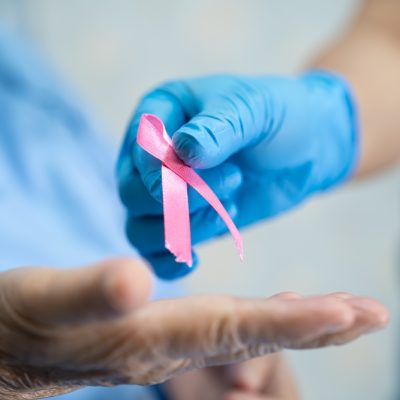
Breast cancer rates have risen rapidly among Asian American women over the past two decades, with some of the steepest increases among women under 50, new research has revealed.
Rates rose by more than three per cent a year in nearly every Asian American ethnic group studied, much faster than in any other US ethnic group.
The increase was particularly marked among women under 50 and in cases involving advanced-stage disease or certain aggressive subtypes of the cancer.
The study found even larger increases among Chinese and Vietnamese women.
Breast cancer rates among Native Hawaiian women were already among the highest recorded among US women, but rose by about one per cent a year, less than the increases seen in Asian American groups.
The researchers said increased screening was unlikely to explain the trend because screening would be expected to identify more cancers at an earlier stage.
Instead, cancers that had already spread increased at the fastest rate.
Triple-negative breast cancer, considered the most aggressive subtype, rose by more than six per cent a year among Chinese American women between 2017 and 2022.
Scarlett Lin Gomez, senior author and professor of epidemiology and biostatistics at the University of California, San Francisco, said: “These patterns are highly concerning from a disparities standpoint.
“They underscore why it is so important to move beyond treating Asian Americans, Native Hawaiians, and Pacific Islanders as a single population.”
Researchers analysed about 150,000 cases of invasive breast cancer diagnosed between 2000 and 2022 using data from the National Cancer Institute’s Surveillance, Epidemiology, and End Results Programme.
The analysis covered nine Asian American, Native Hawaiian and Pacific Islander populations across 14 states. Together, these states account for about two-thirds of the US population within these groups.
Except for Native Hawaiian women, Asian American women have historically had lower breast cancer rates than non-Hispanic white women.
However, the gap has narrowed rapidly. By 2022, incidence among Asian American women under 50 was comparable with that recorded among white women.
The reasons for the increase among women under 50 remain unclear.
Changes in reproductive patterns, diet and other lifestyle factors may play a part, but researchers said they did not fully explain the findings.
They said previously unidentified risk factors may also be contributing to the rises in some Asian American communities.
Researchers hope two UCSF-based studies, the CRANE breast cancer study and the ASPIRE cohort study, will provide insights into these factors.
Gomez said: “Understanding why breast cancer is increasing so rapidly in these communities is critical.
“At the same time, we need to ensure that women across all Asian American, Native Hawaiian, and Pacific Islander communities have access to culturally appropriate education, screening, and timely follow-up care.”
We use cookies on our website to give you the most relevant experience by remembering your preferences and repeat visits. By clicking “Accept All”, you consent to the use of ALL the cookies. However, you may visit "Cookie Settings" to provide a controlled consent.
This website uses cookies to improve your experience while you navigate through the website. Out of these, the cookies that are categorized as necessary are stored on your browser as they are essential for the working of basic functionalities of the website. We also use third-party cookies that help us analyze and understand how you use this website. These cookies will be stored in your browser only with your consent. You also have the option to opt-out of these cookies. But opting out of some of these cookies may affect your browsing experience.
Necessary cookies are absolutely essential for the website to function properly. These cookies ensure basic functionalities and security features of the website, anonymously.
Cookie
Duration
Description
cookielawinfo-checkbox-analytics
11 months
This cookie is set by GDPR Cookie Consent plugin. The cookie is used to store the user consent for the cookies in the category "Analytics".
cookielawinfo-checkbox-functional
11 months
The cookie is set by GDPR cookie consent to record the user consent for the cookies in the category "Functional".
cookielawinfo-checkbox-necessary
11 months
This cookie is set by GDPR Cookie Consent plugin. The cookies is used to store the user consent for the cookies in the category "Necessary".
cookielawinfo-checkbox-others
11 months
This cookie is set by GDPR Cookie Consent plugin. The cookie is used to store the user consent for the cookies in the category "Other.
cookielawinfo-checkbox-performance
11 months
This cookie is set by GDPR Cookie Consent plugin. The cookie is used to store the user consent for the cookies in the category "Performance".
viewed_cookie_policy
11 months
The cookie is set by the GDPR Cookie Consent plugin and is used to store whether or not user has consented to the use of cookies. It does not store any personal data.
Functional cookies help to perform certain functionalities like sharing the content of the website on social media platforms, collect feedbacks, and other third-party features.
Performance cookies are used to understand and analyze the key performance indexes of the website which helps in delivering a better user experience for the visitors.
Analytical cookies are used to understand how visitors interact with the website. These cookies help provide information on metrics the number of visitors, bounce rate, traffic source, etc.
Advertisement cookies are used to provide visitors with relevant ads and marketing campaigns. These cookies track visitors across websites and collect information to provide customized ads.
2 Comments