




Cancer
New breast cancer guidelines poised to revolutionise breast cancer care in China

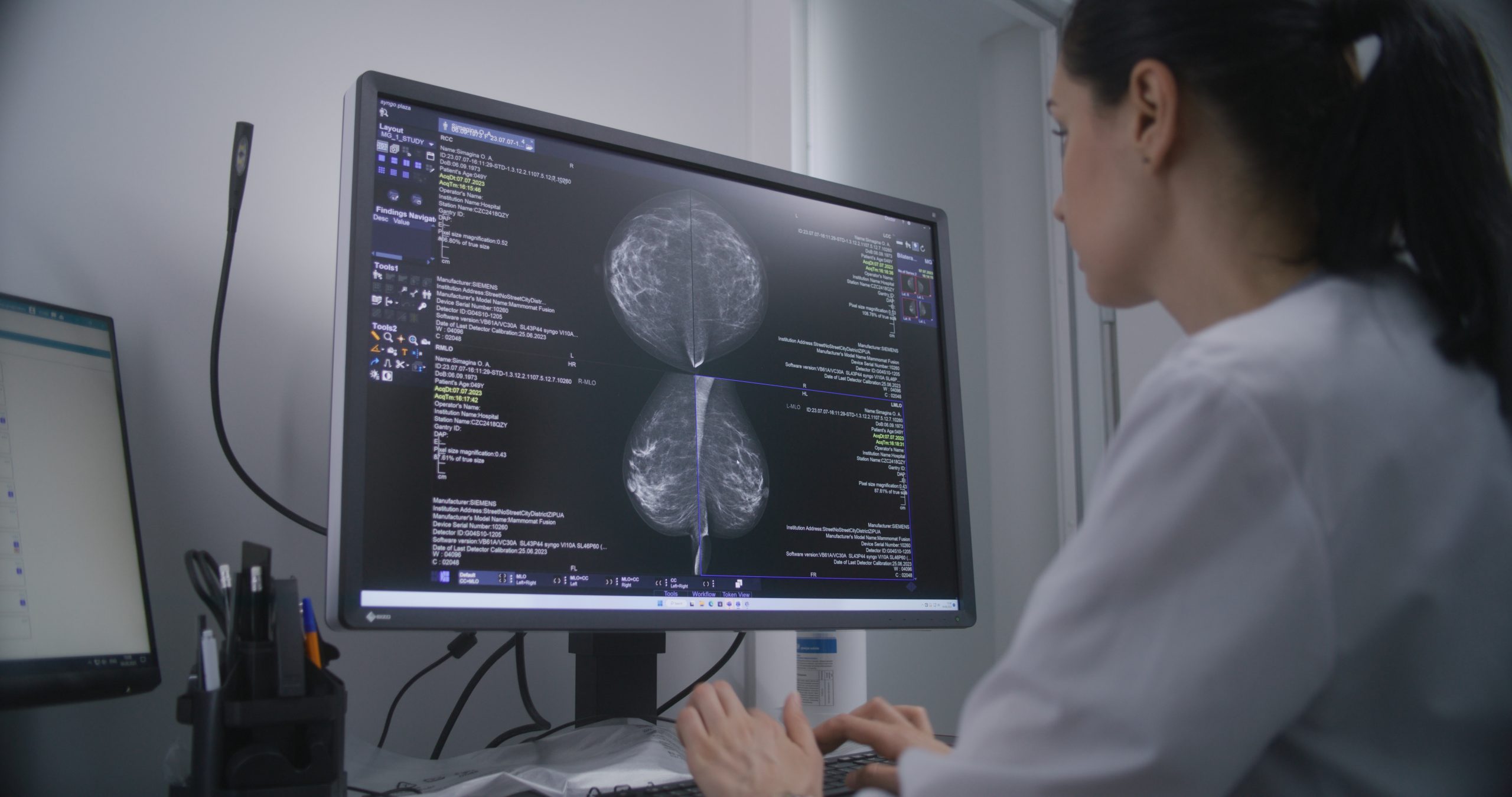
The 2024 Chinese Society of Clinical Oncology Breast Cancer (CSCO BC) has published new guidelines that integrate cutting-edge international research with Chinese clinical evidence – including highlighting the crucial role of targeted therapies for HER2-positive breast cancer.
The guidelines also emphasise the growing impact of immunotherapy in triple-negative breast cancer (TNBC), and outline the strategic use of CDK4/6 inhibitors for HR-positive cases.
Additionally, they introduce a groundbreaking approach to HER2 low-expression breast cancer, establishing a new paradigm for personalised treatment in China.
Breast cancer remains a major global health challenge, with treatment strategies varying widely across regions.
The continuous development of new therapies, combined with the pressing need to personalise treatments for diverse patient populations, underscores the importance of evidence-based guidelines that blend global innovations with local healthcare needs.
This challenge calls for guidelines that not only reflect international advancements but also take into account the clinical realities and accessibility within specific regions, particularly in China.
The 2024 Chinese Society of Clinical Oncology Breast Cancer (CSCO BC) guidelines represent a pioneering effort by a team from Fifth Medical Center of PLA General Hospital and the Beijing Institute of Biotechnology, Academy of Military Medical Sciences, to provide updated, region-specific treatment recommendations.
These guidelines offer a comprehensive approach to managing breast cancer, informed by both high-quality clinical studies and real-world data from China, ensuring that the treatment strategies are both globally relevant and locally applicable.
The updated guidelines place a strong emphasis on precision medicine, offering tailored treatment approaches for various subtypes of breast cancer.
For HER2-positive cancers, the guidelines advocate for dual-target therapies such as trastuzumab and pertuzumab, along with the introduction of pyrotinib in combination with trastuzumab as a novel regimen. This new combination is supported by data from the PHEDRA study, which showed significant improvements in pathologic complete response rates.
In triple-negative breast cancer (TNBC), the guidelines highlight the importance of immunotherapy, referencing the TORCHLIGHT study which demonstrated enhanced progression-free and overall survival with the addition of toripalimab to nab-paclitaxel.
Notably, the guidelines also address HER2 low-expression breast cancer, recommending a personalised treatment approach based on hormone receptor status and previous treatments, including the use of antibody-drug conjugates (ADCs), or targeted therapies after ADC failure. These advancements reflect a broader global trend towards precision oncology, aiming to optimise treatment effectiveness based on individual tumour characteristics.
Dr.Zefei Jiang, principal author of the 2024 CSCO BC guidelines, emphasises the transformative potential of these updates: “The 2024 guidelines are a reflection of the powerful synergy between global research advancements and clinical insights from China.
“By integrating these perspectives, we ensure that our recommendations are not only at the cutting edge of scientific innovation but are also grounded in the practical realities of our healthcare system. Our goal is to create a balanced framework that aligns international standards with the unique needs of Chinese patients, ultimately enhancing care and improving outcomes.”
The 2024 CSCO BC guidelines are poised to revolutionize breast cancer care in China, with the potential to significantly improve patient outcomes and reduce treatment disparities.
By prioritising the generation of local evidence, these guidelines pave the way for more personalised treatment protocols tailored to the specific genetic and clinical profiles of Chinese patients. This approach promises not only to benefit China’s domestic patient population but also to contribute valuable data to the global oncology community, enriching international discussions on breast cancer management.
The broader implications of these guidelines are profound, as they aim to narrow gaps in treatment efficacy and create a more equitable landscape in the global fight against breast cancer.





A health trust will decide how far back to review breast cancer cases after more than 30 women were found to have undergone unnecessary surgery.
It has already been established that hundreds of patients came to harm during treatment at the breast unit at County Durham and Darlington Foundation Trust (CDDFT).
The trust has apologised and is using specialists from other hospitals to review cases to see if other women underwent unnecessary operations or received otherwise poor care.

An extraordinary trust board meeting in Durham will consider the scope of its Look Back Exercise.
Board papers recommend reviewing cases as far back as 2015, working backwards one year at a time.
Documents estimate that this could take five years and involve reviewing the care of approximately 4,500 patients.
Members of the Pink Justice Network, an online support group for women who have received breast cancer treatment from the trust, will attend the meeting.
Nadeen Lister, who runs the group of around 150 women with Amelia Green, said members were calling for a public inquiry into what went wrong.
Lister told the Press Association: “When we started the group, nobody was talking about compensation, they just wanted justice for what has been done.
“The Look Back Exercise has cost the trust more than £500,000 this year, with staff checking back over records, medical experts reviewing cases and psychological help offered to patients affected.”
Green said the trust could avoid the expense of the exercise “by backing our call for a public inquiry”.
Hayley Collinson, of Hudgell Solicitors, which represents many affected patients, said: “Given the scale of harm revealed so far, we can’t see how the Trust board can come to any other decision than to extend this lookback investigation given the findings of the first batch of cases to have been reviewed, and the high percentage of harm being identified.
“The reality is that any woman who had breast cancer treatment at this Trust from 2015 onwards is now going to be questioning whether their treatment was appropriate and if they were actually harmed.”


Breast cancer patients in Scotland face a postcode lottery that could limit access to two newly approved NHS treatments.
The Scottish Medicines Consortium has approved Elacestrant and Capivasertib, which could be life-extending for some people with metastatic breast cancer.
Eligibility depends on genetic testing to confirm gene mutations before treatment can be prescribed, but the necessary testing is not yet available through the NHS in Scotland.
The testing is available to patients in England and to those able to pay for it privately.
Claire O’Donnell, who was diagnosed with metastatic breast cancer at 37, has raised concerns about the difference in access.
Ten years after her diagnosis, O’Donnell is receiving a treatment that works for her but does not know when it may stop being effective.
She said: “I know how lucky I am. It’s certainly not been easy but I’m incredibly lucky and incredibly privileged to be in that position.
“I’ve watched a lot of my friends die, and a lot of the circumstances has been about not being able to access a drug or getting the drug too late or being too poorly by the time the drug becomes available to them. It makes me angry, and it makes me sad.”
O’Donnell, who has been supported by secondary breast cancer charity Make 2nds Count, is frustrated by the gap in care for patients in Scotland.
She said: “These drug are a lifeline to people. It makes all the difference, and it only takes one drug to be your drug that you know can give you six months a year, two years, five years. It’s almost like they’ve given you a bit of good news, but they’ve also put a little bit of a criteria on it that you know they dangle the carrot in front of you.”
David Cameron, professor of oncology at Edinburgh University and chair of trustees for Make 2nds Count, said the system needed improving to better support patients.
He said: “It’s a frustration for many of us in the clinic because for a long time we’ve been saying as we move into an era of medicines, not just cancer medicines, but medicines that are increasingly driven by special tests, we need a system which absolutely locks the two things together.
“There has been progress in that direction, but they’re not locked together. this comes down to the way the NHS is in a sense fragmented internally.”
Health secretary Angela Constance said: “I welcome the acceptance of Elacestrant, known as Korserdu, for treatment of post-menopausal women, and men, with a certain type of advanced breast cancer.
“We work closely with the independent SMC and the NHS in Scotland to improve access to new medicines, helping to expand the range of treatment options available.
“We are aware that a genomic test is needed in order to access this therapy, and we are working in collaboration with the NHS and industry partners to secure access to this as soon as possible.”


A urine and vaginal fluid test could help rule out womb cancer in women with postmenopausal bleeding, potentially reducing invasive checks.
In a study of 1,864 women with postmenopausal bleeding, the test identified 80 of 99 womb cancers and correctly gave a negative result for 93 per cent of women without the disease.
Researchers said the test was not accurate enough to rule out cancer on its own, but could help fast-track women at the highest risk for urgent investigation while reducing immediate invasive testing for those at lower risk.
Professor Emma Davidson, of the University of Manchester and Manchester University NHS Foundation Trust, said: “Bleeding after the menopause is understandably alarming for women because it can be a sign of cancer, but the vast majority of those investigated will not have the disease.
“At the moment, many women face invasive, uncomfortable tests that can be stressful as well as costly for health services before cancer can be ruled out.
“Our study shows that a simple test using urine and vaginal samples could help identify the women most likely to have cancer while safely reassuring many others much earlier in the diagnostic pathway.
“If further studies confirm these findings in routine practice, this approach has the potential to transform care for thousands of women every year.”
Developed at the University of Manchester and Manchester University NHS Foundation Trust, the test examines cells collected from urine and vaginal fluid samples.
Postmenopausal bleeding currently triggers an urgent cancer referral, although only about 5 to 10 per cent of women who report it have an underlying cancer.
Current investigations include an internal ultrasound scan, a biopsy of the womb lining and hysteroscopy, in which a camera is passed into the womb.
Women taking part in the study attended seven hospitals in north-west England and provided urine and vaginal fluid samples before undergoing their routine tests.
Five per cent of participants, 99 of 1,864 women, were diagnosed with womb cancer through biopsy or surgery.
Cytologists assessed the samples without knowing the women’s diagnoses.
Researchers said the test could be used to triage women suspected of having womb cancer, with lower-risk patients monitored through repeat sampling or given a full assessment if symptoms continued.
They cautioned that the samples were assessed by highly trained specialist cytologists, so it is not yet known whether the same accuracy could be achieved in other settings.
The test has also not been studied in women without symptoms.










 Diagnosis2 days ago
Trust to decide how far back to review unnecessary breast cancer surgeries

 Diagnosis3 days ago
New test could cut need for invasive womb cancer checks

 Healthy ageing5 days ago
Higher BMI in early adulthood linked to lower breast cancer risk after menopause

 Business & startups4 days ago
Personalising women’s health with AI

 Pregnancy2 days ago
UK commits £254m to boost women’s maternal healthcare choices

 Wellness4 days ago
Mira launches at-home cortisol tracking kit

 Diagnosis4 days ago
Targeted nanotherapy shows endometriosis promise

 News5 days ago
EU healthcare’s gender pay gap hits 19%, WHO report finds