




Insight
The new front door to women’s health: How GenAI is rebuilding access and trust
By Morgan Rose, chief science officer at Ema


As the $1.8T wellness industry evolves, GenAI is helping women move from overwhelmed to empowered, one conversation at a time.
The women’s health and wellness space is transforming.
According to McKinsey, today’s wellness consumers aren’t simply looking for better products but better experiences.
They want care that’s personalised, responsive, and grounded in trust. In other words, they want to feel seen.
That’s where GenAI comes in.
GenAI can redefine how women interact with digital health. This new intelligence layer helps users understand symptoms, evaluate product options, and make informed care decisions in real time.
Purpose-built GenAI can power user experiences across digital pharmacies, virtual care platforms, and consumer wellness brands and offer a more intuitive, responsive, and capable of guiding users through complex, often sensitive health journeys.
GenAI can intersect personalisation, access, and trust as the women’s health and wellness market evolves. Here’s where it fits in, and why it’s becoming an essential part of the next generation of feminist health tech.
Wellness is Getting Personal. GenAI Was Built That Way.
McKinsey reports that personalisation is no longer a perk; it’s the expectation. That’s especially true in women’s health, where so much of the journey is contextual.
Two women with the same symptoms might need entirely different solutions depending on their birth control, pregnancy status, or comfort with specific treatments.
GenAI accounts for that by tailoring recommendations based on the user’s inputs, including life stage, history, and current symptoms.
Companies can leverage GenAI to explain the difference between treatment options, offer education on side effects, and even validate when something seems off.
When trained to be technically brilliant and intuitively human, GenAI meets users where they are.
The Site Experience Is the Care Experience
As more care shifts online, websites are becoming the new front doors to health. But many brands still struggle with poor navigation, long-winded FAQs, or symptom quizzes that confuse users.
GenAI can embed into product pages, quizzes, and cart flows to offer on-demand support.
Stuck between two birth control options? Confused by discharge symptoms that don’t map neatly to a quiz?
GenAI can guide users based on how they describe what’s happening, not just a rigid drop-down menu. It brings a flexible, conversational layer to a static user experience, making all the difference.
Trust Is the Competitive Advantage
In a crowded marketplace, trust is everything. It’s what turns a one-time visitor into a repeat user. But trust doesn’t come from flashy design.
It comes from clarity, accuracy, and feeling like someone is on your side.
GenAI designed to build trust from the first message is rare and powerful.
Women’s Health Deserves Better Tech
Fertility, menopause, birth control, sexual health, weight care, these categories aren’t just clinical; they’re personal.
They’re often stigmatised, emotionally complex, and deeply tied to identity and life transitions.
GenAI can be trained to treat these topics beyond transactional moments. It can slow down, ask follow-up questions, connect the dots across symptoms and experiences, and offer more than answers.
Perhaps most importantly, it can help companies serve their users with more dignity, efficiency, and care without adding to provider burnout or operational overhead.
What’s Next: From One Engine, Many Futures
The future of feminist health tech isn’t just more AI—it’s the right kind of AI, embedded into platforms women already trust.
We’re already seeing the next wave take shape. Patients Like Me uses generative AI to help patients get personalised insights, symptom education, and guided next steps between provider visits.
Willow uses GenAI to make pumping care more accessible, wrapping education, product guidance, and empathetic support into one seamless, chat-based experience.
MyUTI, a forward-thinking diagnostics company, is integrating AI into its at-home testing experience to help women make sense of their symptoms and select the most appropriate test for their needs.
What ties them together?
Each has built a differentiated product powered by the same underlying generative engine: a women’s health AI named Ema.
Every platform trains Ema differently, embedding its clinical logic, tone of voice, and care model to create an experience that feels brand-native and uniquely effective.
One AI engine, many use cases, and a shared mission: make healthcare more intelligent, accessible, and personal for women everywhere.
This is what happens when GenAI isn’t just bolted on but built in.
It’s not about replacing care; it’s about reimagining how it starts.
Morgan Rose is a Certified Nurse Midwife, Women’s Health Nurse Practitioner, and International Board-Certified Lactation Consultant with over a decade of experience supporting women’s health.
As the Chief Science Officer at Ema, Morgan combines her expertise with her passion for empowering women. She lives in New York City with her spunky daughter and their beloved dog.









Women in Europe’s health and care sector face a 19 per cent hourly gender pay gap, according to a new World Health Organization (WHO) report.
Women account for 77 per cent of the sector’s workforce, compared with 45 per cent across all other sectors combined, but make up only 55 per cent of its top earners.
The hourly gender pay gap widens at higher wage levels, from 2 per cent among the lowest earners to more than 22 per cent at the top.

The WHO report found that health and care accounts for almost 17 per cent of all women’s employment in its European Region, compared with 5 per cent of men’s employment.
The sector is the fourth-largest employer overall and the single largest employer of women in the region.
Natasha Azzopardi Muscat, director of the Division for Health Systems at WHO Europe, said: “Women make up the majority of the people who keep Europe’s health systems running, yet they’re paid less than their male counterparts, a gap that compounds over a lifelong career.”
The findings follow a pattern seen across the wider labour market, with structural inequality increasing at higher wage and seniority levels.
Globally, women working in health earn an average of 24 per cent less than men, according to the report, a wider gap than in many other industries.
Some of the difference in pay could be explained by work-related factors, including age, education, public or private sector employment and whether people worked full-time or part-time.
After adjusting for those four factors, the hourly pay gap fell from 19 per cent to 6 per cent, while the monthly gap declined from 28 per cent to 10 per cent.
The remaining difference could not be explained by factors measured in the data.
“Most of this gap isn’t down to women working fewer hours, being younger or working in different parts of the sector,” Azzopardi Muscat said.
“It comes down to how the sector values women’s work. Age, education, working hours and public versus private sector employment only helps explain some of it.”
WHO said the findings point to factors including the undervaluation of care work, occupational segregation and potential discrimination in pay-setting practices.
Occupational categories with a higher proportion of women paid less across managerial, professional and technical roles.
Management jobs in health and care employ more women than management roles in other sectors and pay an average of €22 per hour, compared with €24.70 in comparable roles elsewhere.
WHO described the gender pay gap as one of the most persistent forms of labour market inequality. Given the number of women working in health and care, it said the gap could have important economic and social consequences.
The report said the inequality may lead to lower lifetime earnings and pension entitlements, increase women’s risk of poverty, reduce returns to education and undermine sustainable economic growth.
“It means lower pensions, less financial security in older age, and a higher risk of poverty for women who’ve spent their working lives caring for others,” said Azzopardi Muscat.
“This isn’t a coincidence, and it isn’t about qualifications. Women are being paid less for the same work and passed over for the roles that pay more.”
WHO said closing gender pay gaps was both an equity imperative and an investment in a stronger and more sustainable health workforce.
It suggested measures including greater salary transparency, increased female representation in decision-making roles and action to address gender norms and stereotypes.

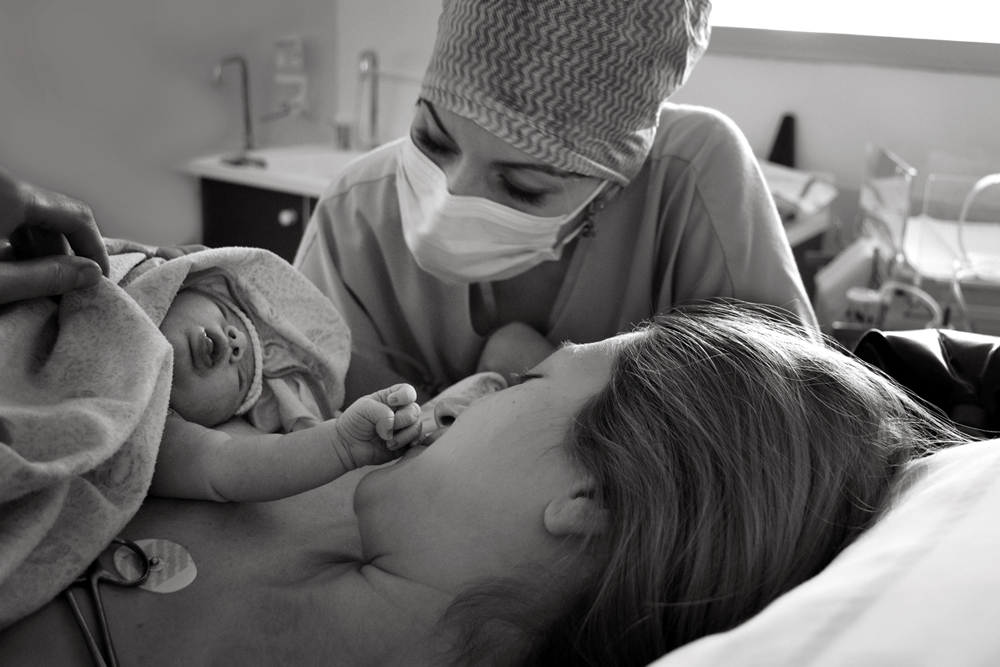
Women with childbirth-related PTSD had healthcare costs 2.5 times higher than women without PTSD from six to 12 months after birth, a report found.
The analysis estimated that early prevention of traumatic births and childbirth-related post-traumatic stress disorder (PTSD) could save the NHS around £26m each year.
Women with PTSD were also less likely to have returned to work by 12 months after giving birth, suggesting potential longer-term employment and economic effects.
The report from City St George’s, University of London was launched at an All-Party Parliamentary Group (APPG) on Birth Trauma event on 10 September 2026.
Researchers calculated the potential NHS savings using the number of births reported in NHS hospitals in 2024-25 and the UK prevalence of childbirth-related PTSD.
Around one in 20 women in the UK develop PTSD following childbirth, while recent research has shown that the condition remains underdiagnosed.
The findings draw on research that tracked more than 2,000 women in England and Scotland from pregnancy to two years after birth. Researchers assessed mental health, use of health services and employment outcomes.
The research included assessments of childbirth-related PTSD and PTSD arising from other traumatic experiences. It also included a separate Birth Trauma Association survey examining women’s experiences of birth trauma.
Between six and 12 months after birth, healthcare and support service costs for women with childbirth-related PTSD were 2.5 times those of women without PTSD.
Women with low or moderate symptoms, including those reporting one or two PTSD symptoms, also had higher healthcare service costs than women without PTSD.
Just over half, 53 per cent, of women with PTSD had returned to work by 12 months after giving birth, compared with 68 per cent of women without symptoms.
Women with PTSD were more likely to be referred for mental health support, but more than half received no referral.
Those whose PTSD followed a traumatic birth also had slightly higher healthcare costs than women whose PTSD resulted from other traumatic experiences.
The researchers called for routine PTSD assessment and treatment during pregnancy and after childbirth, alongside greater access to specialist perinatal mental health services.
They also recommended training healthcare staff in perinatal trauma, trauma-informed care and identifying women at risk of PTSD.
The report said further research was needed to establish whether screening, treatments and trauma-informed care pathways are effective and evidence based.
The work follows the APPG’s 2024 Birth Trauma Inquiry, which highlighted the effects of birth trauma on women and families and called for evidence on its wider public health and societal costs.
The report focused primarily on healthcare use and did not attempt to calculate all costs associated with birth trauma and postnatal PTSD, including wider employment, family and societal effects.

The UK government is reviewing a surrogacy firm after complaints that medical insurance claims involving surrogates in Mexico were rejected.
The Department of Health and Social Care (DHSC) is considering whether UK-based provider My Surrogacy Journey should remain listed on gov.uk as one of four domestic surrogacy agencies available to intended parents.
The review follows allegations concerning its Mexican sister company, where surrogates are based.
Health minister Diana Johnson said: “The department is looking into the allegations about My Surrogacy Journey.
“As part of that assessment, the department will consider whether it is appropriate for that company to remain on the gov.uk list of agencies.”
Emails sent by My Surrogacy Journey chief executive Michael Johnson-Ellis and seen by the Guardian suggest multiple surrogate women in Mexico had their insurance claims rejected.
The emails also suggest 300 couples using the company were moved to a new insurance provider because of the increased risk of claims being rejected.
Commercial surrogacy is banned in the UK, where only altruistic arrangements are permitted.
My Surrogacy Journey operates a not-for-profit UK branch alongside for-profit sister companies in Mexico and the US. All three companies have the same owners and chief executives.
The reported insurance issues relate to surrogacy arrangements in Mexico.
One couple told the Guardian they paid tens of thousands of pounds to cover medical costs after their surrogate had a hysterectomy during childbirth and an insurance claim was refused.
The Guardian said it understood that at least five sets of parents said they had to cover medical costs after insurance claims were rejected.
In an email to the couple whose surrogate underwent a hysterectomy, Johnson-Ellis wrote: “We have already told you that the insurance companies have been declining some of the claims and we are actively working with the broker to get this issue resolved but you should also consider that they may not be paid out and there is nothing we are able to do to change this …
“We appreciate this is not an insignificant sum but this genuinely is out of our control.”
Johnson-Ellis also said the company had switched insurance providers, writing: “We’re also managing this for 300 other journeys, which is a complex position to be in.”
Lawyers acting for My Surrogacy Journey said the company did not comment on individual cases, but that existing insurance policies were in place and claims continued to be accepted and processed.
They said the company understood that a small number of claims had been rejected and was supporting people seeking to resolve those claims with an insurer.
Under the surrogacy arrangements, intended parents are understood to be contractually required to cover medical costs not paid by an insurer.
The couple said they had been recommended the company’s Mexico option. Its website advertises that intended parents using the route can have a baby in “under 18 months”.
They said they were told the UK route could take up to five years and that the US option was much more expensive.
Lawyers for My Surrogacy Journey said prospective parents are given information about typical timelines, costs, legal frameworks and practical considerations, and that the 18-month timeframe is indicative only.
The couple said their surrogate developed placenta accreta, a serious condition in which the placenta attaches to the wall of the uterus.
Emails from Johnson-Ellis acknowledged that the insurance provider investigated the birth after the surrogate experienced health complications.
The parents are considering legal action, while the Guardian said it understood at least four other couples were reviewing their options.
Phil Brickell, MP for Bolton West, raised concerns in parliament about a separate couple who had used My Surrogacy Journey.
He said: “Two of my constituents recently travelled to Mexico, where their children were born by surrogacy.
“Those births were facilitated by a company called My Surrogacy Journey, which is listed on gov.uk.
“While in Mexico, they had repeated traumatic experiences with the company relating to issues including insurance for their children, accusations of bullying towards staff and repeated efforts to silence any constructive criticism.
“I understand that other members of this house have received similar complaints.”
Brickell called for My Surrogacy Journey to be removed from gov.uk pending a review by the Human Fertilisation and Embryology Authority.
Lawyers acting for My Surrogacy Journey said the company was communicating with DHSC and was confident any issues could be resolved.









 Menopause1 week ago
Menopause may not explain rising heart condition in women – study

 Sponsored Content2 weeks ago
Last chance to save on Women’s Health Week and Women’s Sport Summit: Early Bird pricing ends 11 September

 Pregnancy2 weeks ago
Paracetamol use may impact future fertility, studies suggest

 Insight1 week ago
Women with birth trauma face 2.5x higher healthcare costs – study

 Menopause2 weeks ago
Cancer drug could tackle osteoporosis menopause weight gain

 pain conditions6 days ago
Medical cannabis may improve endometriosis symptoms – study

 Cancer1 week ago
Study could explain why obesity is a breast cancer risk factor

 Diagnosis2 weeks ago
FDA approves AstraZeneca breast cancer drug