




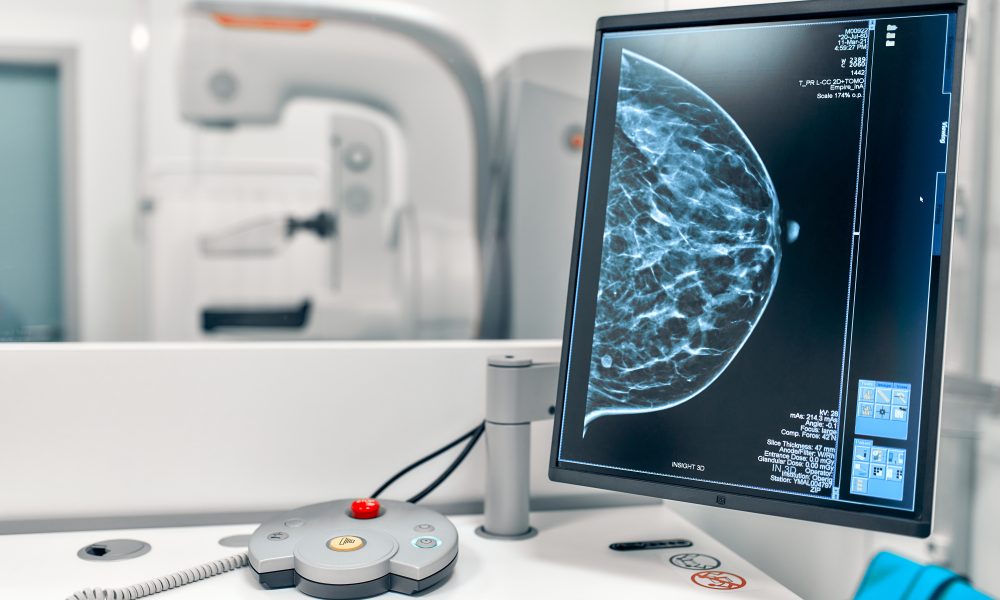
The US healthcare company MedCognetics has received US Food and Drug Administration (FDA) clearance of its “AI-enabled” software for breast cancer screening.
The Texas-based company is developing a medical imaging technology with an initial focus on improving outcomes of early breast cancer detection and helping radiologists with unmanageable caseloads.
QmTRIAGE aims to provide an “unbiased” advanced imaging algorithm that uses AI and machine learning (ML) to detect the earliest manifestations of cancer in all ethnicities.
The digital health software platform can be deployed on customer premises, via the cloud or through the web.

According to Margaretta Colangelo, an independent analyst focused on AI, there is a 10x demand for radiology services to the number of available radiologists worldwide, with 50 per cent of those in practice experiencing depression or burnout.
MedCognetics’ AI technology aims to improve the effectiveness of medical imaging and radiology workflow.
“The American Cancer Society has stated that in 2022 approximately 287,850 new cases of invasive breast cancer will be diagnosed in women,” said Debasish Nag, CEO of MedCognetics.
“MedCognetics is committed to leveraging our technology to help improve outcomes across a diverse group of patients and to do so, partnered with both University of Texas at Dallas and University of Texas Southwestern Medical Center (UTSW) to address these disparities.
“In addition to this, our software’s high detection accuracy enables reduced time for review by radiologists, another key component to improved outcomes.
“The FDA’s clearance is a very important first step for us as we work toward expanding to other realms of cancer,” Nag added.
The CEO said the team would also aim to reduce the amount of time radiologists need to review cases. This would prove vital in underserved communities and areas of the world where medicine and diagnostic imaging are scarce.
W. Phil Evans, clinical professor of radiology at UT Southwestern Medical Center and chief of its breast imaging division, said: “The use of AI in medicine has helped bridge many gaps in the detection and treatment of cancers.
“We are working to leverage this technology to address data bias regarding breast health and imaging.”
Breast cancer remains one of the most common form of cancer in women, with more than two million women worldwide being diagnosed with the disease in 2020 alone.
According to Cancer UK, if cancer is picked up early, treatment is more likely to be successful and chances of survival increase.
Screening can pick up harmless cancers that wouldn’t cause any problems. However, screening can, in some cases, prevent cancer from developing in the first place.

Newsletter
Sign up for free weekly updates
The latest femtech news, research and investment, straight to your inbox.




