




News
Mammogen launches e-commerce marketplace to support women’s health


A California-based female-led biotech company has launched an online marketplace to support women’s health and product development.
Mammogen, a women’s health company specialising in noninvasive precision diagnostics, has launched mammogen marketplace, an e-commerce platform designed to provide hope, comfort and support for those affected by women’s health-related diseases.
The company, currently owned and operated by IV BioHoldings (IVBH), a bio-AI platform company involved in the rapidly growing liquid biopsy industry, says this is the first online marketplace to support product and community development for patients and those who love them.
“Being a patient-first organisation requires a willingness to integrate technologies across every axis of business, says IVBH founder and CEO Marty Keiser, who also serves as chairman of Mammogen.
“The marketplace is an important step towards proving that community can fuel market adoption and that market adoption can, in turn, fuel community.”
Elizabeth Cormier-May, Mammogen CEO and IVBH chief commercial officer, launched the marketplace after discussing with patients and families affected by breast cancer.
She says the comfortable gear and accessories available through mammogen marketplace are designed to drive awareness of and provide solutions for major unmet needs in women’s health. “Innovation should not be confined to our science and product development.
“We’ve tapped into the same level of creativity from which Mammogen was born to completely redefine traditional brand building, revenue generation and the development of non-clinical solutions that uplift and empower the patients and families that we serve.
“Using this marketplace to help build a bridge between science and community is central to ensuring Mammogen remains at the forefront of an ever-evolving healthcare landscape.”
She adds: “Today, we are focused on important issues in breast health and driving awareness to the important role that noninvasive diagnostics play in improving patients’ experiences and outcomes.
“Over time, our aim is to build mammogen marketplace into an expansive platform that closes the gap between science and community for all women, affected by all disease, all around the globe.”
Mammogen partnered with Tee Commerce, an e-commerce services provider founded by cancer survivor Ben Vainer, to create their marketplace.
Tee Commerce head of operations, Collin Lynch, says: “We were honoured to fuel Mammogen’s entrance into e-commerce. After understanding what mammogen marketplace will evolve into, we worked diligently on stocking their store with products focused on health and comfort.
“We look forward to watching Mammogen’s new healthcare model unlock a new era of patient-focused care.”








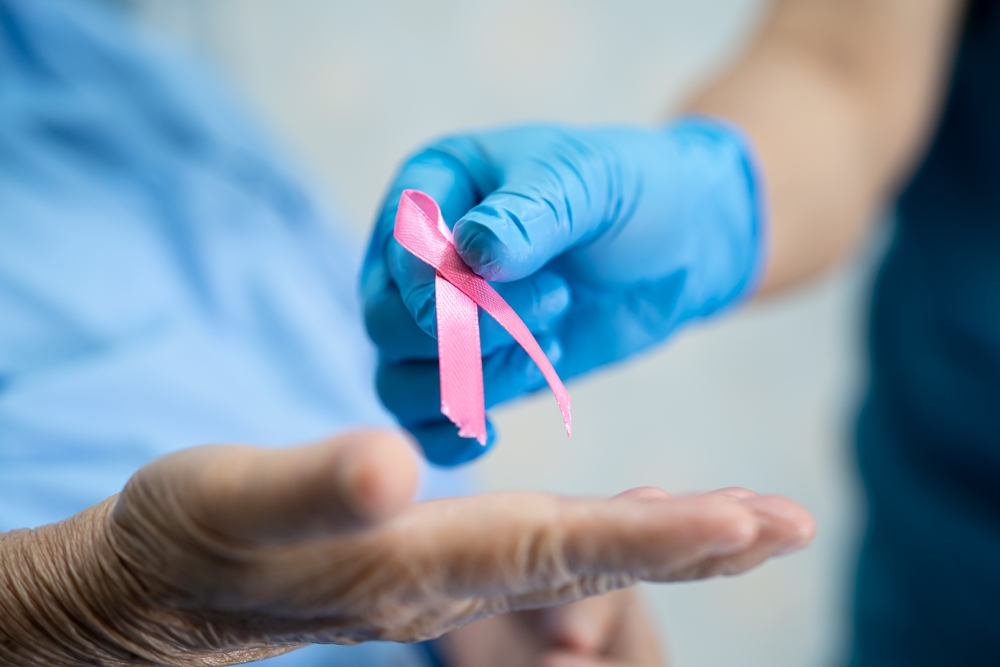
Breast cancer patients in Scotland face a postcode lottery that could limit access to two newly approved NHS treatments.
The Scottish Medicines Consortium has approved Elacestrant and Capivasertib, which could be life-extending for some people with metastatic breast cancer.
Eligibility depends on genetic testing to confirm gene mutations before treatment can be prescribed, but the necessary testing is not yet available through the NHS in Scotland.

The testing is available to patients in England and to those able to pay for it privately.
Claire O’Donnell, who was diagnosed with metastatic breast cancer at 37, has raised concerns about the difference in access.
Ten years after her diagnosis, O’Donnell is receiving a treatment that works for her but does not know when it may stop being effective.
She said: “I know how lucky I am. It’s certainly not been easy but I’m incredibly lucky and incredibly privileged to be in that position.
“I’ve watched a lot of my friends die, and a lot of the circumstances has been about not being able to access a drug or getting the drug too late or being too poorly by the time the drug becomes available to them. It makes me angry, and it makes me sad.”
O’Donnell, who has been supported by secondary breast cancer charity Make 2nds Count, is frustrated by the gap in care for patients in Scotland.
She said: “These drug are a lifeline to people. It makes all the difference, and it only takes one drug to be your drug that you know can give you six months a year, two years, five years. It’s almost like they’ve given you a bit of good news, but they’ve also put a little bit of a criteria on it that you know they dangle the carrot in front of you.”
David Cameron, professor of oncology at Edinburgh University and chair of trustees for Make 2nds Count, said the system needed improving to better support patients.
He said: “It’s a frustration for many of us in the clinic because for a long time we’ve been saying as we move into an era of medicines, not just cancer medicines, but medicines that are increasingly driven by special tests, we need a system which absolutely locks the two things together.
“There has been progress in that direction, but they’re not locked together. this comes down to the way the NHS is in a sense fragmented internally.”
Health secretary Angela Constance said: “I welcome the acceptance of Elacestrant, known as Korserdu, for treatment of post-menopausal women, and men, with a certain type of advanced breast cancer.
“We work closely with the independent SMC and the NHS in Scotland to improve access to new medicines, helping to expand the range of treatment options available.
“We are aware that a genomic test is needed in order to access this therapy, and we are working in collaboration with the NHS and industry partners to secure access to this as soon as possible.”



A urine and vaginal fluid test could help rule out womb cancer in women with postmenopausal bleeding, potentially reducing invasive checks.
In a study of 1,864 women with postmenopausal bleeding, the test identified 80 of 99 womb cancers and correctly gave a negative result for 93 per cent of women without the disease.
Researchers said the test was not accurate enough to rule out cancer on its own, but could help fast-track women at the highest risk for urgent investigation while reducing immediate invasive testing for those at lower risk.
Professor Emma Davidson, of the University of Manchester and Manchester University NHS Foundation Trust, said: “Bleeding after the menopause is understandably alarming for women because it can be a sign of cancer, but the vast majority of those investigated will not have the disease.
“At the moment, many women face invasive, uncomfortable tests that can be stressful as well as costly for health services before cancer can be ruled out.
“Our study shows that a simple test using urine and vaginal samples could help identify the women most likely to have cancer while safely reassuring many others much earlier in the diagnostic pathway.
“If further studies confirm these findings in routine practice, this approach has the potential to transform care for thousands of women every year.”
Developed at the University of Manchester and Manchester University NHS Foundation Trust, the test examines cells collected from urine and vaginal fluid samples.
Postmenopausal bleeding currently triggers an urgent cancer referral, although only about 5 to 10 per cent of women who report it have an underlying cancer.
Current investigations include an internal ultrasound scan, a biopsy of the womb lining and hysteroscopy, in which a camera is passed into the womb.
Women taking part in the study attended seven hospitals in north-west England and provided urine and vaginal fluid samples before undergoing their routine tests.
Five per cent of participants, 99 of 1,864 women, were diagnosed with womb cancer through biopsy or surgery.
Cytologists assessed the samples without knowing the women’s diagnoses.
Researchers said the test could be used to triage women suspected of having womb cancer, with lower-risk patients monitored through repeat sampling or given a full assessment if symptoms continued.
They cautioned that the samples were assessed by highly trained specialist cytologists, so it is not yet known whether the same accuracy could be achieved in other settings.
The test has also not been studied in women without symptoms.

Nottingham University Hospitals NHS Trust has apologised after a human error caused 11 years of maternity data to be overwritten.
The incident happened during routine technical work on 18 August, when computer instructions intended to create a copy of a radiotherapy database were mistakenly applied to the maternity database.
Most of the affected information has since been recovered, including notes, observations, test results and other information recorded as part of patient care.
However, the trust has been unable to fully restore the historical record showing who viewed maternity records between September 2011 and November 2022.
Current data was not affected and the incident has had no impact on current maternity services or care provided to women and babies, according to the trust.
It also said no information was accessed or used inappropriately as a result of the incident.
Andy Callow, chief digital and information officer at Nottingham University Hospitals, said: “I am sorry for the concern and distress this incident may cause to women and families affected.
“On 18 August 2026, a human error during a routine technical process resulted in a maternity records database being unintentionally overwritten.
“We took immediate action to investigate the incident and recover the affected information.
“The information needed to support patient care has been restored and there has been no impact on current maternity services or the care provided to women and babies today.
“However, to date, we have been unable to fully restore the historical record showing who viewed maternity records between September 2011 and November 2022.
“We have informed the Information Commissioner’s Office, completed a full investigation and strengthened our processes and controls to help prevent a similar incident from happening again.”
The error occurred when pre-written computer instructions previously used for another hospital system were used during the technical work.
A setting that should have been changed was not altered, resulting in work being carried out on the maternity database instead of the radiotherapy database.
The issue was escalated within minutes of being identified and experts were brought in to recover as much information as possible.
The trust has referred the incident to the Information Commissioner’s Office and notified Nottinghamshire Police, which is conducting a separate criminal investigation into maternity care at the trust.
The force is assessing whether the loss of information about who accessed maternity records could affect that investigation.
The incident follows a maternity review led by midwife Donna Ockenden, which concluded in June after examining the cases of 2,500 families over a 20-year period.
The review found more than 500 mothers and babies suffered potentially avoidable harm, with 162 dying following substandard care. Some babies who survived were left seriously disabled.
Nottinghamshire Police announced its separate criminal investigation, Operation Perth, in September 2023.







 Menopause1 week ago
Menopause may not explain rising heart condition in women – study

 Fertility2 weeks ago
Paracetamol use may impact future fertility, studies suggest
 Insight1 week ago
Women with birth trauma face 2.5x higher healthcare costs – study

 News1 week ago
Medical cannabis may improve endometriosis symptoms – study

 Mental health5 days ago
Neuroscience-backed journaling for women’s mental health
 Cancer1 week ago
Study could explain why obesity is a breast cancer risk factor

 Menopause2 weeks ago
Menopause hormone therapy may improve cardiovascular health outcomes, study suggests
 AI1 week ago
Evvy secures US$40m for AI-powered vaginal microbiome testing
4 Comments