




News
WeNatal donates over $25,000 worth of products to those affected by LA wildfires


The co-founder of fertility-focused supplement brand, WeNatal, has donated over $25,000 worth of products to her community after losing her own home in LA’s wildfires.
Former Nike executive and WeNatal co-founder, Ronit Menashe, saw her family home in the Palisades destroyed during the fires which devastated Los Angeles earlier this month.
Celebrity nutritionist, Brigid Titgemeier, who was staying with the family at the time, shared an Instagram post documenting the events that took place after a fire broke out next to Menashe’s daughter’s pre-school.
They rushed home to pack their belongings before evacuating, with another photo— thought to be from a few hours later—showing their town ‘burned to the ground’.

Instagram/Brigid Titgemeier
The following day, Menashe posted on Instagram offering to send free supplements to those in her community who had also ‘lost everything’.
“This is the person that she is,” Titgemeier wrote in an accompanying caption.
“After losing everything she still wants to help others.”

Instagram/Brigid Titgemeier
Menashe reached out to those in her neighbourhood and community group chats, and individually texted friends and customers who she knew were pregnant. She also advised others on how the supplements could be taken as a multivitamin to support their overall wellbeing.
“I couldn’t stop thinking about the families, especially pregnant women, who were also going through this trauma,” Menashe told Femtech World.
“While it is incredibly easy to slip into feelings of overwhelm and helplessness at this time, in all circumstances of loss, it’s critical to focus on what we can do.
“A natural way I could give back to my community, which lost everything, was to offer them a way to support their health—no one was sleeping or eating, and it’s so easy to neglect your health during times like this. But these are precisely the moments when focusing on nutrition should be a top priority.”

Instagram/Brigid Titgemeier
The WeNatal team has now sent out over $25,000 worth of products to help women and their look after their health in the aftermath.
She continued: “No doubt rebuilding will be challenging for us all, but I’ve been so moved by how so many have shown up in meaningful ways, and it is this strong sense of community and generosity that will bring us to the other side.”
A ‘new sense of hope’
Menashe founded WeNatal with her former Nike colleague, Vida Delrahim, after they both experienced miscarriages just a week apart.
One in six couples experience infertility, with up to half of these cases attributed to male factors. But Menashe and Delrahim say their partners were ‘left out of the discussion’.
The brand, which aims to support fertility in both men and women, has been backed by high-profile functional medicine practitioners, such as Dr Mark Hyman and Kelly LeVeque.
“This isn’t the first time we’ve been compelled to give after a loss,” said Menashe.
“Our brand started after my co-founder Vida and I both had miscarriages a week apart. We were sad for ourselves, yes, but also for all the couples like us who were given little direction on what to do differently to improve our fertility.
She added: “Beyond products, our deep hope and the focus of so many of our educational and community-building efforts is to foster a new sense of hope.”








Women accounted for 71.4 per cent of global health workforce growth between 1990 and 2023, according to a study covering 204 countries and territories.
The global workforce almost tripled over the period, rising from 40.9m to 122.1m workers.
Women represented 68.9 per cent of all health workers in 2023, but remained concentrated in professions that generally offer lower pay and fewer leadership opportunities.
The study analysed 20 groups of specially trained health personnel, including doctors, nurses, midwives, pharmacists, dentists and community health workers.
Between 1990 and 2023, the workforce grew by more than 81m people, including an additional 18.9m nurses and 8.7m doctors.
In 2023, there were 33.2m nurses, 15.1m doctors, 7.6m community health workers, 6.8m pharmacists and pharmaceutical assistants, and 6.1m dentists and dental assistants worldwide.
Women made up 80.7 per cent of nurses, 96 per cent of midwives and 89.5 per cent of community health workers, while fewer than half of doctors were women.
A similar pattern was seen in dentistry and pharmacy, where women were more likely to work as assistants than as dentists or pharmacists.
Megan Knight, lead author of the study and researcher at the Institute for Health Metrics and Evaluation, said: “Women have transformed the global health workforce over the past three decades, but they continue to be concentrated in professions that generally offer lower pay and fewer opportunities for leadership.
“Building stronger health systems will require not only expanding the workforce, but also creating equitable opportunities for career advancement, leadership, and safe, supportive working environments.”
Despite the growth, researchers estimated that an additional 34.4m doctors, nurses, midwives, dentists and pharmacists would be needed to achieve moderate levels of universal health coverage.
Universal health coverage means people can access essential health services without experiencing financial hardship.
The estimated global shortage includes 23.9m nurses and midwives, 7.1m doctors, 1.8m dentists and 1.6m pharmacists.
South Asia had the largest estimated shortages, requiring an additional 2.6m doctors and 10m nurses and midwives to reach the study’s benchmark for moderate universal health coverage.
Sub-Saharan Africa also had substantial shortages. Nursing density was estimated at 14.5 nurses per 10,000 people, compared with 121.8 per 10,000 in high-income countries.
At country level, there were 3.2 nurses per 10,000 people in Chad and 3.3 in Madagascar, compared with 171.7 in Belgium and 161.4 in the US.
Dr Annie Haakenstad, senior author of the study and assistant professor of health metrics sciences at the Institute for Health Metrics and Evaluation, said: “Health workers are the foundation of every health system.
“Although the global workforce has expanded dramatically, millions more doctors, nurses, midwives, dentists, and pharmacists will be needed to ensure people everywhere can access essential health services.
“These findings provide countries with minimum thresholds for planning the workforce needed to strengthen health systems and move toward universal health coverage.”
The study estimated that moderate universal health coverage was associated with minimum workforce densities of 23.8 doctors and 64.5 nurses and midwives per 10,000 people, alongside 5.2 dentists and 5.6 pharmacists per 10,000.
Researchers said closing workforce gaps would require continued investment in education, recruitment, retention and working conditions.
They also highlighted gender-responsive policies, including leadership development, workplace protections, paid parental leave and flexible work arrangements, as measures that could support a predominantly female workforce.
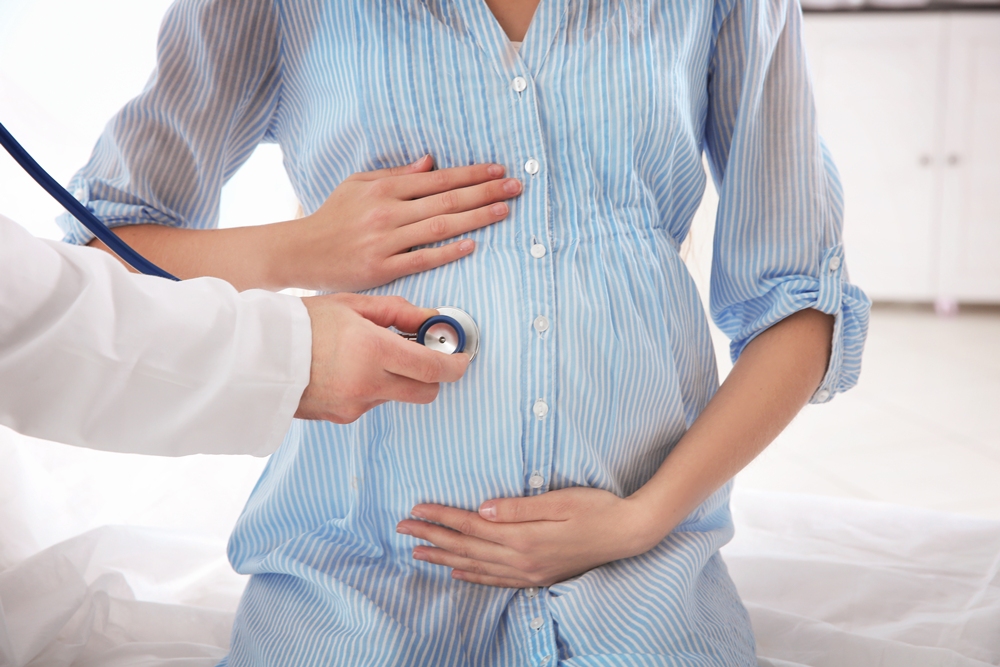
Women entering pregnancy with multiple conditions face a 20 per cent higher miscarriage risk and around four times the risk of anxiety and depression, new research has revealed.
The observational study found women with two or more pre-existing long-term physical or mental health conditions also had a 69 per cent higher risk of severe nausea and vomiting.
They had more than double the risk of venous thromboembolism, when a blood clot forms inside a vein, and a 42 per cent higher risk of pre-eclampsia, a pregnancy complication involving high blood pressure.
Dr Steven Wambua, research fellow in health data science at King’s College London and joint first author, said: “Maternity care is still largely organised around single health conditions, but one in five women now enters pregnancy with two or more.
“By harmonising five datasets covering all four UK nations, we could show consistently and across a much broader range of outcomes than before, that these women face higher risks and that risk climbs with every additional condition.”
Researchers from King’s College London, Queen’s University Belfast, Bristol NHS Foundation Trust, the University of Birmingham, Swansea University and the University of St Andrews analysed more than 2.2m pregnancies and birth events recorded between 2000 and 2022.
The data came from five datasets covering England, Scotland, Wales and Northern Ireland.
Around one in five pregnant women in the UK live with multiple long-term conditions, but their combined impact on pregnancy is poorly understood.
The study found risks rose with each additional condition. Women with three or more conditions had more than three-and-a-half times the risk of venous thromboembolism compared with women without long-term health conditions.
Women with multiple conditions also had a 32 per cent higher risk of placental abruption, when the placenta separates from the womb before birth, and a 26 per cent higher risk of gestational diabetes.
The researchers said maternity care pathways vary considerably and, where they exist, are often organised around individual conditions.
They said the findings highlight a need to restructure these pathways to address the complex needs of women living with multiple conditions.
Professor Krishnarajah Nirantharakumar, clinical professor of public health and health data science at King’s College London, MuM-PreDiCT principal investigator and joint senior author, said: “These findings make a strong case for recognising multiple long-term conditions as a marker of antenatal risk in its own right.
“That means identifying these women at maternity booking, assessing physical and mental health needs together, and joining up obstetric, primary care and mental health services around them.
“The near four-fold risk of antenatal anxiety and depression is particularly striking, and points to perinatal mental health support as an urgent priority.
Dr Kelly-Ann Eastwood of Bristol NHS Foundation Trust and Queen’s University Belfast, joint senior author, added: “Our results help define the urgent clinical challenges facing both women entering pregnancy with multiple long-term conditions, and clinicians caring for them across the UK.
“Supporting recommendations from recent national maternity and neonatal investigation reports, there is a critical need to address healthcare inequalities, and improve support for women with pre-existing mental health conditions.
“These findings highlight the pressing need to restructure existing maternity services to improve antenatal outcomes.
The authors cautioned that, because the study used routinely collected health records, some conditions and outcomes may have been under-recorded or recorded inconsistently.
Further work by the MuM-PReDiCT consortium will examine birth and child outcomes and identify which combinations of long-term conditions carry the greatest risk.

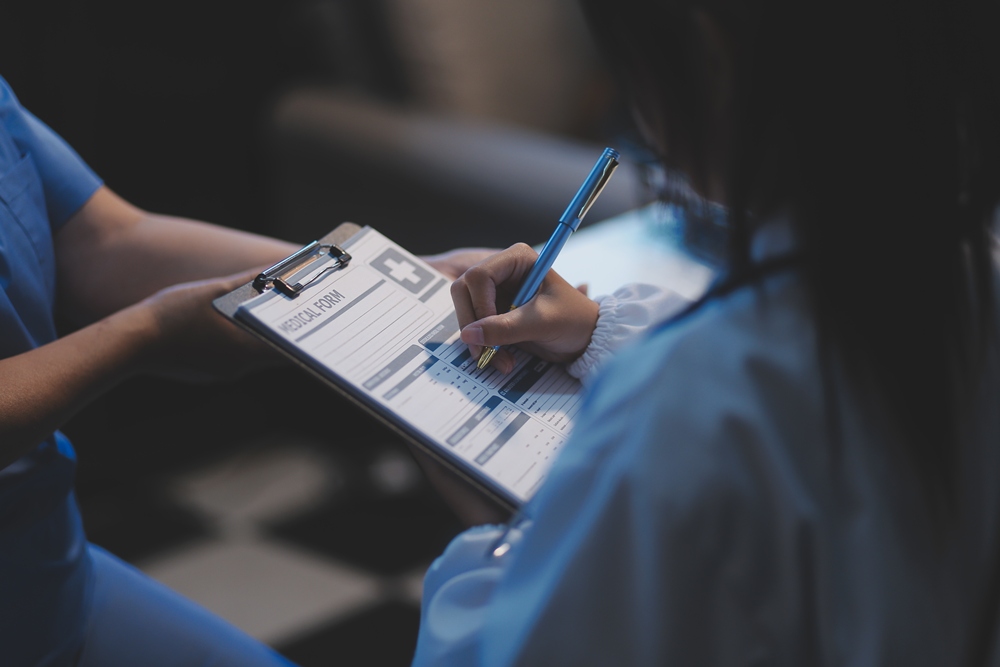
Women using PIEDs reported difficulty accessing reliable information, testing and clinical expertise, according to a qualitative study.
Researchers interviewed nine women who used performance- and image-enhancing drugs, primarily to enhance body composition, physical appearance or sporting performance.
Participants reported problems accessing comprehensive blood and hormone testing and finding clinicians familiar with health concerns linked to women’s use of these drugs.
This has been a male-dominated area of research for a long time, so there are significant gaps in understanding women’s health care needs.
The research, led by University of Queensland School of Psychology PhD candidate Hannah Schuurs, explored how the women managed their health while using PIEDs, which include substances such as steroids and peptides.
Schuurs said: “We interviewed nine women who use PIEDs about how they managed their health throughout their PIED use.
“They reported difficulty accessing reliable information and a lack of clinical expertise and formal health care support.
“The study participants were all active in self-monitoring, tracking changes in their bodies, and actively sought formal health care support.
“But they found it hard to access comprehensive blood and hormone testing, or clinicians who were familiar with the unique health concerns associated with women’s PIED use.”
The study found participants spent considerable time educating themselves about the drugs and their potential risks.
“They often found themselves educating healthcare professionals rather than receiving guidance tailored to their circumstances.
Schuurs said: “The participants had spent considerable time educating themselves about PIEDs and their risks and found they were often educating their health care providers, rather than receiving guidance tailored to their circumstances.”
“Structural and systemic barriers shifted a disproportionate level of responsibility for harm reduction and care coordination onto the women themselves.”
Participants were also aware of sex-specific risks, including hormonal disruption and virilisation. Virilisation is when masculine physical traits develop due to high levels of androgens.
However, the women did not necessarily expect healthcare professionals to have all the answers.
Schuurs said: “Participants were often understanding of gaps in clinical knowledge, provided they were met with openness and a willingness to work collaboratively.
“They emphasised that respectful, nonjudgmental health care relationships were just as important as technical expertise.”
The findings also challenged stereotypes that people using PIEDs are uneducated or indifferent to their health.
Participants reported actively managing their health while navigating stigma, uncertainty and gaps in healthcare.
Schuurs said: “The participants actively managed their health and navigated stigma, uncertainty and gaps within health care.”
“We need health care responses that are collaborative rather than judgmental, as those narratives can oversimplify people’s experiences and make it harder for them to seek support.”
She said the research showed PIED use could form part of wider goals relating to health, wellbeing, performance and self-management.
Schuurs said: “Better understanding women’s experiences is critical if we want health care systems to respond effectively and ensure women can access the support they need.”
“There is a real opportunity to improve education, clinical guidance and support for health care professionals in this space that values and draws from the lived experience of women themselves.”





 Entrepreneur2 weeks ago
UK femtech investment surges 194% in a decade, research finds

 Entrepreneur2 weeks ago
TidalSense raises £14m to expand five-minute COPD test across NHS

 News2 weeks ago
Cross-Border Impact Ventures raises US$58m for women and children’s health

 Entrepreneur1 week ago
Applications close August 18 for Women’s Health Innovation Summit 2026 Innovation Showcase
 News2 weeks ago
Cultural stigma is a barrier to menopause help, black women say
 Menopause1 week ago
Third of women unaware of perimenopause mental health impact

 Motherhood2 weeks ago
One in eight mothers diagnosed with gestational diabetes, research finds

 Hormonal health2 weeks ago
Menstrual data is missing a critical layer: The mind