




Ageing
Despite greater need, women are less likely to use mobility aids than men


A new study has found that women are less likely than men to use mobility aids such as walking sticks or wheelchairs despite having a greater need for them.
The study investigated who may be more or less likely to use mobility aids when needed, finding that 61 per cent of more than 8000 participants have has at least one instance of not using a mobility aid despite experiencing difficulty.
It also found that women were 50 per cent more likely than men to transition from not needing a mobility aid to unmet need status during the study period, but were 20 per cent less likely to transition from unmet need to use, according to University College London (UCL).
Speaking to UCL, Jamie Danemayer, first author of the study from UCL Computer Science and UCL’s Global Disability Innovation Hub, said: “Though unmet need for mobility aids like walking sticks and wheelchairs is a prevalent global health issue, it’s unclear how non-clinical characteristics like age, gender, or socioeconomic position might make people more likely to experience unmet need.
“Our analysis suggests that there is a clear gender gap in access to mobility aids. Though our data didn’t ascertain the reason why participants weren’t using mobility aids, other research tells us that women are often more likely than men to face obstacles such as cost barriers as a result of well-documented income disparities between genders.
“Many mobility aids are designed for men rather than women, which we think may be a factor. Using mobility aids can also make a disability visible, which can impact the safety and stigma experienced by women in particular. There’s a critical need for further research to identify and break down the barriers preventing women from accessing mobility aids that would improve their quality of life.”
The authors noted that: “Our analysis identifies sex as a particularly important factor associated with disproportionate unmet MAP need, suggesting targeted efforts to expand MAP use for women could reduce unmet MAP need.
“As access to assistive technology is shown to vary by functional domain and country income, these findings are most relevant within the sphere of mobility products in a high-income setting. The present study nonetheless establishes the importance of non-clinical factors for disparities in MAP need and use.
“This finding is useful for studies in low-income and middle-income countries, where population-level datasets including assistive technology access are more often limited to demographic, socioeconomic, and social factors, and clinical data are more subject to diagnostic availability or ascertainment bias.
“Future research and new data collection in low-income and middle-income settings is necessary, as need and use disparities could have a stronger association with socioeconomic and social factors in these settings.”

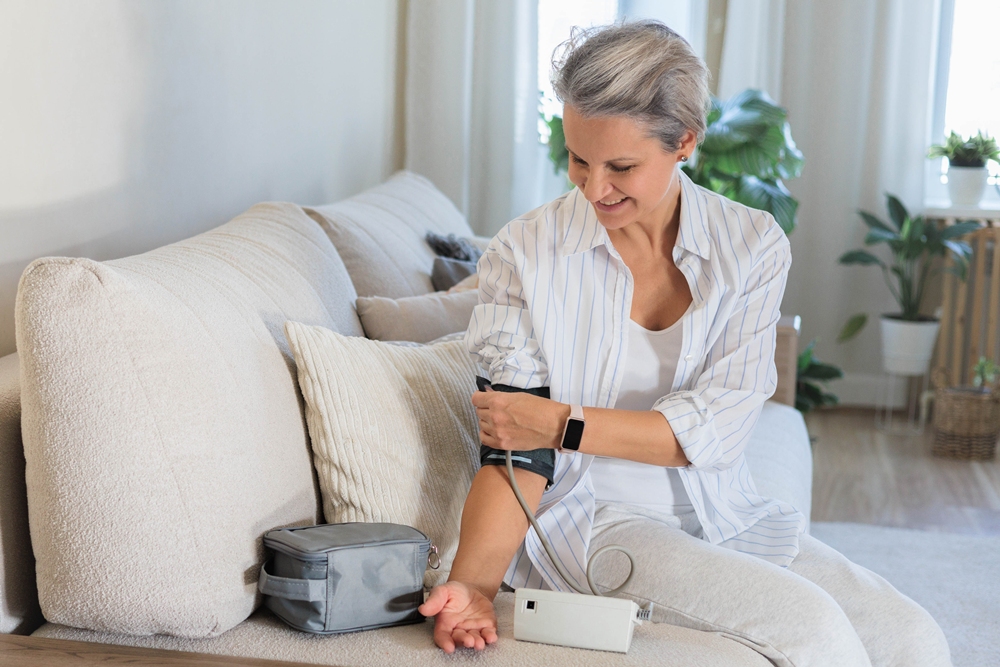
Menopause may not drive rising pulse pressure after midlife, with changes beginning up to two decades before the final menstrual period, a study found.
Pulse pressure, the gap between the upper and lower numbers in a blood pressure reading, is influenced by the stiffness and width of the aorta, the body’s largest blood vessel.
The analysis found that women’s pulse pressure reached its lowest point and began rising in their late 30s, around a decade earlier than in men, regardless of when menopause occurred.

Researchers analysed data from the Framingham Heart Study, a long-running study of cardiovascular risk factors involving three generations of families in Massachusetts.
The study included 6,760 adult women assessed at three health visits over 14 years. Women were grouped according to whether they were premenopausal or experienced early, average or late menopause.
Women whose menopause was induced by surgery or medication were excluded. Researchers also analysed data from 3,248 adult men to examine differences between the sexes.
Pulse pressure typically falls between early adulthood and midlife as the internal space within the aorta increases in diameter, allowing blood to flow more easily.
After midlife, pulse pressure tends to rise as the aorta stops widening and its walls become stiffer. A wider pulse pressure means the heart has to work harder and can contribute to damage in small blood vessels in organs including the brain and kidneys.
The researchers found that the age at which women’s pulse pressure changed from falling to rising was not affected by whether their final menstrual period occurred early, late or at a typical age.
After midlife, pulse pressure increased with age in both women and men, although it rose faster among women. Average pulse pressure was higher in women than men after the age of 60.
Gary F. Mitchell, senior author of the study, said: “To our huge surprise, our results suggest that factors other than the timing of the final menstrual period were likely involved in the accelerated increase in pulse pressure in women after midlife.”
The findings challenge the assumption that hormonal changes associated with menopause contribute to the increase in aortic stiffness seen among women later in life.
However, the observational study could not establish cause and effect. It also relied on participants reporting their age at menopause rather than researchers measuring oestrogen levels.
Most participants were of white European descent, meaning the findings may not apply to people from other racial or ethnic groups.
Wide pulse pressure is an independent risk factor for cardiovascular disease, dementia and kidney disease, according to the researchers, although pulse pressure is not currently included in clinical guidelines for managing blood pressure.
Mitchell said healthcare professionals should consider pulse pressure when assessing middle-aged and older people with high blood pressure, particularly women.
Samar R. El Khoudary, who was not involved in the study, said the findings did not mean menopause had no role in women’s cardiovascular health.
“Vascular aging may begin years before menopause, but that doesn’t mean menopause is irrelevant. The trajectory may accelerate as women enter perimenopause.
“We shouldn’t wait until menopause to start thinking about cardiovascular health.
“By the time a woman reaches her final menstrual period, vascular changes may already have been underway for years. Midlife is an opportunity to identify cardiovascular risk early and intervene before disease develops.”


Women who do strength training may have a lower risk of major cardiovascular disease, particularly alongside aerobic activity, a study suggests.
Cardiovascular disease is the leading cause of death worldwide. Aerobic activities such as brisk walking, jogging, cycling and swimming are already established ways to help reduce the risk.
Strength or resistance training, also known as RT, is less established as a prevention strategy. It makes muscles work against a force and can involve body weight, free weights, resistance bands or machines.

Current US guidelines recommend at least two days of strength training and 150 minutes of moderate-to-vigorous aerobic activity each week.
They also recommend limiting sedentary behaviour, including prolonged television viewing, which is considered an independent risk factor for cardiovascular disease.
Dr Tianyue Zhang, lead study author and scientist in the department of nutrition at the Harvard T.H. Chan School of Public Health, said: “Despite its established health benefits, RT is often overlooked as a prevention strategy for CVD, and its impact on CVD risk, especially in middle-aged and older women, remains understudied.
“A key question is, how much does it add beyond aerobic activity alone?”
Researchers analysed data from 117,025 women participating in the Nurses’ Health Study and Nurses’ Health Study II.
The two groups had average starting ages of 66.8 and 48.1 years respectively.
The women reported their resistance training every four years, with exercises involving the arms and legs recorded separately.
Time spent watching television was used as the main measure of sedentary behaviour.
The researchers examined exercise and television-viewing habits alongside the incidence of major cardiovascular disease.
Major cardiovascular events included fatal or non-fatal heart attacks, strokes, coronary artery bypass surgery and percutaneous coronary intervention.
Coronary artery bypass surgery redirects blood around narrowed or blocked heart arteries. Percutaneous coronary intervention uses a small balloon, often followed by a stent, to open a narrowed artery.
Higher levels of strength training were associated with a lower risk of major cardiovascular disease, particularly heart attacks.
No statistically significant link with stroke was found when resistance exercise was considered separately.
Women completing at least two hours of strength training a week had a 20 per cent lower risk of major cardiovascular disease and a 44 per cent lower risk of heart attack than those doing none.
Each additional hour a week was associated with a five per cent lower risk of major cardiovascular disease and a 14 per cent lower risk of heart attack.
The associations weakened somewhat after researchers accounted for body mass index and conditions including diabetes, high blood pressure and high cholesterol, but remained clear.
Body mass index, or BMI, compares weight with height and is commonly used to assess whether someone is within a healthy weight range.
Strength training was also linked to additional benefits among women who did aerobic activity.
Women completing at least two hours of strength training and 150 minutes of aerobic activity each week had a 45 per cent lower risk of heart attack than those reporting no physical activity.
Women who met recommendations for strength training, aerobic activity and reduced television viewing had the lowest risks of major cardiovascular disease, heart attack and stroke compared with those who met some or none of the recommendations.
Zhang said: “These findings suggest that, within an already active population, RT is associated with additional reductions in CVD risk above and beyond overall aerobic activity.
“Alongside aerobic activity and reductions in sedentary behaviour, RT may be an important component of public health strategies for cardiovascular prevention in women.”
The study relied on participants reporting their own resistance training, meaning the data may not always have been precise.
Researchers also noted the possible influence of unmeasured factors and the limited diversity of participants.
They were unable to fully separate the effects of the type of resistance training performed from the overall amount completed.
Dr Harlan M. Krumholz, professor at Yale School of Medicine, said: “We have long encouraged resistance training, and this study provides strong evidence to reinforce that message.
“It should be included in a well-rounded health routine to support function and longevity.”

A first-in-human clinical trial of an immune rejuvenation therapy designed to restore the function of worn-out T cells is expected to begin later this year, building on research led by UCL scientists into the mechanisms of immune ageing.
The Phase 1 trial will focus on exhausted or senescent T cells, which accumulate with age and in chronic disease and become less effective at coordinating immune protection.
Researchers hope that metabolically resetting these cells may help the immune system regain characteristics associated with younger, healthier immune responses. The work may have clinical utility for diseases such as cancer, HIV and dementia.
Our immune system protects us from infection, cancer and disease. However, as we age, some immune cells become exhausted and lose their ability to function effectively. This process, known as immune ageing, can leave people more vulnerable to illness and less able to respond to health challenges.
The new therapy, developed by biotech company SenTcell founded by Dr Alessio Lanna (UCL Medicine), is designed to rejuvenate these worn-out immune cells. Rather than attacking diseased cells directly, it works by restoring the immune system’s natural ability to recognise and respond to threats.
The treatment is a liquid formulation administered by intramuscular injection, similar to many commonly used vaccines. Once delivered, it is designed to reprogramme key pathways that drive immune dysfunction, helping immune cells regain characteristics of younger, healthier cells.
The goal is to improve immune resilience, enhance protection against disease and ultimately support healthier ageing.
Dr Lanna said: “People living with HIV are now able to live long and healthy lives thanks to major advances in treatment, but many still experience features of accelerated immune ageing. Similar patterns of immune dysfunction are also seen in cancer and other chronic diseases.
“This trial is an important step towards testing whether we can safely rejuvenate exhausted immune cells and restore aspects of healthy immune function. Our goal is to help establish immune rejuvenation as a new way of treating diseases linked to immune ageing and dysfunction.”
The trial builds on research suggesting that some dysfunctional T cells – a type of white blood cell that helps coordinate the body’s immune response – can be restored to a more youthful, functional state. Researchers are focusing on CD4+ T cells, often described as the “conductors” of the immune system because they help direct other immune cells to respond to infection, cancer and disease.
Inside every cell, chromosomes are protected by structures called telomeres, which sit at their ends like protective caps. Telomeres help shield genetic material from damage and gradually shorten as cells divide over time, making them a well-established marker of biological ageing.
Previous laboratory studies suggest that rejuvenated CD4+ T cells may be able to release telomere-containing structures into the bloodstream. Researchers have termed these structures “telomere rivers” and are investigating whether they could help explain how rejuvenated immune cells influence the health and function of other tissues throughout the body. This idea remains under active investigation and has not yet been demonstrated in humans.
The research programme has received support through the Medicines and Healthcare products Regulatory Agency’s (MHRA) Innovative Licensing and Access Pathway (ILAP), recognising its potential to address significant unmet needs associated with age-related immune decline and immune dysfunction.
UCL researchers are preparing for Phase 1 of the trial, which will carefully select adult participants and is expected to focus initially on people with evidence of immune dysfunction, including immune ageing and chronic viral infection. Participants will undergo detailed immune profiling before and after treatment.
Investigators will look at whether the therapy can restore features of healthy immune function. As an early-stage trial, the primary goals are safety and biological activity rather than demonstrating clinical benefit.
If successful, the programme could establish immune rejuvenation as a new therapeutic approach: restoring the immune system’s protective capacity instead of targeting each pathogen or disease process separately.
Researchers believe the strategy could eventually have relevance for conditions characterised by immune exhaustion, including chronic infections, autoimmune disease and cancer, while also informing broader efforts to improve healthy ageing.









 Entrepreneur2 weeks ago
KOVE Medical raises €1.7 million to improve safety of foetal surgery
 Menopause2 days ago
Menopause may not explain rising heart condition in women – study

 Fertility6 days ago
Paracetamol use may impact future fertility, studies suggest

 Entrepreneur1 week ago
Last chance to save on Women’s Health Week and Women’s Sport Summit: Early Bird pricing ends 11 September

 Menopause2 weeks ago
Menopause hormone treatment may ease brain fog, study suggests

 Menopause1 week ago
Cancer drug could tackle osteoporosis menopause weight gain

 Insight3 days ago
Women with birth trauma face 2.5x higher healthcare costs – study

 Hormonal health2 weeks ago
Menopausal women posing as men to buy testosterone amid NHS access issues