




A labour of love: making pregnancy and childbirth safer with 80% more accurate foetal oxygen monitoring
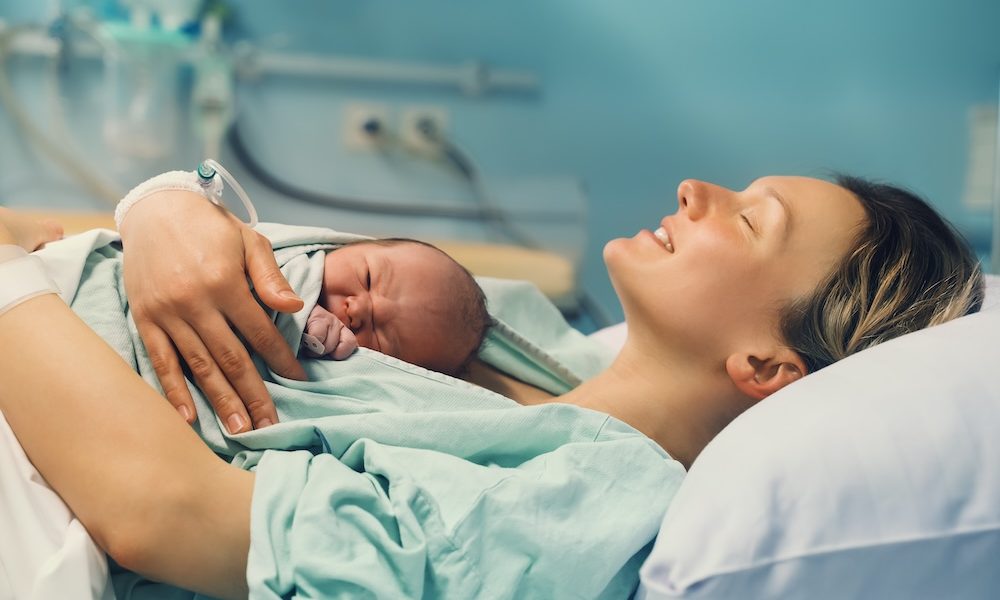
For expecting mothers, the process of bringing life into the world has remained the same since the beginnings of mankind, but what has changed is the outcome.
Thanks to modern medicine, over the last century maternal deaths associated with childbirth have decreased by nearly 99 per cent in developed countries. And better outcomes for mothers lead to better outcomes for newborns, as well as the entire family.
Advancements in medical technology, coupled with access to high-quality prenatal care, have been game changers for maternal and newborn health. Ultrasounds, electronic foetal monitoring, and pulse oximetry have become table stakes in the delivery room, helping to detect and manage high-risk pregnancies and reducing complications in the delivery room.
Despite this progress, women in the US are still three times more likely to die from pregnancy-related complications than women in other developed countries, a statistic that is significantly worse for women of colour [1]. These are sobering facts for the world’s highest-income nation, as the World Health Organization considers prenatal care and infant mortality rates to be important measures of healthcare quality.

One factor contributing to this troubling statistic is the alarming exponential increase in unnecessary procedures such as the Caesarean section (C-section) to deliver babies.
When utilised appropriately, C-sections have saved millions of lives for mothers and babies, but also carry significant risks associated with major abdominal surgery that result in short- and long-term consequences for both mother and baby.
The increasing C-section rates are tied to increasing maternal morbidity and mortality, and is an issue that has recently received attention from Dr Jill Biden and the White House [2]. It is reported that over half of all C-sections are medically unnecessary – yet they have become so prevalent that one in three American women will deliver their baby through this surgical procedure [3].
Detecting foetal distress: heads or tails?
One company aiming to remedy this is Raydiant Oximetry out of San Ramon, California and Cork, Ireland. Founded in 2016 by Dr Neil Ray, a paediatric anaesthesiologist, Raydiant Oximetry is using the principles of pulse oximetry to more accurately detect foetal distress during labour and delivery to reduce the overuse of emergency C-sections and improve outcomes for both mother and baby.
Pulse oximetry technology is used to diagnose low oxygen levels in virtually every clinical setting, but no such technology has existed for foetuses in the labor ward. Raydiant Oximetry is on the path to commercialising Lumerah™, a low-cost and non-invasive photonics sensor that monitors foetal oxygenation during labour.
Every year in the US, approximately 3.4 million women (85 per cent of all births) are placed on foetal heart rate monitors during pregnancy [4]. However, current foetal monitoring technology has the accuracy of a coin toss in accurately predicting foetal distress [5].
The false positive rate for foetal heart rate monitors has been reported to be as high as 89 per cent and as a result, clinicians struggle to determine when an emergency intervention is truly indicated [6]. Emergency C-sections are consequently performed for medical-legal liability fears which drive up hospitalisation costs and leave mothers with increasing rates of postpartum depression and PTSD [7].
Lumerah promises to change all of this by detecting foetal distress more accurately with a non-invasive, transabdominal approach that directly measures foetal arterial blood oxygen levels. This will give clinicians more accurate data and insights, enabling them to make better-informed labor and delivery decisions.
In a recent clinical study completed at University of Texas Medical Branch (UTMB) in Galveston, Texas, Lumerah demonstrated a false positive rate of 19 per cent for detecting foetal distress [8].
The path to commercialisation
Although not yet commercially available, Lumerah is getting the attention it deserves because of its life-improving potential. The US Food and Drug Administration (FDA) has granted Lumerah the status of Breakthrough Device to expedite its market approval.
Most recently, Raydiant Oximetry was named by the National Institutes of Health (NIH) as one of six finalists in the RADx Tech Challenge, a competition to identify companies that are enhancing foetal health diagnostics. The company received US$75,000 to fund ongoing technology development, and is now in the running for a larger prize that will be announced in October.
Furthermore, Raydiant Oximetry recently received IDE approval from the FDA in April to initiate a clinical study of Lumerah at Eastern Virginia Medical School (EVMS) in Norfolk, Virginia. The study began in May and is expected to be completed by the end of 2024 [9].
Raydiant Oximetry’s innovation in the obstetrical space is just getting started with Lumerah. The company has developed the Daisy TM device as well. Daisy was developed to prevent postpartum haemorrhage (PPH) for a woman undergoing a C-section delivery, which complements other PPH devices on the market that treat PPH in women that had a vaginal delivery.
PPH is the leading cause of maternal mortality around the globe and takes the life of an expecting mother every four minutes [10]. A clinical study of Daisy was also initiated at EVMS this past May and expected to be completed by the end of 2024 [11].
Importantly, not only is the company aiming to transform maternal care in the US, but it is already working with global health funders and experts to ensure that these technologies also become accessible in low- and middle-income countries where, according to the WHO, nearly 95 per cent of all maternal deaths occurred in 2020 [12].
Keeping mothers and babies safe during labour and delivery
Raydiant Oximetry is creating a new benchmark in obstetrics care that will benefit countless mothers and babies around the world. The history of childbirth shows us how far we have come, but also how far we still need to go – especially in addressing inequalities.
Continued investment in transformative healthcare companies with a global lens can propel further progress in maternal and newborn health. Access to better health technology that transcends borders will benefit women, children, and the world at large.
Annie Theriault is a managing partner at Cross-Border Impact Ventures (CBIV), an impact venture capital firm investing in women’s, children’s and adolescents’ health technology companies addressing large international markets. Raydiant Oximetry is a CBIV portfolio company.
REFERENCES:
1 https://www.cdc.gov/nchs/data/hestat/maternal-mortality/2021/maternal-mortality-rates-2021.pdf
3 PMID 24565430
4 PMID 19546798
5 PMID 23009972
6PMID 14749646
7 PMID 35457767
8 https://clinicaltrials.gov/study/NCT05147584
9 https://clinicaltrials.gov/study/NCT06405984
10 PMID 17012482
11 https://clinicaltrials.gov/study/NCT06219538
12 Maternal mortality (who.int)



Newsletter
Sign up for free weekly updates
The latest femtech news, research and investment, straight to your inbox.




