




‘Years of being dismissed, ignored and belittled’: the founders reshaping gynaecological care
“Gynaecology is a neglected area of global health,” Dr Ranee Thakar, president of the UK’s Royal College of Obstetricians and Gynaecologists, stated in an article discussing the stigma in gynaecological care globally.
The piece, although published four years ago, is relevant to this day when millions of women around the globe are still struggling to access treatment.
Despite progress in getting people talking about fertility and menopause, gynaecological health remains deeply stigmatised. It’s impossible to discuss the anatomy involved – vagina, vulva, clitoris, cervix – without disapproval and censorship.

Because of the silence, it’s likely that the true burden of gynaecological conditions is grossly underrepresented, so prioritisation of these conditions for research development and health system improvement has been low.
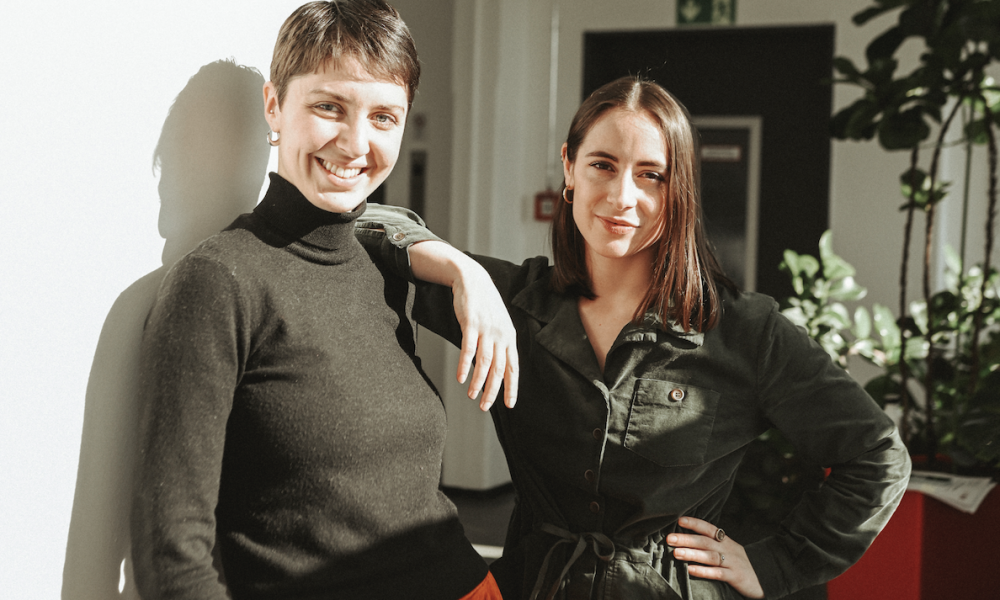
Gaia Salizzoni and Vittoria Brolis, who have endured years of being dismissed, ignored and belittled, know this too well.
“We were the typical examples of women who were being mistreated and misdiagnosed for years before getting a diagnosis,” says Salizzoni. “We realised we got a diagnosis not because a new product was out, but because we just met the right gynaecologist.”
The duo, now founders of the virtual clinic Hale, believe the lack of standardised care and the stigma surrounding reproductive health are responsible for the mounting waiting lists and the long diagnosis times women are facing.
“Some of the most basic things, such as STIs, UTIs, are not tackled properly simply because there are no standardised approaches,” says Salizzoni.
“Many doctors and are not trained in specific conditions, which puts women at risk. At Hale, our job is to simplify and standardise the process in order to make it shorter, cheaper and more effective.”
Hale, the winner of this year’s Femtech World OB/GYN Innovation award, aims to revolutionise patient care through a digital platform designed to guide women through their health journey.
With a focus on scientific evidence, data integration and collaboration with existing healthcare systems, the app, currently available in Italy, aims to bridge the gap in pain research and offer much-needed support to women experiencing pelvic pain.
“There are many women at the beginning of their journey, who are seeking answers,” says Salizzoni.
“For some, answers might be getting a prescription, for others, it might be getting a diagnosis. Our focus is on this this first triage, where we use technology to gather as much information as possible about someone’s medical history, symptoms and health outcomes to offer them the care they need.
“We centralise this data on our platform and we are using algorithms and tools that are helping us understand the needs of the patients and the protocols they might require. Through these protocols – online consultations, gynaecological check-ups, nutrition support – we are trying to reduce as much as possible the human factor to make it more efficient.”
Many of the gynaecological problems women are experiencing, according to Salizzoni, can be tackled without them becoming chronic, which opens the possibility of preventing them from happening in the the first place.
“We are still working on the algorithms we are developing, but we know that if we understand how to tackle these conditions, we can help prevent them.”
Hale’s biggest challenge so far has been people’s attitudes towards digital health. While the adoption of digital technologies has significantly increased over the past few years, some women are still finding it difficult to use digital tools.
“Some people are not used to doing everything online, but I think over time they will start trusting digital health and see the benefits,” says Salizzoni.
“We’ve seen this happening already with mental health. Yes, it can be hard at first, but we have to change our mindset. Things are not going to change in the traditional way.”
To receive the Femtech World newsletter, sign up here.


Newsletter
Sign up for free weekly updates
The latest femtech news, research and investment, straight to your inbox.




