




News
London tech start-up TaraCares launches revolutionary AI co-pilot MIMI for personalised hormone health


In a groundbreaking move set to transform personal health management, the London-based tech start-up TaraCares has unveiled MIMI (Menopause Information and Management Interface), an advanced AI co-pilot designed to personalise science for users of its B2B2C hormone health and employee wellbeing platform MIMOSA.
Leveraging cutting-edge responsible AI and a deep understanding of human health, MIMI aims to become an indispensable tool for women and female individuals of all ages seeking to optimise their hormonal wellbeing and health span, from puberty to post-menopause.
In Beta since 2023, the development of MIMI was funded by an NIHR R&D grant awarded to TaraCares and strategic angel investors from Big Tech and Big 4 Consulting firms.
MIMI has been successfully tested by individuals and clinicians in the UK, US and India including British Menopause Society (BMS) certified menopause specialists.
“MIMI gives you the freedom, safety and scientific evidence at your fingertips,” said Lisa Watson, advanced specialist nurse and BMS Menopause Specialist at Watson Health Menopause Clinic.
Dr Vikram Talaulikar, reproductive specialist at UCLH, trainer and BMS certified menopause specialist added: “Out of the comparable apps I have seen, MIMOSA stands out as comprehensive, inclusive and easy to use.
“I am astonished at the accuracy of MIMI. It is first-class and better than some of the clinicians I know!”
MIMI stands out by its ability to meticulously study and monitor user behaviour and symptoms across 29 key determinants of female hormonal health transition. This sophisticated level of monitoring allows MIMI to deliver tailored recommendations and up-to-date research, empowering users with insights that are specifically relevant to their unique health profiles.
MIMI was inspired by founder Jyoti Sharma’s conversations with female C-suite leaders at UNLEASH World in Paris where she discovered that women running some of the largest and successful businesses in the world were being ill-informed by sponsored social media posts, antiquated diagnostic tools as they resort to dwarfed medical expertise and over the counter menopause test kits against RCOG recommendations.
“We are thrilled to introduce MIMI to our corporate customers,” said Sharma, founder and CEO of TaraCares.
“Our mission is to bridge the gap between complex scientific knowledge and everyday health management. MIMI does just that by providing personalised, actionable insights that can make a real difference in people’s lives.”
The development of MIMI is a significant leap forward in the field of responsible AI.
Unlike generic health apps, MIMI’s algorithms are designed to prioritise user privacy and data security while delivering highly specific health recommendations. The system continuously learns from the data it collects, improving its accuracy and relevance over time.
Users interact with MIMI through an intuitive interface on MIMOSA that makes complex scientific information easily understandable. The AI tracks various health indicators, such as sleep patterns, stress levels, physical activity, diet, and more.
By analysing these factors, MIMI identifies trends and potential issues before they become serious problems, allowing users to take proactive steps toward better health.
MIMI’s personalised approach is particularly valuable for managing hormonal health, a crucial aspect often overlooked by traditional health monitoring systems.
The 29 determinants that MIMI monitors include hormone levels, menstrual cycles, mood fluctuations, and other critical markers. This comprehensive approach ensures that users receive a holistic view of their health, backed by the latest scientific research.
Early adopters of MIMI have already reported significant benefits, praising the AI for its precision and user-friendly design. Testimonials highlight how MIMI’s insights have led to improved lifestyle choices, better management of hormonal imbalances, and a deeper understanding of personal health.
The launch of MIMI marks a significant milestone in the journey towards personalised healthcare.
As the tech start-up continues to refine and expand its capabilities, MIMI is set to become an essential tool for anyone looking to take control of their health with the help of advanced, responsible AI technology.
For more information about MIMI and how it can help you personalise your health journey, visit TaraCares’ official website here.
To receive the Femtech World newsletter, sign up here.









Women’s Health Week Europe 2026 has released its fully populated speaker and session lineup ahead of the event’s return to The Emirates Stadium in London on 7–8 October, with 80+ speakers now confirmed across two dedicated stages.
The programme
The agenda runs across two dedicated stages in parallel, plus two pitch competitions across both days.
The Global Stage opens with a keynote from Merete Clausen (EIF) before moving into sessions on funding trends, AI, the gender data gap, the wearable revolution, and European policy.
Standout sessions include The Age of Digital TransformAItion featuring Nichole Young-Lin (Google), Frida Polli (MIT), and Sapna Shah (Sie Ventures); Lone Wolf or Pack Leader on collaboration versus fragmentation, with Eirini Rapti (Inne), Tatum Getty (Thena Capital), Novo Nordisk, and Jen Roberts-Woods (Borski Fund); and a live debate on whether the women’s health label helps or hinders founders. Day one closes with a keynote from Alison Cave, Chief Safety Officer at the MHRA.
The Scale Stage runs a practical playbook track in parallel, with sessions covering regulatory approval pathways, international expansion, the founder’s legal playbook, PR strategy, and implementing AI into a women’s health business.
The Reverse Pitch flips the usual format: investors and corporates pitch the room on what they are actively looking to fund, acquire, or partner on right now.
View the full agenda and speaker lineup
Pitch competitions
The WHW Europe pitch competitions are back, taking place in front of the audience across both days on the mainstage. 16 finalists will compete across two categories: Consumer & Tech on day 1 and Medical Devices & Therapeutics on day 2.
Any company treating a condition that affects women exclusively, differently, or disproportionately is eligible to apply.
Applications and close 28 August 2026.
Previous alumni include Circe, who secured £100k from Innovate UK, BoobyBiome, who closed a £2.5M seed round post-WHW Europe, and Amilis, who secured £1M at London Tech Week after winning at WHW USA 2026.


UK femtech investment has risen by more than 194 per cent over the past decade, with deal activity and funding both increasing, new research has found.
The number of deals increased from 18 in 2015 to 53 in 2025, while total funding rose from £9.4m to more than £100m over the same period.
Despite the growth, deal volume and value remain relatively low compared with other parts of the health and care market. Healthcare recorded 69 deals in 2015 and 171 in 2025.

More companies have raised funding over the past decade, while investment values have also increased. Average deal size more than doubled from £527,000 in 2015 to £1.9m in 2025.
Some of the largest funding rounds last year included SheMed at more than £37m, Gaia at £12m, emm at £6.8m and Hertility at £5.9m, with the majority of investors based in the UK.
The research found femtech remains largely early-stage, with seed investments accounting for most deals.
However, venture capital involvement has increased over the past decade, which the research said showed the market was becoming more mature. The number of VC deals rose by 600 per cent.
Vicky Protano, corporate partner at Mills & Reeve, which conducted the research, said: “Over the last decade, the UK femtech ecosystem has expanded, both in terms of deal activity and funding levels. This positive upward trend demonstrates growing investor confidence in femtech and increasing institutional interest in the sector.
“Whilst companies in femtech have relied heavily on angel investors and angel networks to fund their growth ambitions, dynamics are shifting, with more venture capital and PE investors appearing in funding rounds. However, this is just the beginning and there is still more to do. While the sector has experienced strong growth, more work needs to be done to create the right funding environment that is balanced and evenly spread across the UK.”
The research found most deals had taken place in London. While the capital has strengthened its position as the UK’s main hub for femtech start-ups, regional clusters are gradually emerging elsewhere.
Protano said: “Whilst London clearly remains a dominant location for women’s health businesses and investment – both in terms of deal activity and total funding – there is a gradual move to regional expansion outside of the capital, with the South West, South East and the East of England showing increased investment activity in the femtech sector. What the data also highlights is a growing North/South divide, with areas such as the North East, North West, and Yorkshire & Humber significantly underrepresented in the national figures.
“As a national firm, we are also witnessing that similar divide. More investments are being made into women’s health businesses based in the South – and more businesses are, often as a result, locating themselves there, rather than in the North. This is representative of the investment landscape as a whole. However, growth in the femtech sector is being supported by growing regional innovation hubs, the increasing influence of university spin-outs, as well as improved support for start-ups at a regional level.”
She added: “Looking at the positives, we have advised and are continuing to advise on some significant investments in the sector. This further evidences the growing nature of femtech, with sector specific investors also coming to the market.”
Examples include Northern Gritstone’s investment in IVF technology business IVF Micro and Phoenix Private Equity’s investment in London Gynaecology, a provider of private gynaecology clinics.
Other deals include an EKA Ventures-led investment in tech-enabled postnatal care company Hesta Health and Amulet Capital’s acquisition of TFP Fertility.
September marks 10 years since the term “femtech” was coined by Ida Tin, co-founder and chief executive of Clue, one of the first period-tracking apps for women, and founder of think tank Femtech Assembly.
The global market grew to US$9.12bn in 2025 and is projected to reach US$41.4bn by 2034.
Despite that growth, women’s health is still not treated as a priority and significant gender inequalities remain globally in research, trials, diagnosis and treatment, continuing to disadvantage women.
Tin said: “I want men with money and power to get femtech on their radar. The business opportunity is there. The societal economic argument is there.”
Charlotte Lewis, commercial health lawyer at Mills & Reeve who specialises in healthtech and women’s health, said: “For far too long, ongoing disparities in women’s healthcare across the UK have adversely impacted women’s health outcomes, often resulting in prolonged diagnosis and treatment – some of which are well publicised, including the time it takes to diagnose women’s health issues such as endometriosis and rising maternal mortality rates.
“However, we are seeing the landscape beginning to shift in a more positive direction. Our experience is that this is helped by more open discussion and conversations which highlight the issues.
“The data around the sector is valuable and growing and demonstrates the progress that is being made from an investment point of view, creating a better environment where digital innovation can thrive, with a renewed focus on prevention through market-leading consumer-driven products.
“The UK has a real opportunity to transform women’s healthcare into a model of fairness, accessibility, and excellence, and femtech businesses have a crucial part to play in achieving this transformation. As a firm, Mills & Reeve is passionate and dedicated to continuing to influence and support this transformation.”
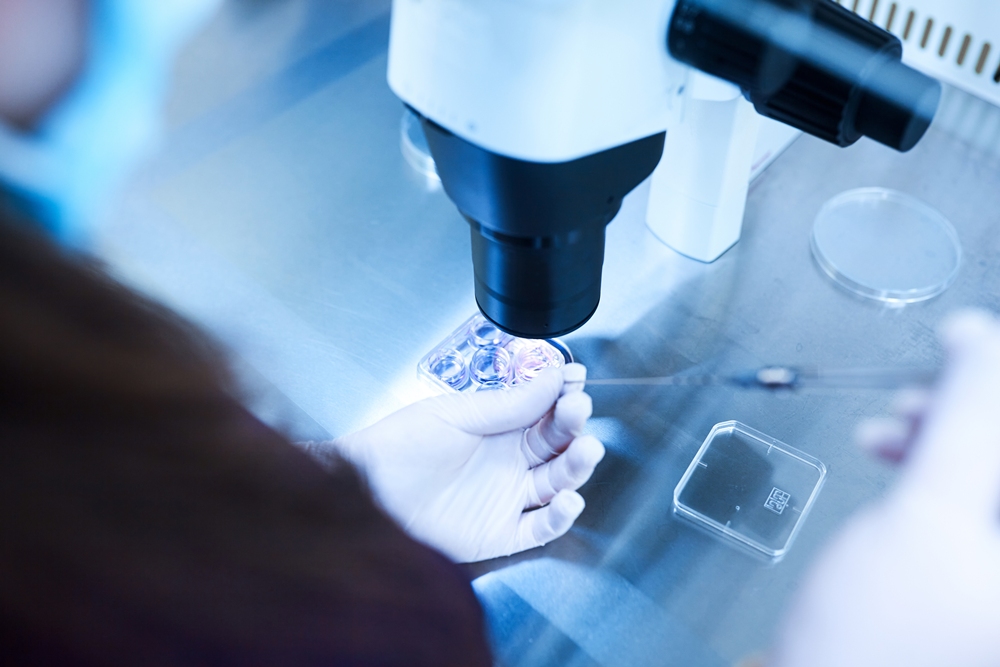
Common IVF preparation techniques used before embryo transfer have no proven effect on pregnancy rates, according to a review.
Researchers said evidence for the widely used practices remains uncertain because available studies are limited and generally of low quality.
Embryo transfer is the final and most vulnerable stage of IVF, when an embryo is placed into the womb. Only around one in three transfers results in pregnancy.
Practice varies between clinics, with some routinely using preparation techniques such as adjusting bladder fullness while others do not consider them necessary.
Dr Ryosuke Akino, practising obstetrician-gynaecologist from Kato Ladies Clinic, said: “To an extent, this is a case of tradition driving practice rather than the evidence.
“Current practices in this area often reflect local protocols, clinician preference, and historical convention rather than strong, high-quality evidence.”
The Cochrane review analysed 11 studies involving 2,524 women undergoing embryo transfer.
Researchers looked at three preparation techniques used by fertility clinics: having women arrive with a full bladder to straighten the angle between the uterus and cervix, removing cervical mucus and using a technique called afterloading.
Afterloading is a technique used to guide the embryo through the cervix.
The review found no reliable evidence that any of the three approaches improved pregnancy rates compared with standard care.
Researchers rated the evidence as low or very low certainty because the trials were small and had methodological weaknesses. They found no grounds to recommend any of the techniques over standard care.
There was also limited information about possible side effects.
The review team, which included methodologists and practising obstetrician-gynaecologists, said full bladder preparation and cervical mucus removal were generally considered safe, with no clear evidence of harm or major complications.
Dr James Brown, obstetrician-gynaecologist from Women’s Health and Research Institute Australia, said: “While these techniques are generally considered safe, it’s still important to test their effectiveness.”
Akino and Brown added: “A full bladder can be uncomfortable, although it may ease catheter insertion in certain uterine positions and reduce procedural difficulty.
“Mucus removal is usually quick, but if done roughly and causes bleeding, it may affect the woman’s experience.
“Overall, the risks are minor and relate mostly to discomfort and procedural factors rather than clinical harm.”
The authors said embryo transfer has changed relatively little despite major advances elsewhere in IVF.
Research has instead focused more heavily on embryo quality and genetic factors, which have a greater bearing on treatment success than transfer technique.
Embryo transfer also depends heavily on the person carrying out the procedure and can be difficult to standardise, making large, rigorous clinical trials harder to design.
Researchers said women may also be reluctant to risk valuable embryos by taking part in randomised studies comparing different transfer techniques.
Dr Noyuri Yamaji from Showa Medical University in Japan said: “Sixteen years of research still haven’t answered a basic IVF technique question.
“This is a critical step in the IVF process and these small changes and techniques have the possibility to make a massive difference, but we won’t know more until more robust, better-quality trials are conducted.”
All the studies assessed were carried out in high-income countries, meaning the findings may not necessarily apply to other healthcare settings and populations.
The authors said further research could be particularly valuable in resource-limited settings, where these procedures are inexpensive and simple to change and basic procedural standardisation could matter more than advanced technical modifications.











 Entrepreneur3 days ago
UK femtech investment surges 194% in a decade, research finds

 Entrepreneur2 weeks ago
Fertility startup American Baby Company secures US$4m

 Insight2 weeks ago
Natural Cycles receives sixth FDA clearance for fertility algorithm

 Wellness7 days ago
Cancer patient receives ‘landmark’ treatment in world-first

 Insight2 weeks ago
Experimental treatment significantly slows progression of fatal brain disease in women, study finds

 Sponsored Content2 weeks ago
The room is filling up at WHW Europe 2026 with super early bird pricing ending this Friday

 Insight1 week ago
Johnson & Johnson offers to pay US$5.5bn to settle talc cancer lawsuits

 Insight6 days ago
Women urged to be wary of menopause misinformation on social media