




News
Fertility platform launches membership to educate patients
Most of the women struggling to conceive do not share their story, thus increasing their vulnerability to misleading claims and misinformation


The Canadian fertility platform Fertilitywise has introduced a new online membership programme to educate and support fertility patients.
The initiative aims to become a “one-stop solution” that empowers individuals and couples on their fertility journeys with evidence-based resources, articles and moderated discussion boards.
The membership also includes private discussion boards for fertility questions, stories and guidance.
Unlike other fertility forums, Fertilitywise says these boards are free of ads and moderated to ensure a safe and supportive space for open dialogue and shared experiences.
Fertility treatment is a complicated topic, with much to understand about the process, success rates and more. It is also an incredibly high-stakes experience for those going through it.
Research shows people who are struggling to conceive report feelings of depression, anxiety, isolation and loss of control. Depression levels in patients with infertility have been compared with patients who have been diagnosed with cancer.
Studies have found that the majority of women going through infertility do not share their story with family or friends, thus increasing their vulnerability to misleading claims and misinformation.
“At Fertilitywise, our mission is to equip individuals and couples embarking on one of the biggest decisions of their life: their fertility journey,” said Maryanna Basic, the founder of Fertilitywise and a former fertility patient herself.
“We understand the complexities fertility challenges bring and we are committed to providing a comprehensive solution that combines evidence-based information with a supportive community every step of the way.”
Basic said she hoped the new membership programme would provide a “safe space” for members to share their experiences, seek advice in confidence and connect with others who understand and are experiencing the same challenges.
She added: “The moderation will ensure a ‘troll-free’ environment, protect against activities which could contravene regulations and/or laws and shield the patient community from intrusive advertising found on popular social media platforms.”
To receive the Femtech World newsletter, sign up here.









We are excited to reveal the winners of the third annual Femtech World Awards.
The winners were announced at a virtual event this afternoon attended by shortlisted companies, along with sponsors and judges.
The event welcomed guests from the UK, Europe, Asia, Africa and North America.
Thank you to all 174 entries, as well as the sponsors for making the event possible.
See you in 2027!
Femtech World Awards 2026 Winners

Winner:
Shortlisted:
IVI RMA x Juno Genetics
Natural Cycles

Winner:

Highly commended:
U-Ploid
Shortlisted:
Hello Inside
Winner:

WISE HF, led by Prof. Mary Ryder
Highly commended:
Cardiac College for Women
Shortlisted:
Hyvelle Ferguson-Davis
CognitiveCare

Winner:

Highly commended:
Youterus
Shortlisted:
ŌURA
Winner:

Shortlisted:
LeanShield by ParrotPal Group
Perigen
Winner:

Shortlisted:
Body Moody
Looop
Winner:

Shortlisted:
Owning Your Menopause
Womeno

Winner:

Shortlisted:
The Blue Box
Celbrea
Winner:

Shortlisted:
HealCycle
Mor

Winner:
Shortlisted:
HRC Fertility
Mira

Pregnant women’s expectations about postpartum sleep may predict sleep quality after birth, outweighing prior sleep and psychiatric history, a study suggests.
The findings suggest attitudes and beliefs about sleep during pregnancy could be a modifiable risk factor for postpartum sleep concerns.
They also indicate that, among women expecting the poorest sleep, higher postpartum anxiety may further worsen sleep quality.
Sammy Dhaliwal, lead author is clinical health psychologist and research fellow in the department of obstetrics and gynaecology at the Perelman School of Medicine at the University of Pennsylvania.
Dhaliwal said: “Most pregnant women in our sample anticipated poor postpartum sleep before it occurred, and it was striking that those expectations predicted worse sleep outcomes even after accounting for factors such as prior sleep disorders, psychiatric history, and number of previous births.
“This suggests that attitudes and beliefs about sleep during pregnancy may represent a modifiable target for early intervention before postpartum sleep problems emerge.”
Sleep disturbance affects an estimated 60 to 80 per cent of postpartum women and is linked to a higher risk of depression and anxiety.
Researchers said it is often regarded as an expected part of life after childbirth rather than a health issue that may be addressed earlier.
The study enrolled 432 pregnant women at about 24 weeks of gestation, meaning around 24 weeks into pregnancy.
Participants completed measures of their expectations about postpartum sleep, current sleep quality using the Pittsburgh Sleep Quality Index, and mood using validated depression and anxiety scales.
Assessments were repeated at six, 12 and 24 weeks postpartum.
A subset of 49 women also wore wrist actigraphy devices at six to eight weeks postpartum.
Actigraphy uses a wearable device, similar to a watch, to estimate sleep and wake patterns based on movement.
The results showed that 70 per cent of pregnant women, or 301 of 432 participants, expected poor sleep in the postpartum period.
Researchers found that predicted sleep disruption during pregnancy was a significant predictor of postpartum sleep concerns.
Among first-time pregnant women without prior health concerns, those who expected greater sleep disturbance had significantly more disrupted sleep after birth, measured by both actigraphy and self-report.
Among women who expected the worst sleep quality, higher postpartum anxiety significantly worsened both measured sleep and self-reported sleep, independent of anxiety levels during pregnancy.
Dhaliwal said the findings point to two possible areas for intervention: addressing sleep-related beliefs during pregnancy and treating postpartum anxiety.
Dhaliwal said: “Postpartum sleep disruption is often treated only after problems develop, but our findings suggest there may be an opportunity to intervene earlier during pregnancy.
“Addressing sleep-related beliefs and postpartum anxiety during prenatal and postpartum care may help improve sleep and emotional well-being in new mothers.”
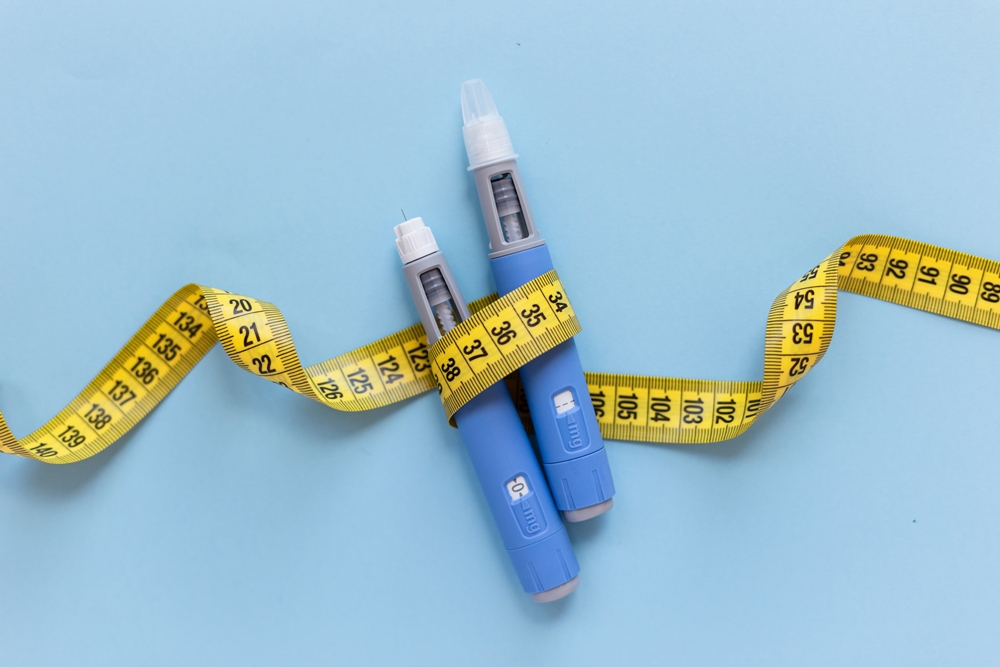
A weight loss jab may improve fertility outcomes in women with PMOS, early findings from an ongoing clinical trial suggest.
The proof-of-concept analysis found that injectable semaglutide may offer reproductive benefits while also addressing obesity and metabolic dysfunction.
It is the first report to examine how injectable semaglutide may improve reproductive outcomes in women with PMOS while also addressing obesity and metabolic dysfunction.

The work forms part of the ongoing RESTORE clinical trial.
Melanie Cree, professor at CU Anschutz and first author of the report, said: “Women with PMOS frequently face a frustrating choice between treatments that target reproductive symptoms and those that address metabolic health.
“Our early findings suggest injectable semaglutide may have the potential to improve both, offering a more comprehensive approach to care.
“This medication is incredibly promising when someone responds with 10 per cent weight loss.”
The trial is examining whether semaglutide can restore ovulation and improve reproductive health in adolescents and adults with polyendocrine metabolic ovarian syndrome, known as PMOS.
PMOS, formerly known as polycystic ovary syndrome or PCOS, is a hormone and metabolic condition linked to irregular periods, raised testosterone levels, infertility risk, obesity and increased cardiometabolic disease.
Cardiometabolic disease refers to conditions linked to the heart and metabolism, such as heart disease, high blood pressure and type 2 diabetes.
Existing treatments, including metformin and hormonal contraceptives, often do not fully address reproductive and metabolic complications at the same time.
The analysis focused on participants aged 12 to 35 who lost at least 10 per cent of their body weight during treatment.
Researchers said reproductive improvements appeared earlier than expected, prompting them to report preliminary findings while the wider study continues.
Cree is also a paediatric endocrinologist at Children’s Hospital Colorado.
Endocrinologists are doctors who specialise in hormones and hormone-related conditions.
Cree said: “What makes this work particularly important is that it focuses specifically on women with PMOS receiving injectable semaglutide.
“Although GLP-1 medications have transformed obesity treatment, there remains a significant need for rigorous data examining how these therapies affect fertility and reproductive function in this population.”
The RESTORE study is evaluating semaglutide treatment in girls and women with PMOS and obesity.
Its broader aim is to determine whether weight loss and metabolic improvements can restore ovulation and improve reproductive outcomes.
Ovulation is the release of an egg from the ovary, a key part of the menstrual cycle and fertility.
The authors said the findings are from an early proof-of-concept analysis and that larger, longer-term studies will be needed to confirm whether the reproductive benefits last.
The findings suggest injectable semaglutide may become a treatment option for women with PMOS seeking improvements in both metabolic and reproductive health, if future studies confirm the results.











 Menopause2 weeks ago
Perimenopause misinformation ‘putting women at risk’

 Hormonal health3 weeks ago
NHS urged to update website following renaming of PCOS

 News2 weeks ago
Women still being failed when they reach menopause, experts say
 Insight4 weeks ago
PCOS renamed after decade-long campaign to end ‘cyst’ misconception

 Events2 weeks ago
Women’s Health Innovation Summit opens submissions for 2026 Innovation Showcase

 Insight1 week ago
British women among angriest in Europe, health survey reveals

 News2 weeks ago
Three menopause innovators shortlisted for Femtech World Award
 Fertility4 weeks ago
AI could transform ovarian care through personalisation, study finds