




Special
‘I lost my ovary at 25 – how the system failed me and countless others’
By Isabella Fricker, yoga teacher and women’s health advocate


Women with endometriosis are disbelieved and held responsible for biological realities. Here’s what needs to change.
My story
In December 2014, I was diagnosed with a borderline ovarian tumour – losing my right ovary – at the age of 25.
The ovarian mass was the size of a small baby. A traumatic ordeal that could have been prevented if I had not experienced medical gaslighting from various GP’s.
They ignored my symptoms. I visited the GP six times over four months, but I was constantly dismissed and asked, “Are you stressed?” “I think it could be irritable bowel syndrome.’”
Fast forward a few years, I underwent laparoscopic surgeries in 2018 and 2021 for severe endometriosis. As a young woman with ovarian endometriosis, I had the opportunity to preserve my fertility through IVF.
Understanding endometriosis
Endometriosis, a chronic, inflammatory disease that has no cure, can significantly impact a woman’s life physically and emotionally.
The condition comes with a high burden of comorbidities. Chronic fatigue, for example, is a common symptom of endometriosis, but is still invariably dismissed by the medical profession.
Like many other women in this community, it has taken many years to be acknowledged with this debilitating symptom.
The Department of Work and Pensions, government, educational and work establishments need to understand all the comorbidities of endometriosis.
It is important to recognise that women may experience difficulty in professional development. Endometriosis for many is unpredictable, impacting daily lives and financial independence. Some women will be able to work full-time. However, others may only manage part-time or not at all. Discrimination should not be happening via health assessments.
Employers should support their employees too. There needs to be more opportunities in the workforce for women to have flexible options – reduced hours, time for appointments and menstrual leave if needed.
We also need support for self-employed women and those unable to work but might be able to in the future.
Furthermore, universities, colleges and schools need to recognise that endometriosis is challenging for individuals and that everyone’s experience is very different – educational workshops are paramount.
The impact of endometriosis
Endometriosis can affect sexual relationships, family, friendships and social commitments. Fertility problems may arise and in some severe cases, infertility.
It is important that all endometriosis sufferers have access to fertility treatment if they wish -it should be a part of an endometriosis care package. Gaslighting and medical negligence should not still be happening.
According to Imperial College London, less than two per cent of medical research funding is spent on pregnancy, childbirth and female reproductive health.
Historically women’s health hasn’t received much funding, due to patriarchy, ignorance and misunderstanding. One could argue that if men had the condition, there would probably have been a cure by now.
Throughout history women have been forced into a culture of silence about their bodies and menstrual cycle – a systemic issue that has caused taboos around the world, resulting in stigma, discrimination and gender disparities.
The government and medical establishments, however, need to facilitate change, through public health campaigns, strong leadership, education and investment into high-quality medical training and research.
As science evolves, all medical professionals need to become more collaborative and holistic in their approach. Gynaecologists should not be performing endometriosis surgery outside of the specialist centres accredited by the British Society of Gynaecological Endoscopy (BSGE).
Access to early intervention – diagnostic tools, abdominal and transvaginal ultrasound, MRI, laparoscopy and robotic surgery – should also be imperative.
Recognising and addressing endometriosis early is key, as prolonged diagnostic delays can lead to the disease progressing, worsening symptoms and risking permanent organ damage.
Women should also benefit from prompt referrals to specialist BSGE centres, access to multidisciplinary teams, treatment and long-term care.
All individuals with a diagnosis of endometriosis should be offered fertility support and should have access to pain clinics, pelvic health physiotherapists, nutritionists and counsellors. Alongside that, they should be able to access complementary therapies, such as acupuncture and yoga, which have been repeatedly shown to reduce pain and promote wellbeing.
This year UN Women calls for the world to “Invest in Women, Accelerate Progress” as the best way to accelerate economic growth and build more prosperous societies. It’s time for governments to make women’s and girl’s healthcare a priority.
Isabella Fricker is a UK-based women’s health advocate and yoga teacher at yogawithizy.co.uk.







Former US first lady Dr Jill Biden visited Imperial College Healthcare NHS Trust and Imperial College London to explore work on women’s health and antimicrobial resistance.
The visit was hosted by professor the Lord Darzi of Denham, who chairs the Fleming Initiative and directs Imperial’s Institute of Global Health Innovation.
Dr Biden, chair of the Milken Institute’s Women’s Health Network, spoke about the impact scientists, clinicians, innovators and investors can have on improving women’s healthcare.

Dr Biden stressed the importance of “collaboration, prevention and education” in improving women’s health globally.
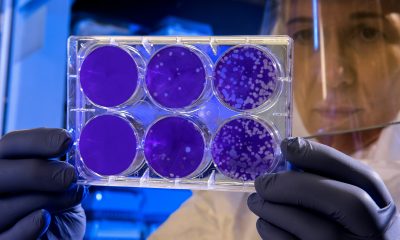
At the museum, Dr Biden and Esther Krofah, executive vice-president of health at the Milken Institute, heard about the worldwide significance of the discovery and the contribution of women who, during wartime Britain, grew penicillin in bedpans to support early experimentation.
The discussion also explored how AMR is a key women’s health issue, with women disproportionately affected in low and middle-income countries, and in high-income settings where women are more likely than men to be prescribed antibiotics.
Dr Biden was shown an architectural model of the Fleming Centre in Paddington, which will bring together research, policy and public engagement to address AMR worldwide.
The second part of the visit brought together Imperial clinicians, researchers and innovators for a roundtable on women’s health priorities, including improving diagnosis, equity in maternity care and support during the menopause transition.
Participants highlighted wide variation in the quality of care for conditions affecting women and called for fairer access to services, with the postcode lottery named as a priority to address.
Professor Tom Bourne, consultant gynaecologist and chair in gynaecology at Imperial’s Department of Metabolism, Digestion and Reproduction, described how AI could improve diagnostic accuracy for conditions such as endometriosis.
Equity emerged as a central theme.
Professor Alison Holmes, professor of infectious diseases at Imperial College London and director of the Fleming Initiative, highlighted persistent gaps in women’s representation in clinical trials, including antibiotic studies, which limits the ability to optimise care and treatments.
Dr Christine Ekechi, consultant obstetrician and gynaecologist at Imperial College Healthcare NHS Trust, drew on national maternity investigations to underline the importance of valid data, meaningful engagement with affected communities and rebuilding trust.
Menopause and midlife health were also identified as priorities for clinical research.
Professor Waljit Dhillo, consultant endocrinologist and professor of endocrinology and metabolism in Imperial’s Department of Metabolism, Digestion and Reproduction, described a new treatment for hot flushes, including for women unable to take hormone replacement therapy, such as those with a history of breast cancer.
The discussion then turned to bringing innovation into health systems. Innovators shared how data and technology are being used to close gaps in women’s health, while noting challenges in accessing funding to grow and scale.
Dr Helen O’Neill and Dr Deidre O’Neill, co-founders of Hertility Health, described predictive algorithms using self-reported data to help diagnose gynaecological conditions at scale.
Embedded into clinical workflows, the technology could reduce waiting times, identify conditions earlier and improve outcomes. They noted how “we have cures for the rarest genetic conditions but don’t even have the answers to common women’s health issues.”
Dr Lydia Mapstone, Dr Tara O’Driscoll and Dr Sioned Jones, co-founders of BoobyBiome, outlined work creating products that harness beneficial bacteria found in breast milk to support infant health.
By isolating and characterising key microbial strains, BoobyBiome has created synbiotics, combinations of beneficial bacteria and the food that nourishes them, to make these benefits accessible to all babies.
Speakers throughout the visit stressed the need to reduce variation in care quality and outcomes for women, strengthen prevention and education, and address power and equity in women’s health.
Professor the Lord Ara Darzi said: “It was a privilege to welcome Dr Biden and the Milken Institute to Imperial to meet some of the outstanding researchers, clinicians and innovators advancing women’s health.
“Imperial’s unique combination of clinical excellence and world-leading research positions us at the forefront of tackling the biggest health challenges facing society and the UK’s ambition for innovation demands nothing less.
“For too long, the health needs of women and girls across their life course have not received the attention they deserve.
“By working together across borders and disciplines, we can transform equitable access to care, accelerate the detection and treatment of disease, and ultimately improve health outcomes for millions of women in the UK and around the world.”













 Menopause2 weeks ago
Perimenopause misinformation ‘putting women at risk’
 Hormonal health3 weeks ago
NHS urged to update website following renaming of PCOS
 Hormonal health4 weeks ago
PCOS renamed after decade-long campaign to end ‘cyst’ misconception

 News1 week ago
Women still being failed when they reach menopause, experts say
 Entrepreneur2 weeks ago
Women’s Health Innovation Summit opens submissions for 2026 Innovation Showcase

 Diagnosis4 weeks ago
Artera receives FDA Clearance for breast cancer platform

 News1 week ago
Three menopause innovators shortlisted for Femtech World Award
 Fertility3 weeks ago
AI could transform ovarian care through personalisation, study finds
1 Comment