



Pregnancy
Bellabeat becomes first women’s health tracking app to implement private key encryption
The extra layer of security means that the data stored on the company’s servers can’t be read without the user’s private key


The Californian wellness company Bellabeat becomes the first period tracker to roll out a new data security layer to protect users’ data in the wake of the US Supreme Court ruling.
Bellabeat had been using full end-to-end encryption to protect its users, as the method was considered a secure way to protect customers’ data.
Now the San Francisco-based company decided to introduce private key encryption to better protect health data.
The newly implemented encryption feature is hoped to enable the users of the app to access and decrypt their data using a private key via their Bellabeat mobile app.
Any data stored on the company’s servers will be in an encrypted form only. Thus, no one can access the Bellabeat servers lawfully or unlawfully.
The extra layer of security means that the data stored on the company’s servers can’t be read without holding an individual user’s private key – a password or a pin code that only the user knows. The only person who could have access to the health data will be the users themselves.
Without that key, the data is unreadable, says Bellabeat. The company will therefore not be able to benefit from collecting end-user data “in any shape or form”, including for internal research or product improvements.
Bellabeat executives determined that there was not a question in options and that users’ safety at this time is of the utmost importance.
The company’s decision comes weeks after a US Supreme Court ruled overturning Roe v Wade on June 24, raising concerns over data protection.
“Our business is helping women to track and understand their cycles and bodies,” says Urska Sršen, co-founder of Bellabeat. “The overturning of Roe v Wade is a tremendous blow to women’s rights.
“Many women are now in fear of exactly what to share and where to share it. This ruling will change how health data and records are maintained offline with OBGYNs and primary care physicians, what women feel safe to disclose, and will grossly change how women will choose to share their reproductive information online.”
She adds: “We will continue to be a safe and progressive space for women to track their cycles, fertility, and all wellness concerns. Incorporating the private key encryption feature means an extra layer of security designed to ensure our users’ safety and show them that we are unable to leak or sell their data and that a breach within Bellabeat’s servers will never mean a threat to their personal safety.”
Sandro Mur, co-founder of Bellabeat, says that the idea that health data could be used to criminalise women is “horrific”.
“It’s not a sentiment reflected anywhere in healthcare or health rights for the male body. We stand with women everywhere and have taken the necessary steps.
“The implementation of the private key encryption ensures that we will never be placed in a position, as a company, where we could be forced to submit user’s private health data in its readable form.”
Muhammad Ikram, lecturer at the Macquarie University Cyber Security Hub in Sydney, warned users to remain cautions.
“We need more regulation to ensure the use of data responsibly,” the expert told FemTech World. “I would advise people to have a closer look at the permissions these apps are asking for and at the extent to which they can monitor their activity.”


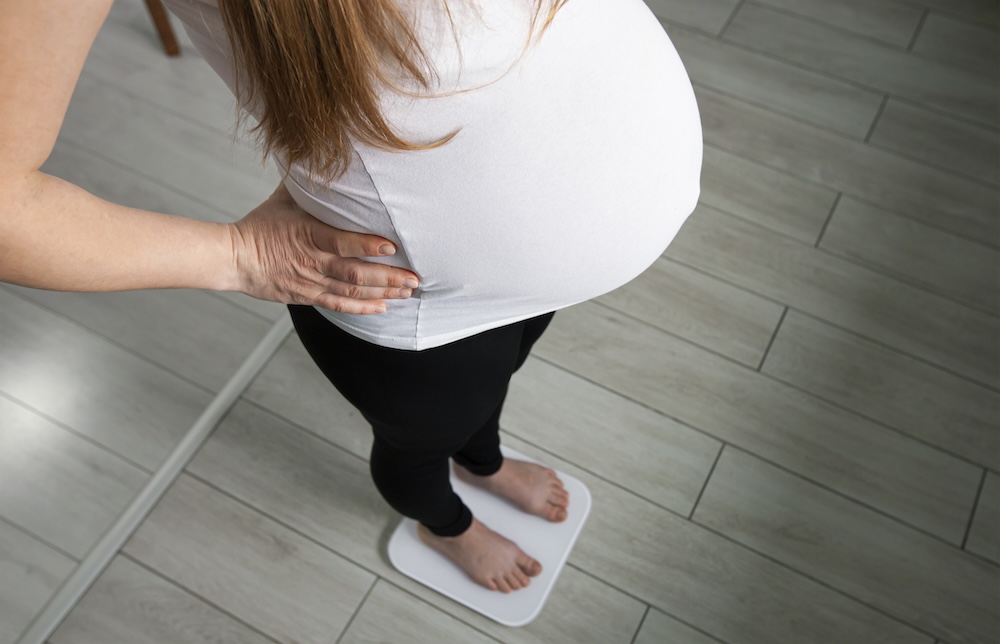
Two-thirds of pregnancies involve weight gain outside recommended pregnancy weight ranges, linked to complications including preterm birth and neonatal intensive care admissions, research shows.
Analysis of 1.6 million women found only 32 per cent gained the recommended amount of weight during gestation, with 23 per cent below and 45 per cent above guidelines.
Gestational weight gain (GWG) refers to the combined growth of mother and baby during pregnancy.

The research reviewed 40 observational studies from five World Health Organization regions between 2009 and 2024.
Lead researchers Helene Teede and Rebecca Godstein say findings reinforce the need for international standards alongside lifestyle support and public health measures.
The researchers concluded: “Our findings inform and support the need for optimised, evidence-based WHO international GWG reference standards based on individual patient data, applicable across the full BMI range in contemporary and diverse global populations.
“This will build on and improve current recommendations and are essential to underpin multi-level support to improve the health of mothers and babies worldwide.”
Current guidelines from the Institute of Medicine are based on data from predominantly white women in high-income countries during the 1980s.
These do not reflect ethnically diverse populations or environmental factors driving global weight trends.
Around half (53 per cent) of participants had healthy pre-pregnancy BMI (body mass index, a measure of weight relative to height), with others classified as below (6 per cent), above (19 per cent) or obese (22 per cent).
Weight gain below recommendations was linked to lower risk of caesarean delivery and large babies but higher risk of preterm birth, small babies, low birth weight and respiratory distress.
Conversely, gaining above recommended ranges increased risks of caesarean delivery, hypertensive disorders (high blood pressure complications), large babies and neonatal intensive care admission, while lowering risks of preterm birth and small babies.
Similar patterns emerged when Asian BMI categories were applied in studies from that region.
In a linked editorial, Annick Bogaerts and Dominika Osicka said wide variation across BMI categories and regions challenges the “black and white logic” behind many clinical guidelines.
They argue for a more nuanced focus on weight gain patterns, underlying determinants and personalised, non-punitive counselling.
They wrote: “Without comprehensive, life course public health strategies, the obesity epidemic will continue across generations.
“Governments and (inter)national agencies must act now to support women’s health before, during and after pregnancy, ensuring that the next generation inherits the opportunity not the risk.”










-

 Wellness3 weeks ago
Opinion: Not ‘just stress’ – How hormonal changes affect women’s brain function
-

 News4 weeks ago
Top 7 drug-free solutions for managing PMS and PMDD in in 2025
-

 Diagnosis3 weeks ago
Researchers develop nasal therapeutic HPV vaccine
-

 News3 weeks ago
Woman files lawsuit claiming fertility clinic ‘bootcamp’ caused her stroke
-

 Wellness4 weeks ago
YON E Health raises €250k for its vaginal health device
-

 Fertility4 weeks ago
Researchers achieve first pregnancy using AI to recover sperm in infertile men
-

 News1 week ago
Doctors push back on ‘data-free’ ruling on menopause hormone therapy
-

 Menopause3 weeks ago
Sleep-related disorders linked to hypertension in postmenopausal women
Pingback: Will The Bellabeat Ivy Tracker Help Me Cycle Sync? (2023 Review) - Good Gear