



Nearly three years of full-scale Russian invasion in Ukraine has exacerbated existing health disparities, say the co-founders of FemTech UA, taking a toll on millions of women and girls.
When Russia invaded Ukraine in February 2022, Julia Ivanytska, co-founder of Women’s Health & FemTech Ukraine (FemTech UA), and her family were among those who chose to stay in their home city of Dnipro, instead of seeking refuge in neighbouring countries.
“We have our home and work here, and our parents did not want to leave,” she says.
Her husband’s parents’ city was badly damaged in the war, with residents now reliant on volunteers to bring essential supplies such as food and medicine.
She adds: “It is most difficult for the elderly and those with chronic diseases to live in such conditions.”
Julia’s mother is also suffering from insomnia and anxiety from living with constant uncertainty about the future.
“My life during the war seems to have been put on hold,” her mother says. “I can’t plan, I can’t dream and get pleasure from things I used to, and it’s hard to even think about desires. Everything will happen later, when the war is over. The only thing that brings me joy is calls and meetings with my children and grandchildren.”

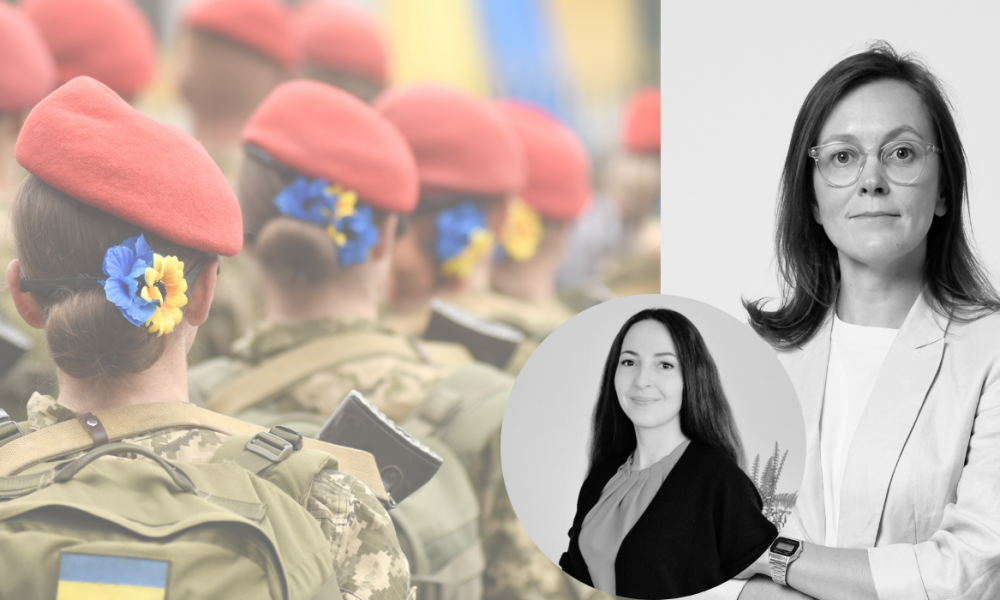
Julia Ivanytska, (right) with her mother, Dnipro City, Ukraine
A “crisis” in women’s health
According to UNFPA, the war has left 14.6 million people within Ukraine, and a further 2.2 million Ukrainian refugees in European countries in urgent need of critical health services and support programmes. The war has created a “multifaceted crisis” in women’s health which spans sexual, reproductive, mental, and physical health and well-being.
Rates of anxiety, depression, and PTSD have risen significantly— WHO estimates that almost 10 million people in Ukraine are now suffering from mental health disorders—particularly among women and mothers grappling with the impact of displacement and trauma.
As a direct result of the war, rates of gender-based violence—already an issue affecting around three quarters of women over the age of 15—have increased over the last few years, as well as conflict-related sexual violence. Data from the Ukrainian National Police revealed that cases of domestic violence increased by 51 per cent during the first five months of 2023, compared to the same period the previous year.
Displacement also leaves women more vulnerable to sex trafficking and exploitation, with one in five refugees or internally displaced women in complex humanitarian settings estimated to have experienced sexual violence.
Meanwhile, access to essential reproductive health services has been disrupted in many regions, leading to increased risks of pregnancy and delivery complications, as well as shortages of essentials such as menstrual products and contraception.
But beyond these immediate health concerns, women are also bearing the brunt of increased caregiving and domestic responsibilities—which disproportionately fall to them— and rising poverty levels that have an indirect impact on their overall health.
“Women are now under a lot of pressure from household duties and taking care of their family,” says Julia. “The wives of servicemen take full care of their families, often neglecting their health.”
The constant air raids force many schools and public services to close, leaving women to take on additional roles teaching their children at home.
“Not all schools have shelters where children can continue their studies during an air raid siren,” she continues. “My daughter is currently in fifth grade, and about half of her lessons will be cancelled due to the air raid sirens, so I have to spend more time studying with her at home and pay for additional classes.”

Julia Ivanytska, co-founder, Femtech Ukraine (UA)
Women in the Armed Forces
The number of women in the Ukrainian military has been rising since 2014. In September 2024, there were more than 48,000 servicewomen, compared to about 16,500 in 2014. According to data from the Ministry of Defense of Ukraine, 5,000 women are currently serving in direct combat zones.
Despite this, there is a lack of gender-specific healthcare for female personnel, with an understaffing of endocrinologists and gynaecologists in front-line hospitals, and women not always supplied with period products, menstrual pain relief medication, contraception, or other essentials.
According to Dr Olena Ivanova, co-founder of FemTech UA, service women often return from the frontline with numerous problems, including hormonal imbalances, amenorrhea, infertility, and breast pathology. These health challenges may arise from prolonged stress, limited preventive care, and insufficient organisational support and understanding, she adds.
It was only in 2023 that the first female-specific military uniforms were introduced in Ukraine and the first bulletproof vest for servicewomen. In October 2024, the Cabinet of Ministers approved the first procedure for material, medical, psychological, and social support of military personnel, which considered the needs of both women and men.
Exacerbating pre-existing challenges
FemTech UA was launched to advance women’s health in Ukraine and raise awareness of the issues women in the country are facing. Even before the war, Ukraine had one of the highest maternal mortality rates in Europe, with breast cancer the number one cause of cancer deaths among Ukrainian women over the age of 30.
Julia, a researcher and market analyst, first encountered the FemTech sector while working at the London-based DeepTech consortium, Deep Knowledge Group, where she became part of the core team launching the strategic analytics agency, FemTech Analytics.
“We got in touch with Olena and in our first call, quickly realised that we shared similar values and a vision for the community we wanted to create,” she says. “We understood that Ukrainian girls and women would benefit from introducing FemTech, more so in these hard times.”
Olena has spent over a decade researching women’s health globally, focusing on sexual and reproductive health, and has always been passionate about bridging the gaps between healthcare, research, and technology to improve the health of girls and women worldwide.
“Women’s health in Ukraine is compromised by the ongoing war, which has intensified pre-existing challenges,” says Olena.

Dr Olena Ivanova, co-founder of FemTech UA.
With limited access to specialist services and resources, women in Ukraine and outside seeking information and advice about their health are increasingly turning to online sources such as Google and Instagram — where misinformation is flourishing.
Scientific research on women’s health is underrepresented around the world, but while other countries are introducing initiatives to prioritise greater awareness and innovation, the war has damaged Ukraine’s research infrastructure potentially exacerbating setbacks in women’s health research.
Around 12 per cent of academics have been displaced, either emigrating or relocating internally, while 1,518 have joined military service. Ukrainian scientists face supply chain disruptions, destroyed university facilities, and ongoing economic challenges that significantly impede scientific work and academic progress.
The situation exemplifies the global underinvestment in women’s healthcare, Olena says, particularly in conflict zones, where women’s specific medical needs are often overlooked.
A call for international collaboration
Despite these challenges, Ukraine’s tech industry, including the health tech sector, has demonstrated remarkable resilience and growth, with women playing an increasingly vital role in the startup ecosystem. Julia and Olena believe this adaptability underscores the potential for innovation and progress in the face of adversity.
FemTech UA aims to address women’s health challenges and unite multiple actors by building a collaborative platform to share information and establish partnerships between research, healthcare, startups and accelerators, Venture Capitalists, and NGOs to help raise funding and advance innovative solutions in women’s health.
Not only is there an urgent need from a health and humanitarian perspective, but there is a huge economic opportunity too. The Ukrainian FemTech market is largely underrepresented but has the potential to reach 14 million women (15-64 years old) with solutions in the Ukrainian language.
Over the coming year, the FemTech UA community plans to host several knowledge-sharing events, as well as collecting crucial data, and publishing white papers.
“Raising awareness and collecting data about the issues women are facing in Ukraine, especially due to the ongoing war, is an important component of the initiative,” adds Olena. “As FemTech Ukraine grows, we call for national and international support and collaboration.”
Find out more about Femtech UA and follow the journey on LinkedIn and Instagram @femtechua.

Newsletter
Sign up for free weekly updates
The latest femtech news, research and investment, straight to your inbox.



